• Debunking Data Center Myths

    by Jeff Reynolds

    You’ve heard the stories. Data centers are loud, water-guzzling monsters chewing up rural landscapes. They promise jobs but deliver none. They’ll suck the grid dry, jack up everyone’s electric bill, overload the power grid, and leave abandoned warehouses when the AI bubble bursts. Opponents paint them as the latest corporate scam, with Chinese Communist Partyโ€“backed accounts flooding social media to amplify every complaint from low information voters. 

    Meanwhile, the Big Tech acolytes tell us these monstrosities will unlock human flourishing to a degree never before seen in history. The AI revolution will free humanity to create instead of having to punch a clock as a slave to the grind. It will transform industries, contribute trillions to the global economy, and even heal the planet by slowing global warming. All at a relatively low low strain on resources, unlike the claims to the contrary by those opposed to data centers in their back yard.

    So who’s right?

    The social media furor has gotten so loud that local governments are hesitating, even while the technology reshapes the economy. 

    The sheer volume of misinformation surrounding the issue has marred any sort of thoughtful debate about the pros and cons of data centers. 

    To be fair, this is not to advocate for one side of the debate or the other. The purpose of this exercise is to examine the BS and offer actual facts so the debate can proceed with true understanding, not hype and fearmongering.

    This graphic made the rounds recently on social media. Regardless of verifying whether the claims hold any statistical significance, it indicates the sheer volume of misinformation and disinformation emanating from both sides of the data center divide:

    (more…)


  • Letโ€™s Be Honest: Virginiaโ€™s Budget Is Racist

    by Kerry Dougherty

    Are black tourists having trouble coming to Virginia?

    How about โ€œindigenousโ€ visitors?

    Hispanics?

    I only ask because buried on page 122 of the hastily assembled 600-page budget Democrats finally finished on Friday – 100 days late – is this intriguing item:

    โ€œ$1,500,000 the first year and $1,500,000 the second year out of this appropriation from the general fund is provided for the Virginia Tourism Authority to develop a marketing campaign to attract out-of-state visitors from black, indigenous and Hispanic communities.โ€

    Just curious. Why do we care what color our tourists are, as long as their money is green? After all, the entire purpose of a media campaign to make Virginia attractive to visitors is so they will come here and blow a wad of money.

    If anything, the authority should be targeting wealthy zip codes where the residents have lots of loot.

    But thatโ€™s not the way virtue-signaling racists think. For reasons that boggle the mind, they want to pick the complexion of tourists.

    Imagine, for a moment, if the General Assembly decided to set aside $3 million to attract white tourists.

    Weโ€™d be hearing about Jim Crow 2.0 and white supremacy.

    And theyโ€™d be right.

    So letโ€™s just call the architects of this sloppy budget item what they are: Racists.


  • Building a New State Climate Bureaucracy


  • Virginia’s Return to RGGI: Another Ratepayer Rip-Off in the Making

    Governor Spanberger just made every Virginian’s household more expensive.

    by Jeff Reynolds

    Virginia has jumped back into the Regional Greenhouse Gas Initiative (RGGI), and residential ratepayers will feel the painโ€”again. 

    The last time the state was in the program, under the last Democratic governor, it cost Virginians more than $600 million over three years. Every penny landed on electric bills. Now, Democratic leadership in the Assembly, Senate, and governor’s mansion has reenrolled the state in the “cap-and-invest” scheme, and the latest estimates put the annual hit at more than $500 million going forward. That figure doesn’t even account for rising credit prices now that Virginia’s demand has re-entered the market and driven up costs. 

    Analyses have pegged the household impact north of $1,500 a year. 

    Glenn Davis, who helped shape Virginia’s energy policy as director of the state Department of Energy, doesn’t mince words about what this means for families. 

    “We know everyone’s bill is going to go up,” he told Restoration News.ย 

    (more…)

  • Virginia Democrats Inject Race into Tourism

    by Virginia Grace McKinnon

    Image credit: Grok

    The Virginia House of Delegates just released its final draft of the 2026 budget. Buried in a civil war on data centers, lifting marijuana restrictions, and giving themselves a 150% pay raise, Democrats are also seeking to spend millions on DEI tourism.

    Virginia legislators are busy working out the 2026 budget. After months of back and forth with the state Senate and the governor, the Democrat-controlled Legislature released its budget proposal Friday evening, 100 days late.

    Buried in the 600-page proposal, which cost taxpayers $50,000 to craft, is a marketing provision that seeks to promote non-white travel to Virginia.

    The item, titled โ€œEstablish a Black, Indigenous, and Hispanic Communities Marketing Campaign,โ€ aims to spend $4 million to develop a marketing campaign to attract out-of-state visitors from those minority communities.

    (more…)

  • Assembly To Data Centers: “Here’s Your Hat, There’s the Door”

    by Steve Haner

    The energy regulatory provisions buried in the final conference report on Virginiaโ€™s 2026-2028 budget, approved by the General Assembly Monday, are as complex and detailed as any of the energy bills reviewed earlier during the regular session. They are also just as damaging.ย 

    The data center industry was a particular target. The political fights over its partial sales and use tax exemption and its sources of energy were not resolved at all, but another new tax and a host of new regulations are now imposed on just these companies. A harsh but clear message was sent.ย 

    Why even have a 60-day General Assembly session if all the big decisions are made in a closed room in a delayed budget negotiation? This conference report could not be amended, could not be divided into separate votes on separate provisions, and was โ€œmust passโ€ because the June 30 deadline is next week. The public disenfranchisement was total. ย 

    All the headlines are focused on the newย consumption taxย imposedย on the data centers effective July 1, which isย similarย and in addition toย an existing state and local energyย consumption tax. The additional tax of 1.1 cent per kilowatt hour will raise $600 million in each of the next two years and then sunset, but this tax likely will only go away if something even more detrimental to the industry is adopted.ย 

    Threeย things are important to note about that new consumption tax.ย  (more…)


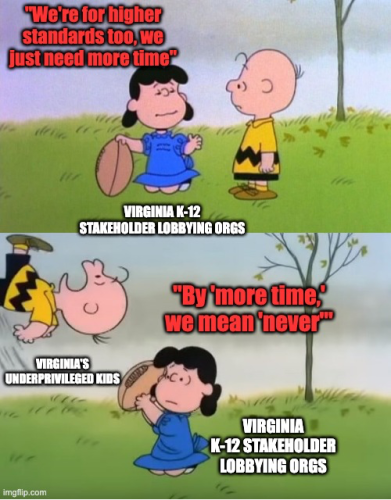
  • Spanberger Admin Proposes Extending Virginiaโ€™s Lowest-in-Nation English and Math State Standards for 2 More Years

    After years of delays, the proposed additional delay sets up a likely strong push for another delay in 2 years by powerful lobbying groups for those who work in the K-12 system… at the expense of Virginia students and parents

    by Todd Truitt

    As a supporter of Governor Abigail Spanberger, Iโ€™ve been impressed by much of the new administrationโ€™s promises on the campaign trail and in their first day executive order on higher expectations for Virginiaโ€™s public schools.

    The administrationโ€™s upcoming presentation to the Virginia Board of Education on the Assessment and Accountability Roadmap attempts to confirm this commitment. The presentation lays out the administrationโ€™s policy plans in detail, with multiple strong accountability elements and repeatedly affirms a commitment to higher expectations.

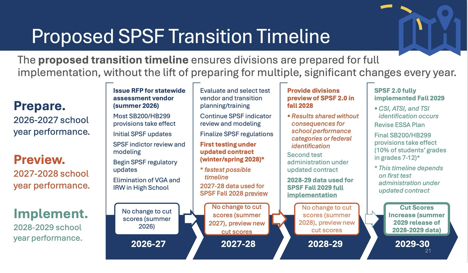
    Unfortunately, the same presentationโ€™s proposal to delay any increase in the minimum thresholds for โ€œpassingโ€ state English and Math standardized tests (โ€œcut scoresโ€) by two more years does the exact opposite. Instead, the administration proposes changing the 4-year gradual cut score hikes scheduled to begin this fall into a single large increase in Fall 2028-2029 to coincide with implementation of accountability changes and new assessments. One can see the โ€œstakeholderโ€ voicesโ€”school administrators and teachers associationsโ€”almost certainly arguing in a couple years that itโ€™s โ€œtoo much at onceโ€ and lobbying for yet another delay or another long phase-in.

    Spanberger administration proposal
    Source: Virginia Department of Education, June 2026

    Virginiaโ€™s cut scores have embarrassingly remained the lowest in the nation for years, and this proposed move extends that embarrassing distinction even further. In the best-case scenario, the proposal is a politically naรฏve concession to the powerful K-12 lobby. In the worst-case scenario, it is a policy giveaway to those who are employed by and administer the public school system and their powerful lobbyists. In either case, Virginia students and families will pay the price if such proposal is enacted by the Board in August.

    (more…)

  • Amazon Data Centers Now Use Less Water

    Plus, in Virginia they spawn tax cuts for homeowners.

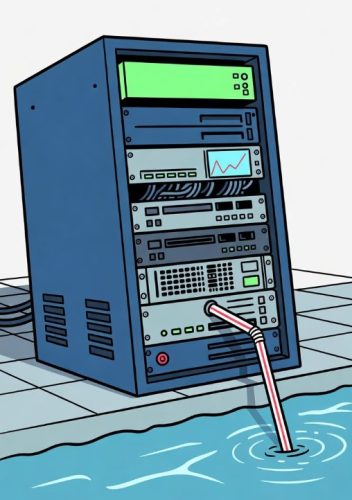
    A cartoon illustration of a server tower standing on a tiled floor with water around it, featuring a straw inserted into the server that is submerged in the water.
    Data center sipping water. Image credit: Grok

    by Hans Bader

    Amazonโ€™s data centers are using water more efficiently than in the past. A company report shows that โ€œAmazonโ€™s data centers used just 0.12 liters of water per kilowatt-hour of compute in 2025, about one-seventh of the industry average and less than half of Amazonโ€™s rate of 0.25 liters in 2021,โ€ notes The Doomslayer.

    Amazon News says that

    When data centers use water for cooling, one of the most important metrics is how efficiently they use that waterโ€”meaning how little water they use for each unit of compute. Amazon announced that its global data center operations used just 0.12 liters of water per kilowatt-hour (L/kWh) in 2025, a rate thatโ€™s over 7x more efficient than the industry average of 0.84 L/kWh.

    In other words, we use far less water per unit of compute than others in the global data center industry, which as a whole accounts for less than 0.5% of all industrial water use globally.

    And weโ€™re continuing to get even more efficient year over year. These efficiency gains are the result of years of investment in custom cooling technology, smarter systems, and a commitment to minimize water use wherever possible.

    A think-tank says that โ€œthe total water use of all U.S. data centers constitutes less than 0.5% of American freshwater use and there is not a single instance of AI infrastructure raising water prices anywhere in America. AI data centers are a boon for the country, driving economic growth.โ€ The largest U.S. data center consumed less water than three square miles of farmland did.

    (more…)

  • Spanberger’s Slow Start

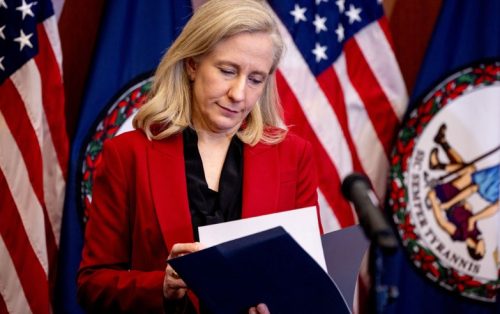
    A woman in a red blazer is reading a document while standing in front of Virginia state flags.

    by Rich Tucker

    Imagine for a moment that youโ€™re at a Donald Trump rally. As you approach the event, you come across a Republican protester wearing an anti-Trump mask and carrying a โ€œNo more warsโ€ sign. Perhaps the person is also accusing the president of being too cozy with corporations.

    Does that sound unlikely?

    Well, outside a Democratic meeting this weekโ€”an event sponsored by a Democrat state senator and featuring an appearance by L. Louise Lucas, the president pro tempore of the Senate and the stateโ€™s most influential lawmakerโ€”stood the Virginia Democratic Partyโ€™s version of just such a protester.

    This Democrat sported a cardboard image of the Democrat governor wearing a mock tiara that said: โ€œDiva Data Center.โ€ The protester was holding a โ€œNo more data centersโ€ sign and hinted the governor is too close to Dominion Energy. The protester wasnโ€™t shunned for shaming a governor from her own party; other rally-goers seemed to welcome her presence.

    The governorโ€™s rift with Democrats goes deeper.

    (more…)

  • If We Ban the AR-15, Perhaps We Should Restrict Hands and Feet As Well

    by Ken Stiles

    A black rifle positioned next to a human hand and foot, all arranged on a flat surface.
    Which kills more Virginians each year? AR-15s or hands and feet? Image credit: Grok

    โ€œWe have finally reached a place where we have a critical mass of legislators who are willing to vote for bills that save lives โ€“ not that you hope will save lives, but bills that are written based on data and evidence, and empirically we know they save lives,โ€

    So said Governor Abigail Spanberger about legislation, which she signed, that restricts the sale and purchase of the AR-15 style rifle/carbine in Virginia.

    Delegate Dan Helmer, D-Fairfax Station had this to say:

    โ€œWeapons similar to those I carried in Iraq and Afghanistan should not be trafficked in our commonwealth. โ€ฆ I think the high-capacity magazines that so oftentimes have been involved in instances of mass shootings that lead to mass death should be removed from Virginia.โ€

    Spanberger said she was signing HB 217 into law “because firearms designed to inflict maximum casualties do not belong on our streets.โ€

    But she admitted that the AR-15 holds a special place in America when she added, โ€œWhile the General Assembly chose not to adopt my amendment that specifically carves out certain firearms frequently used for hunting, I will work with the patrons to clarify this language.โ€

    The rhetoric echoed that of Vice President Harris, speaking in May 2022: โ€œYou know what an assault weapon is? You know how an assault weapon was designed? It was designed for a specific purpose โ€“ to kill a lot of human beings quickly. An assault weapon is a weapon of war with no place, no place in a civil society.โ€

    All of the above, except the governorโ€™s caveat about the special carve out are based on emotional dribble grounded on lies and ignorance.

    Letโ€™s examine a few facts:

    (more…)

  • RGGI Rebates for Some Ordered in New Budget Language

    The pending conference report on adopting a new Virginia state budget includes a process to rebate the cost of the Regional Greenhouse Gas Initiativeโ€™s carbon tax, but only to smaller customers and only if their utility is charging them for it directly.

    The states currently in the Regional Greenhouse Gas Initiative tax compact.

    Larger energy users, especially the largest industrial, commercial and data customers, will still pay in full.ย The full economic impact of the tax on electricity prices in general will be unchanged, and RGGI raises energy costs across the board in Virginia.ย 

    The complicated rebate process outlined in one paragraph in the budget section on the Department of Environmental Quality would apply only if the utility paying the RGGI carbon tax to run its hydrocarbon power plants then collects the tax from its customers through a special charge on monthly bills.

    This might apply only to customers of Dominion Energy Virginia, which has applied to the State Corporation Commission for a 1.3 cent per kilowatt hour โ€œrate adjustment clauseโ€ on all its customers.ย Appalachian Power Company, serving parts of Western Virginia, pays very little RGGI tax on just one in-state plant and has not used a RGGI rider to collect the funds from customers. Maybe now it will do so. There is no provision for rebates to rural cooperative customers, and again, the RGGI cost has not been segregated on their bills as it is buried in their purchased power costs.

    This is another admission by the Democrats so fond of this carbon tax that it ultimately is paid by customers, not the power companies.ย When the tax was $5- to $6 per ton of carbon emissions, it was harder to see, but now at $35 per ton it is impossible to miss.ย 

    (more…)

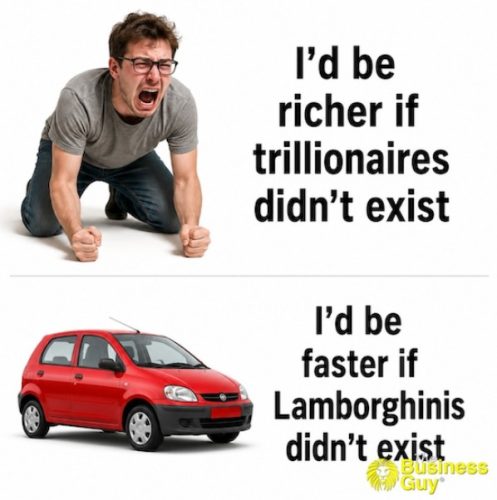
  • Jeanine’s Memes

    A frustrated man crying out loud with text saying 'I'd be richer if trillionaires didn't exist.' Below, a red compact car with text saying 'I'd be faster if Lamborghinis didn't exist.'

    View more memes at The Bull Elephant.


  • Data Centers Will Pay Same Tax on Solar Power as on Coal

    by Steve Haner

    The new energy tax being imposed on Virginiaโ€™s data center industry effective July 1, assuming the new state budget conference report passes next week, is totally ecumenical. The same tax is imposed on electrons from a solar panel or wind turbine as is imposed on electrons from coal.

    A data center that has largely or fully supplied its needs with generation behind the meter on site or with a contract with a competitive service provider will pay the same tax per kilowatt hour as a data center straining the general utility grid. This is what the new provision states:

    …regardless of whether the electricity is provided through an incumbent electric utility, an incumbent electric cooperative, a competitive service provider, or is self-supplied. For electricity that is self-supplied, the data center operator shall report its usage quarterly to the Department of Environmental Quality, who shall verify such usage with the State Corporation Commission.

    The $11,000 per 1 million kilowatt hours (and data centers use hundreds of millions in some cases) will be in addition to the existing $875 per 1 million kilowatt hour tax on large electricity users in an existing law. But that tax is only on utility-delivered power. Taxing the self-supplied power is new. 

    (more…)

  • DEI by Any Other Name Is Just as Noxious

    Did UVA eliminate DEI or merely rebrand it?

    A caricatured man in a suit smiling confidently, presenting two boxes labeled 'Old Product' and 'New Product'. The 'Old Product' box is marked 'DEI Bureaucracy $220/Year', while the 'New Product' box is titled 'DEI Community Engagement & Wellbeing Initiative'. Background decorations include banners that say 'DEI is Dead... Long Live Partnerships!' and 'Inclusive Excellence 2.0'.
    Image credit: Grok

    by the Jefferson Council

    For over a decade, successive UVA administrations spent millions of dollars building one of the most extensive Diversity, Equity and Inclusion (DEI) bureaucracies in American higher education. A 2021 survey ranked UVA second among major universities in the number of DEI employees, and by 2024 the universityย was spending $20M on 235 positions. When these practices were found to violate the Civil Rights Act of 1964 and a landmark Supreme Court decision, the Board of Visitors unanimously voted to dismantle them. UVA later entered into a formal agreement with the U.S. Department of Justice to do exactly that.

    Even a cursory review of the current situation on Grounds suggests the reality is otherwise.

    One administratorโ€™s official biography still describes her job, in the present tense, as executing diversity, equity, and inclusion strategy โ€” the same language from her previous role as the Senior Assistant Dean and Chief Community and Connection Officer. Her title has been scrubbed from the page. However, her payroll listing now reads Compliance Consultant. Her biography did not change. The page simply moved to a new address.

    That detail captures, in microcosm, what a review of key DEI staffers, archived webpages, and salary records reveals about the scope of UVAโ€™s restructuring: titles changed, office names changed, URLs changed. The people did not. 

    (more…)

  • Bacon Meme of the Week

    Close-up of cooked bacon strips on a grill with a humorous warning text about drooling.