-
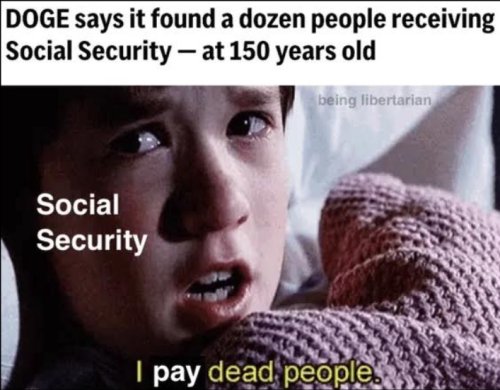
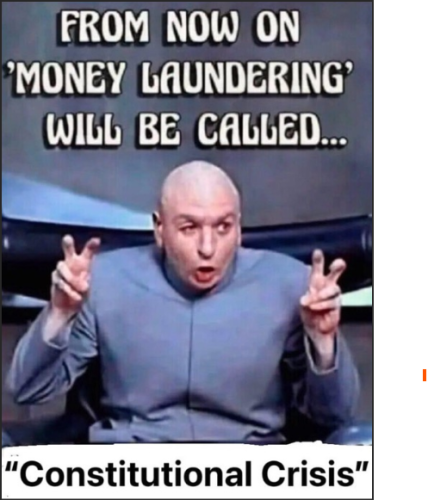
Jeanine’s Memes
-
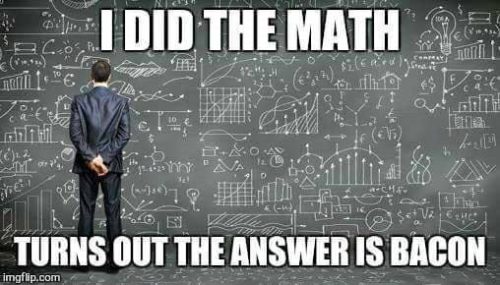
Bacon Meme of the Week

-
Waste, Fraud, and Abuse Report
by Dick Hall-Sizemore
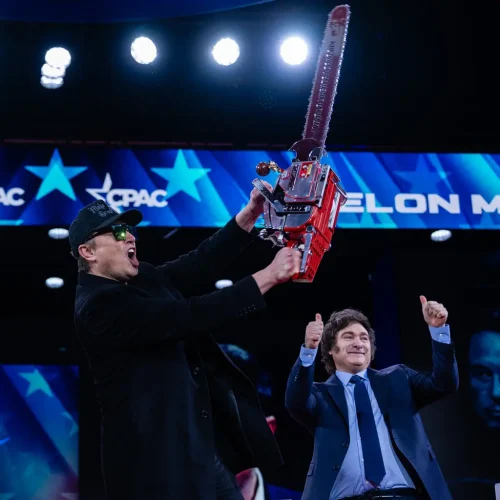
Picture credit: New York Times Below are two instances of waste, fraud, and abuse of federal funds that have been recently identified and dealt with in Virginia:
Hurricane Helene aid—The Virginia Creeper Trail and the tourist revenue associated with it are important to the town of Damascus and the rest of Washington County in southwest Virginia. Hurricane Helene destroyed a significant portion of the trail. Congress included $660 million in recent legislation for repairs to the trail.
Sen. Mark Warner (D-Virginia) recently told Cardinal News that the money “is not flowing. I am very worried that this money is either part of on-off freeze or just a completely screwed up bureaucracy that has now eliminated people and can’t do its job.”
Sen. Warner is not the only one concerned about how the funding for the trail has seemed to stop. Vice-President J.D. Vance was in Damascus about a month ago and commented on the slow response. According to Cardinal News, the Vice-President said that the administration needed to figure out what was causing delays.
In the meantime, five technicians with the U.S. Forestry Service responsible for repairing walking trails, campgrounds, and other recreational facilities damaged by Hurricane Helene have been fired.
(more…)
-
Do No Harm

By James C. Sherlock
One translation of the Hippocratic Oath reads:
“I will follow that system of regimen which, according to my ability and judgment, I consider for the benefit of my patients, and abstain from whatever is (harmful).”
That will prove cold comfort to the thousands of Virginia patients subjected to unnecessary danger, pain, indignities and death at the hands of Virginia’s worst nursing homes.
Virginia hospitals, with a discharge signed by a doctor, transport patients to nursing facilities every day. Government data richly reproduced in this and previous BR series on Virginia’s nursing homes show many of those facilities to be dangerous.
The proper response to anyone enquiring about who could have predicted the twin tragedies charged as crimes at Colonial Heights Rehabilitation and Healthcare Center (Colonial Heights) is: “Anyone charged to oversee nursing homes and the health and safety of patients”.
(more…)
-
Key Energy Issues of Customer Cost, Reliability Often Ignored
By Steve Haner
The Virginia General Assembly has approved a long list of bills to reinforce its previous commitment to ending the use of hydrocarbon fuel in Virginia. It ignored warnings that natural gas is essential for energy security from the regional electricity marketplace, the Virginian who now chairs the Federal Energy Regulatory Commission and even its own hired expert.
Governor Glenn Youngkin now has the final say and should apply his veto vigorously.
Most of the bills passed on party line votes, with Youngkin’s fellow Republicans opposed, but not all of them. What is true for all is that none of the bills were subject to any formal written analysis of their ratepayer impact from either the State Corporation Commission (SCC) or the newly reconstituted Commission on Electric Utility Regulation (CEUR).
When CEUR was revived by the legislature, one of its promised roles was to provide that impact analysis. Instead, it has become a cheerleader for some of the worst ideas now before the Governor, but no one should be surprised.
For its part, the SCC’s impact statements often focused on its own bills to raise a utility consumption tax by up to $4 million per year to pay for all the staff and outside experts it will need to add. Maybe if the Governor vetoes enough of the bills that add to the SCC’s workload, he can also veto the two bills raising their utility tax.
(more…)
-
Attack of the Killer Swine
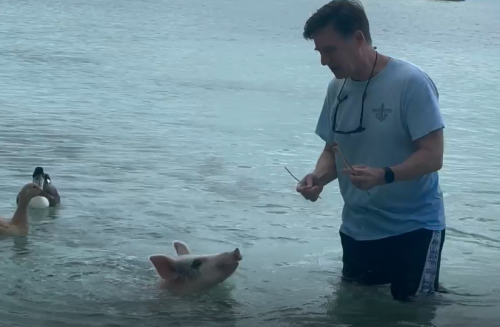
it was a lifelong dream come true — swimming with the pigs. On Pig Island. Off the coast of Eleuthera in the Bahamas.
Well, I didn’t actually swim with the pigs. I stood in shallow water enticing the pigs with skewers of hot dogs while the pigs came swimming — furiously, I might add — around me in tight circles, grunting, oinking, hard piggy hooves thrashing.
Let me tell you, never stand between a pig and a piece of meat. (I was assured that the hot dogs contained chicken meat, by the way, so there was no cannibalism involved.)
Reportedly, the weather has been awful back home and the news even worse. I’m in no hurry to return. — JAB
-
A Conscious Veto of the Unconsious Bias Bill
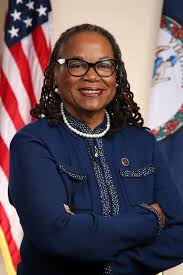
Senator Mamie Locke By Derrick Max,
Senator Mamie Locke (D-Hampton) and the Progressives in the General Assembly have again sent a bill to Governor Youngkin’s desk requiring doctors in Virginia to complete training in “unconscious bias and cultural competency.” Last year, when Governor Youngkin vetoed a similar bill, Sen. Locke took to X (formerly Twitter) to smear the Governor: “It is a shame unconscious bias drove this veto.”
This shameful response not only exposed Sen. Locke’s own unconscious bias to assume anyone who opposed her bill is themselves biased (or worse, racist), but it also fails to understand that this bill may actually “do more harm” than good. This bill was worthy of the veto it received last year and is worthy to be vetoed again.
As background, unconscious biases (often called implicit bias or in earlier times, stereotypes) are the automatic and often unintentional associations we hold about groups of people. Unconscious biases can be positive or negative, but it is argued that biases worsen medical outcomes, particularly for black patients. The evidence for this, however, is weak.
The academic article cited in support of this belief, most notably by Supreme Court Justice Ketanji Brown Jackson in her confirmation hearing, is the 2020 National Academy of Science article claiming that black newborns experience lower mortality when attended by black physicians after birth. Thus, it was assumed, there must have been some hidden bias in the white doctors that led to the negative outcomes for their black infant patients.
(more…)
-
Tapping the Strategic Investment Fund to Assess Research Spending
This is the third part of a new three-part series exploring the influence of UVA President Ryan’s Strategic Investment Fund. Parts 1 and 2 can be found here and here.
by James A. Bacon
UVA has established the goal of boosting its status as a research university. Sponsored research now accounts for roughly $714 million a year in a $5.4 billion total budget (including both academics and the healthcare division). The strategic case for chasing more research dollars has not been presented to the Board of Visitors, nor have the implications of expanding sponsored research for tuition & fees been explored.
The Ryan administration has identified five “grand challenge” focus areas for research: democracy, environmental resilience, precision medicine/health, brain & neuroscience, and digital technology and society. A common theme running across all focus areas is Artificial Intelligence: not research on AI per se but exploring the implications of AI for good and ill.
The competition is keen for professors whose research can win sponsored grants from the foundations, private industry, or the federal government. One way to recruit star faculty is to raise their pay by means of endowed professorships. Another is to assign them graduate students to assist in teaching and research. Another is to allocate lab space, office space, and computer resources. Meanwhile, UVA in recent years has been bolstering its spending on administrative support, mostly for grant writing, on the theory that it’s better for researchers to focus on their research rather than file paperwork.
(more…)
-
Monopoly Beer and Electric Vehicles
By Brett A. Vassey,

Spoiler alert! This is not an article about a new board game, but about a game in which the Virginia General Assembly writes the rules and picks the winners.
House Bill 2087 was introduced by Delegate Irene Shin, D-Fairfax. It cleared the Senate Commerce and Labor Committee on a narrow 7-6 vote Monday and is pending in the full Senate. At first glance, it looks like the usual game—an electric vehicle (EV) infrastructure subsidy. However, the bill creates an entirely new game of monopoly for Virginia’s consumers. The bill gives existing investor-owned electric utility monopolies the entire transportation fuel sector to monopolize as well.
How is that possible?
The bill expressly allows only two existing electric monopolies to produce the electricity, distribute the electricity, and retail the electricity for transportation fuel (a.k.a., fast chargers) to consumers. The bill’s core is the “transportation electrification” of all “passenger vehicles, trucks, buses, trains, boats, or other equipment that transport materials, goods, or people.”
Why should you care if you do not drive an electric vehicle?
By 2035, you may only be able to purchase zero-emission vehicles (ZEV) in the Commonwealth. In 2021, the Virginia General Assembly passed a ZEVs law governing the sale of motor vehicles with a gross vehicle weight of 14,000 pounds or less beginning with the 2025 model year. Specifically, politicians created a mazelike set of rules that directed the Virginia Air Pollution Control Board to create regulations that would force Virginians to be subject to the California Air Resources Board (CARB) regulations for new vehicle sales under § 177 of the federal Clean Air Act (42 U.S.C. § 7507). CARB has now mandated that all new passenger cars, trucks, and SUVs sold must be ZEVs by 2035, and this applies to Virginia. Although Governor Youngkin and AG Miyares have temporarily removed Virginia from this mandate, it is still the law, and advocates are simply waiting until this fall’s gubernatorial election to reinstate California’s ZEV mandates on Virginians.
(more…)
-
Tapping UVA’s Strategic Investment Fund to Drive Restructuring
This is the second part of a new three-part series exploring the influence of UVA President Ryan’s Strategic Investment Fund. Part 1 can be found here.
by James A. Bacon
UVA is one of the most expensive public universities in the U.S. to attend. It provides significant financial aid to lower-income students, but the rising cost of tuition is pricing out the middle class, especially students from out of state. Chief Operating Officer J.J. Davis has hired consultants to achieve efficiencies through procurement reforms, IT implementation and other administrative tweaks, but cost savings are measured in the millions of dollars while spending leaps yearly by the tens of millions. No one has challenged the underlying cost drivers.
The Jefferson Council believes that there is massive waste and redundancy in UVA’s vast and growing bureaucracy, that teaching productivity of tenure-track professors is abominable, and that UVA is supporting too many academic departments where enrollment is eroding. Not only has the administration refused to address these issues, it has withheld information from board members who seek to conduct their own analysis on the grounds that staff doesn’t have time to perform busy work. The administration has a deep vested interest in continuing to fend off such discussions, and by its intransigence has forfeited the right to lead a reform effort.
Counter-intuitively, it appears necessary for the Board to add another administrative cost in order to tackle the issue of administrative costs: The Board should tap the Strategic Investment Fund to employ an independent staff, answerable to the Board, to respond to information requests and conduct analysis on how to cut costs. It could also hire outside consultants for specific projects as needed.
(more…)
-
Interesting Poll on School Choice, But Timing Off

Artillery is of limited use after the battle is over. Governor Glenn Youngkin’s proposed state subsidy program for low-income students opting for a private school is dead, but a poll has just been released showing public support for the idea.
The Virginia General Assembly’s 2025 session may be just days away from ending, but the end of the session is the opening bell for the 2025 election season. Supporters of the $5,000 Virginia Opportunity Scholarships the Republican proposed are hoping to keep the issue alive in the elections.
Is this big news now? No. But those interested in the topic may wish to review the poll, which found broad support for the program, 57% to 28%. It also found a general feeling that while Virginia overall was moving in the right direction, its education system was not (35% right, 42% wrong).
The pollster, Cygnal, reached 600 registered voters by different communications methods and then weighted the results to reflect the state’s political balance. The weighted sample reflects the majority vote for Democrat Kamala Harris and includes more self-identified Democrats than Republicans. The interviews took place January 31 and February 1, the same weekend legislators were adopting budgets that deleted the tuition scholarship program.
The client for the poll was a national organization promoting school choice, 50CAN, and it was shared in Virginia by the Virginia Institute for Public Policy with this news release. Last year, 50CAN did another poll to reach 20,000 registered voters in all states, not just Virginia. The long national results summary is also worth reading as the questions went deep into what is going on in schools, and also has a section focused on Virginia’s results (see page 204).
— SDH
-
He Who Controls UVA’s Strategic Investment Fund Controls Its Strategic Direction
This is the first part of a new three-part series exploring the influence of UVA President Ryan’s Strategic Investment Fund.
by James A. Bacon
Back in December, University of Virginia President Jim Ryan unveiled a major philanthropic gift at the Board of Visitors meeting: Board member John L. Nau III had committed to donating $20 million to fund fellowships for College of Arts & Sciences graduate students. The sum, Ryan added, would be matched by $10 million from the University’s Strategic Investment Fund (SIF). The combined $30 million impact, he said, would support 30 to 35 grad students per year. Fellow board members gave Nau a round of applause.
The SIF, which is throwing off roughly $65 million a year that the University can spend any way it wants, is UVA’s secret fundraising weapon. It has helped UVA surpass its $5 billion “Honor the Future” campaign 18 months ahead of schedule. With matching dollars from SIF, Ryan reeled in mega-donations such as a $50 million gift creating the Karsh Institute of Democracy and a $100 million donation launching the Manning Biotech Institute. Few public universities have anything to compare.
Ironically, during the same meeting in which they lauded Nau for his generosity, some UVA board members made it clear they wanted to exercise tighter control over the SIF. They didn’t take issue with any of Ryan’s decisions on how to spend the income. Indeed, board member Doug Wetmore described the program as “very successful,” and he said the overwhelming majority of the administration’s proposals likely would meet board approval. But the board would be failing to exercise its financial duty, he said, if it neglected to review spending of such magnitude.
What went unsaid during the board meeting is that he who controls the SIF controls the strategic direction of the University of Virginia.
(more…)
-
Biting the Steady Hand That Lights Your House
By Steve Haner

Three western Virginia politicians have penned a press release masquerading as a serious proposal. They seek to decertify a major monopoly electric utility which serves 540,000 Virginia accounts, the Appalachian Power Company, a division of American Electric Power.
The letter was sent to the State Corporation Commission and then released, with probably the best coverage provided by the online Cardinal News. It reported:
Citing “ever increasing bills,” Sens. Bill Stanley, R-Franklin County; Todd Pillion, R-Washington County; and Travis Hackworth, R-Tazewell County, said that “our region deserves better than an out-of-state company who doesn’t work with [its] struggling customers and continually works to extract maximum profit for an essential utility service.”
The letter asks a series of questions about how the territory and customers could legally be taken away from the Appalachian Power Company, also known as APCO. But then what? Will APCO’s service territory be given to Dominion Energy instead? Be converted into a very large member-owned cooperative? How much might Appalachian customers be paying to the AEP shareholders (which include many APCO customers) in compensation for taking their assets and dividends? The “be careful what you ask for” warning has never been more relevant.
(more…)
-
Jeanine’s Memes
-
Bacon Meme of the Week