House Minority Whip Eric Cantor is a curious blend of contradictions. Aiming at the anti-government populism stirring about, he wants to be seen as an anti-tax and anti-spending guy. He’s also a Main Street Republican who is very comfortable with the captains of Virginia business at country club luncheons. Plus, he is an excellent fund-raiser.
-
Cantor’s Curious Contradictions
Once again, these contradictions have come sharply into focus.Last summer, Cantor, who has complained mightily about President Barack Obama’s stimulus program, was leading the charge for a chunk of the $8 billion Obama had laid out for higher speed rail. Richmond’s captains of industry want to take the train rather than get stuck in hours of Interstate 95 traffic when they have meetings in Washington, you see. Virginia ended up getting a paltry $75 million.The latest episode of Cantor’s anti-spending schizophrenia involves some $485 million addition that he has so far succeeded in keeping in a $567 billion defense appropriation bill. In a series of delicious ironies, Cantor, believe it or not, wants to use the money to build a military jet engine that even the Pentagon says it doesn’t want.The engine would be used to power the new F-35 Joint Strike Fighter which will be used by the Navy, Air Force and Marines to replace aging, 1970s-era F-15s. F-18s and F-16s. The F-35, worth hundreds of billions in spending over the next several decades, is a remarkably complex machine. Some version have a vertical takeoff capability and have moveable thrusters allowing it to handle spectacular maneuvers.Lockheed-Martin has the contract to build the jet and has chosen Pratt & Whitney of United Technologies to handle the power plant. The Pentagon is fine with that.Except for one thing. P&W doesn’t have big facilities in Virginia. Rolls Royce North America does. It has a new headquarters office in Reston and a big $500 million jet engine parts factory complex under construction near Petersburg.Rolls Royce has teamed with General Electric, a major jet engine manufacturer, to come up with an “alternative” engine for the F-35. Rolls officials argue that having two competing engines will eventually contain costs and make for a better project. The Pentagon wants to save money.This is where Cantor has become a Main Street Republican again. Although the Prince George County Rolls Royce plant is not in his district (he’s from nearby (Henrico County), Greater Richmond’s captains of industry see the Rolls Royce plant as highly important, if not a salvation for them.The region has been decimated by the recession far worse than any metro area in the state. As they watch chip-maker Qimonda, retailer Circuit City and real estate financier LandAmerica go belly up and big time financial powerhouses like Wachovia Securities skeedaddle for St. Louis and then get gobbled up by San Fransisco’s Wells Fargo, Richmond’s business elite needs to find alternate jobs for many people.The Rolls Royce plant will provide 500 high-paying jobs, but plans are bigger still. The idea is to make Richmond a hub of advanced manufacturing by adding aerospace to its mix of chemical and cigarette plants. Former Gov. Tim Kaine was so keen on the idea that Rolls got an incredible package of goodies totaling more than $50 million. The University of Virginia, Virgina Tech and community colleges would all work together through a new center attached to the Rolls Royce plant to train engineers, scientists and highly-skilled blue collar workers.Sounds good? Sure. But the idea hit rough air. The original plans called for the Rolls plant to make, in part, engine parts for corporate jets, notably a mid-range version made by Dassault.But, as you recall, during the 2008 financial panic, several high-profile CEOs had the bad form to FLY to Washington in their corporate jets to beg billions in bailouts from Congress. The resulting outrage crashed the market for corporate jets.So, Rolls Royce had to go back to the drawing board. A lot is in balance. Now they have started construction on one factory to make blades for engines for the new Boeing 787 Dreamliner and a couple of late-model Airbuses. A second factory is due to go up next year to make bladed discs for the F-35 that General Electric and Rolls hope to make in Indiana and Ohio.Cantor’s office says that the Rolls project is worthwhile, helps Virginia jobs and maybe he can cut other projects on the House floor (sort of like a carbon dioxide offset for global warming legislation, I guess). And, there is an argument for having several engine models for combat jets. The F-16 and F-15 both had P&W and GE engines. Even the famed P-51 Mustang of World War II started out with Allison engines but didn’t become legendary until it was outfitted with Merlin engines made by Rolls, no less.In some ways, it is hard to criticize for Cantor to try to protect a key industry for Virginia. What is hard to take, however, is his posturing for the Tea Baggers and others. Another factoid is that you’ll never read about a story like this in the anti-spending, anti-government Richmond Times-Dispatch where Cantor’s wife serves on the board of the newspaper’s parent firm.Let’s be honest about things.Peter GaluszkaPS: Norm Leahy, former BR blogger, posted on this early and deserves recognition.
-
Virginia’s 11th – Precursor to November?
The Republican primary for Virginia’s 11th Congressional District is being held today. I believe that the results of today’s primary will say a lot about the elections in November. There are two candidates in today’s Republican primary – Pat Herrity and Keith Fimian. The winner will go to the general election against freshman Congressman Gerry Connolly.Fimian is clearly the choice of the far right wing. He is a successful businessman with limited political experience. He ran against Connolly in November, 2008 (after Republican Tom Davis decided not to seek re-election) and lost badly. He is back hoping for a second chance against Mr. Connolly.
Mr. Herrity is a Fairfax County Supervisor. Politics run deep in the Herrity clan. Pat’s father, Jack Herrity, was a long serving chairman of the Fairfax County Board of Supervisors. One of the buildings at the Fairfax County Government Center is the Herrity Building, named after Jack Herrity.
While political experience is a theme in this election it is not the central theme. The crux of this primary is a battle between the Republican activists (often referred to as the Tea Party) and the Republican establishment. Fimian is just the activists’ cup of tea, so to speak. He attends the Tea Party rallies, he rails against the possibility of a Day Labor Center in Centreville, he promises no tax hikes. Herrity is very conservative but more subdued. Herrity is even accused of committing the unpardonable sin of voting to raise taxes. In fact, the tax hike which Herrity voted for was a raise in tax rates which was lower than the fall in property assessments. However, neither math nor truth are favorite topics of the Tea Party enthusiasts.
Former Congressman Tom Davis believes that unseating Gerry Connolly is the 45th most likely chance for the Republicans to pick up a seat this November. If he’s right the Republicans would be back in charge of the House if they get far enough down his list to beat Connolly.
But they won’t beat Connolly this November.
Fimian will win today’s primary and lose against Connolly in November. Virginia’s 11th District is not a hotbed of Tea Party activism. While pledging allegiance to the Tea Party can win a primary in the 11th it won’t win a general election. Which is really too bad since Connolly needs to go.
Virginia’s Republicans are, as usual, poised to snatch defeat from the jaws of victory. I expect that America’s Republicans will do the same this November.
-
LET’S HEAR IT FOR TODD LITMAN
Here is a must read for those who have ANY lingering doubts about the negative impact of Large, Private Vehicles on humans obtaining a sustainable trajectory for civilization.
โSustainable Transport and Liveable Community Planningโ
http://www.planetizen.com/node/44451
Todd Litman lays out in two short pages — with a nice graphic and lots of links for followup reading โ many of the externalities that flow from reliance on Large, Private Vehicles for Mobility and Access. It is tragic that most citizens of the US have no choice.
It is even more frightening that there is Agency, Enterprise, and Institutional stonewalling of any discussion of rational alternatives โ such as Fundamental Transformation of human settlement patterns. That is one reason why an understanding of naive reality (See โRoadblockโ) is so important. Also see THE NEXT BIG THING, forthcoming.
Those who read EMRโs work โ e.g. THE PROBLEM WITH CARS, โInterstate Crime,โ etc., know that EMR frequently cites Todd Litman. Litman is the founder and executive director of the Victoria Transport Policy Institute. EMR met Litman at TRB (The National Academy of Scienceโs Transportation Research Board) years ago and follows his work with interest.
Yes, there are ramifications of Autonomobile impact that Litman still underestimates. However, Litmanโs work โ and Joe Passonneauโs exposition of the impact of the Interstate Defense Highway System construction cost limiting strategies, the unintended wealth transfers and their externality impacts โ are lights at the end of a long dark tunnel constructed by the Autonomobile Industrial Complex.
Along with careful analysis of the Texas Transportation Institute data (as opposed to the spin put on it to please the Enterprises and Institutions that sponsor TTI) and a few others sources, Litman is a critical source of realistic perspectives on Mobility and Access.
It is good to see VTPI moving into the mainstream. Litmanโs work is one of the reasons the Business-As-Usual types (stirred up by the Autonomobile Industrial Complex) are apoplectic over the US DOT / US HUD / US EPA focus on โliveability.โ
Read and enjoy!
EMR
-
Let’s Take This to a Higher Level

One of the frustrating thing about Bacon’s Rebellion is how quickly important discussions decompose to the usual dogmatic lines of the AEI or Cato Institute or what Glenn Beck or some other conservative radio jokey just said.A case in point is global warming.This red flag issue immediately draws skeptics who claim it is not a problem or that it is a fraud proven by some nefarious and obscure emails among scientists involving East Anglia University. I have yet to see the emails and the supposed evidence of fraud (Groveton, I am still waiting).Or if you talk about how not all of Corporate America believes that carbon capping is a superfluous expense demanded by Greeniacs and note that some top CEOs see the need for restricting carbon dioxide, dear ‘ole Jim Bacon trots out his latest, favorite wonk word and paints them as “rent seeking.”This is a short post and I’ll get to it. I want to share with you two things.First, in The New York Review of Books, is a speech by Paul Volcker, the guy who pounded the silver nail into the heart of inflation back in the 1980s when he was Fed chief. He writes:“Restoring our fiscal position, dealing with Social Security and health care obligations in a responsible way, sorting out a reasonable approach toward limiting carbon emissions, and producing domestic energy without unacceptable environmental risks all take time. We’d better get started. That will require a greater sense of common purpose and political consensus than has been evident in Washington or the country at large”Or take this Bloomberg Businessweek profile of James E. Rogers, CEO of utility Duke Energy:“We’re the third-largest emitter of CO2 among corporations in American because we generate 70 percent of our electricity at 20-coal-fired plants.”My point is that BR needs to raise the level of debate to what these guys are saying. We can’t be Sarah Palin-ing each other with East Anglia, which hasn’t changed global scientific consensus about the dangers of global warming one iota. And we need to get beyond the political antics of Ken “the Cooch” Cuccinelli is obviously plays in a lesser league than the likes of the two men I have quoted.The politics of division are the result of the new “Party of No” — the GOP which seems intent on smashing everything to wing a comeback in Congress this fall. The other divisions are the hard right and the Tea Baggers who somehow can’t get over the idea that an African-American is president. And when they complain about the “gov’mint” taking over private industry, they neatly forget that the companies ASKED to be taken over and that it was a REPUBLICAN, George. W. Bush, who did it. They also don’t understand that in most advanced countries, temporary government bailouts or takeovers do occur, are necessary and are temporary.Too bad, my message will fall on deaf ears. Let the rent-seeking begin!Peter Galuszka
-
ROADBLOCKS
THE LONG, TORTUROUS โ PERHAPS IMPOSSIBLE โ PATH TO FUNCTIONAL AND SUSTAINABLE HUMAN SETTLEMENT PATTERNS
This perspective was originally titled: LOCATION-VARIABLE COSTS โ HOUSING LOCATION RELATED TO JOBS. The intent was to amplify the comments by TMT and others following Peter Gโs post โPublic-Private May Get Overhaulโ on public / private transportation โprojects.โ
EMR will get back to location-variable costs and to Job / Housing location synergies in a moment but first:
SOME IMPORTANT BACKGROUND READING
The current issue of Miller-McCune has a compelling essay on the difficulty of overcoming โnaive realismโ โ deeply held but superficial beliefs that have negative impacts on individuals and on society.
Humans find it comfortable, and often compelling, to hold onto simple (and often simplistic) views of complex conditions. This is a variation on what Jared Diamond calls โtraditional valuesโ that lead humans down the path to Collapse. Recognizing naive realism is central to understanding the critical importance of human settlement patterns and to developing consensus on the path to functional and sustainable distribution of human activity.
The topic of the Miller-McCune essay by Christie Aschwanden is the difficulty of shifting from simplistic โbeliefsโ about medical procedures and self-medications to what are called โevidence based medical guidelinesโ based on the best current research.
The cases examined by Aschwanden are:
Long distance runners popping nonsteroidal anti-inflammatorys (NSAIDs) during endurance challenging runs,
The recent U.S. Preventive Services Task Force recommendations on mammography, and
Treatment of back pain.
EMR is not a medical doctor however his Household has had direct, personal experience with NSAIDs and their risks, with mammography success and failure (and similar testing for other cancers) as well as 47 years of experience with back pain and the x-rays, MRIs, exercises and medications to address back pain.
Bottom Line: READ โEvidence Is Only Part of the Storyโ (print version) โConvincing the Public to Accept New Medical Guidelines (on line version) at http://www.miller-mccune.com/health/convincing-the-public-to-accept-new-medical-guidelines-11422/
The article is โright onโ with respect to medical practice but there is a MUCH bigger issue as the print versionโs title suggests.
The difficulty of overcoming โnaive realismโ is key to developing a Critical Mass for support for Fundamental Transformation of human settlement patterns.
How does medical practice relate to human settlement patterns?
In two ways:
First, the human body is a complex organism. Human settlement patterns are far more complex organic systems that are the result of billions of human actions and inactions. (See discussion of why human settlement patterns are organic systems and what that means for anyone trying to understand human settlement patterns โ e.g. aggregation and disaggregation of component parts of organic systems โ in The Shape of the Future.)
Second, even if there were not organism / organic system parallels, the importance of naive perceptions โ and the genetic proclivities which underlie them โ apply in both cases.
Myths rule human actions with respect to settlement pattern preferences and decisions.
โThe Truthโ is not enough to change behavior and the medical examples in Aschwandenโs essay are powerful examples of that reality.
In one of the medical examples:
โGrowth of a cancer is BAD and early detection is the primary issue to be concerned aboutโ is a widely held belief that stands in the way of the most effective ways to protect the most humans from cancer.
In a settlement pattern example:
โGrowth is GOOD and the only issue is how to foster growth and development.โ (This Myth is related not just to LOCATION or cumulative impact of growth but to โgrowthโ itself which will be the topic of a future perspective โDeGrowth โ Shrinking to Survive and THEN to Prosper.โ)
The context and nature of โgrowthโis just one of thousands of naive beliefs that confound and block the path to evolving functional and sustainable human settlement patterns.
CREATING CITIZEN CONSENSUS
The comments on the 27 May 2010 post โPublic-Private May Get Overhaulโ by Peter G. diverged from public / private partnerships into tax districts and specifically the VA Route 28 Tax District. There are a number of good comments and information in the string about the VA Route 28 Tax District.
After coming to grips with the tax district topic, TMT changed horses. He said that he questioned the overarching goal of Job / Housing proximity. EMR will get back to this issue in a moment but first let us examine why naive reality is so important in this context.
After an anonymous commentor who referrers to herself as โObserverโ laid out the need for citizen consensus this way:
“A Critical Mass of citizens must understand the need for Fundamental Transformations and support a comprehensive program (to achieve those Transformations).”
TMT said:
โThis is tilting at windmills. Complex solutions that people don’t understand and understand to be fair will not be adopted.โ
How right TMT is!
That is why EMR spent a decade researching, writing and editing The Shape of the Future.
As those who have read the book know, EMR starts out with Nine Fundamental Theses and articulates Five Natural Laws derived from the settlement patterns that have actually been built over the last 60 years in the US.
The first Volume of the book articulates the absolute requirement for a robust Vocabulary and a comprehensive Conceptual Framework with which to discuss and understand human settlement patterns. EMR also articulated Regional Metrics to facilitate Quantification of the organic components of human settlement pattern.
Before he would agree to pen the Foreword to The Shape of the Future, then Secretary of the Smithsonian, I Michael Heyman insisted that the ideas for moving citizens toward a sustainable path that took up over 500 pages of the Volume II in the Roman and Gargoyle Drafts of the book be organized into simple, easy to understand strategies. The result was the Six Overarching Strategies that make up PART FOUR of The Shape of the Future.
After The Shape of the Future as completed in 2000, EMR and LTR crafted HANDBOOK. A revised edition is now PART ELEVEN of TRILO-G. HANDBOOK articulates a Three Step Process to create strategies that guide the evolution of specific Communities, SubRegions and New Urban Regions toward a sustainable economic, social and physical trajectory.
In 2003 EMR created a SubRegional citizen education and certification program titled โShaping the Future.โ A description of this program can be found in TRILO-G โ PART FOUR โ THE USE AND MANAGEMENT OF LAND. A overview of settlement pattern evolution in the Piedmont of Virginia includes dissection of the phrase โjust twice as many dotsโ which is a perfect example of naive reality. โShaping the Futureโ documented that before a HANDBOOK process can be started there must be a Critical Mass of citizens who understand the need for such an effort. The result of effort to articulate a citizens education process in 2003 to 2005 was PROPERTY DYNAMICS which is profiled in PART TWELVE of TRILO-G.
As part of the โShaping the Futureโ program three PowerPoint programs were created. โFive Critical Realitiesโ and โThe Physics of Gridlockโ are included in their original form on The Shape of the Future, 4th PrintingCD. The third. โThe New Urban Region Conceptual Frameworkโ was revised and expanded and is included on the TRILO-G CD.
Building on the foundation laid down in The Shape of the Future, these PowerPoints are an attempt to make the understanding human settlement pattern dysfunction as simple as possible.
As suggested by LINER NOTES, TRILO-G provides a road map to a โunified field theory of humans settlement patterns.โ
Every one of these efforts has been an attempt to lay out โthe truthโ based on what has actually happened on the ground.
Now there is the obstacle of โnaive realityโ and proof that even with respect to ones individual health, Myths prevail in spite of the best medical research.
This brings us back to the basic question:
Will the genetic proclivities that got humans to this point in the process of civilization fail to get humans farther? Will the belief in โnaive truthโ prevent humans from obtaining a sustainable trajectory?
NOW BACK TO THE IMPORTANCE OF PROXIMITY IN JOBS / HOUSING BALANCE
In the comments following the โPublic-Private May Get Overhaulโ post, TMT said:
โObserver, I fall off EMR’s wagon on the issue of living and working in the same close area.
โIt might have worked years ago, but with both spouses/domestic partners generally working and with the general lack of job security, the odds that a family can live and work in close proximity to each other for more than a short period of time are slim to none, IMO. I’ve never heard a good answer to this question.โ
Observer answered that challenge this way (with minor edits for clarification agreed to by Observer:
โTMT the answer is simple:
โFairly allocate the location-variable costs and then you and your Household can live where so ever they want.
โHere is why:
โIf you are fortunate enough to exist near the top of the Ziggurat, you can live in a place like Groveton does with not a whit of guilt because you are paying the full cost of your decisions.
โIf you are fortunate enough to exist near the top of the Ziggurat and:
1) Your Agency, Enterprise or Institution relies on the efforts of some who exist anywhere below the top of the Ziggurat, or if
2) You care how much goods and Services cost or how much energy and other resources are consumed in your Region;
โYou will be wise to support Jobs with Housing in close, convenient proximity for ALL who hold those Jobs as the FIRST step toward a Balance of Jobs / Housing / Services / Recreation / Amenity.
โThat is true if you are an officer in a software company, a lawyer, the regional VP for Wal*Mart or are just โclipping coupons.โ
โYou will not have a whit of guilt in this case either because:
โFor 60 years the market has shown โ and research documents beyond a shadow of a doubt โ that those who occupy 75 percent of the Households greatly prefer these locations.
โThe other 25 percent of Households (those with small children in the Household) have historically had a lower percentage who favor these settlement patterns. That is because they have not yet realized that, as Prof. Risse has noted:
โWhen the oldest child gets big enough to kick a soccer ball into the flower bed it is time to move to a Cluster with at least 30 persons per acre in a Neighborhood with at least 20 persons per acre. At these densities (10 persons per acre at the Community scale) children can walk to a play field as well as to soccer practice, piano lessons, get a quart of milk and they can walk to elementary, middle and high school. That is all possible in any Planned New Community and many Planned New Villages build between 1962 and 1990 in the US.โ
โThis level of Mobility and Access is also possible in existing settlement patterns that have been revived and renewed.
โThere are those who are speculating with their primary residence and those who hope to pocket an unearned windfall from land speculation and / or from building dwellings that are sold for prices that do not reflect their total cost that will try to obfuscate these fact but they ARE facts.
โThey are facts about:
โMarket preference and
โThe most convenient places to raise children.
[It does not take a rocket scientist to see the arguments against these facts as a pure case of naive reality. As comments on this Blog document, those who do not want to believe the facts about a more complex reality will twist, squirm, question โ and some will insult and demean โ to avoid even acknowledging the complex reality beyond the simple bromides and Myths.]
โAs to the two partners working is different places there are several responses:
โFirst, that is what shared-vehicle systems are designed to address. An efficient system of shared vehicles take care of the few high value trips citizens need to take outside the station-area.
โSecond if costs are fairly allocated it may not seem so attractive to jump to a better paying job if the TOTAL cost turns out to make that less than an intelligent move.
โThe Householdโs decision to stay put helps Dooryard, Cluster, Neighborhood and Village stability.
โIt also make it more likely that citizens will treat one another with more respect. That is because the option of telling a Clustermate to shove it when they comment on where your dog relives himself is far less rational.
โFinally, for those who just have to jump from Job to Job or partner to partner, Richard Florida makes a good argument for renting in his new book โThe Great Reset.โ
โHope that helps:
โObserverโ
That is all correct but EMR would add a few additional notes because this is such a critical issue.
Citizens and their Organizations must:
STOP subsidizing TOO Big Houses in dysfunctional locations, and
STOP subsidizing transportation alternatives that, regardless of how much they are subsidized will not allow:
Everyone to go wherever they want, whenever they want to go there and arrive in a timely manner.
The obverse of the last statement is another naive reality: The Large, Private Vehicle Mobility Myth.
Citizens, Households, Agencies, Enterprises and Institutions cannon afford to continue to pay those subsidies.
The good news is that even HUD is now cranking up location efficient programs.
But how to overcome โnaive realismโ and the power of Myths?
A place to start is an understanding of the Five Natural Laws of Human Settlement.
BACK TO THE START
Later Observer said in answer to a question with respect to the gasoline tax addressed to EMR:
โEMR is apparently out of range and so I have no way to find out for sure but I suspect he would agree with Mr. Bacon:
โRaising the gas tax is the easiest first step.
โWith tolls it is hard to sort fish from fowl. Because of the design of the Interstates it is hard to sort โcommutersโ from InterRegional traffic.
โThe bigger issue, which EMR has made clear often is that one simple tax or fee on this or that is only a band aid.
[And here comes the sentence that kicked off the naive realism discussion.]
โA Critical Mass of citizens must understand the need for Fundamental Transformations and support a comprehensive program [to achieve those Fundamental Transformations.]
โAnything less will doom contemporary, technology-based civilization.
โSort of like a leaking well in the Gulf of Mexico. The longer nothing is done, the worse it will get until there comes a point of no return.
โObserverโ
That is a good answer and is included here to put in context the sentence that TMT disliked and to demonstrate why naive reality, aka Myths are so damaging in the voting booth and in the marketplace.
Oh yes, TMTโs question:
โWhat four understandable and fair steps, besides raising the gas tax, would make incremental progress to EMR’s goal?โ
Well, the Six Overarching Strategies are a place to start โ once one has a grasp of the reality of human settlement patterns.
EMR
-
Virginia’s New Slavery

Slavery in Virginia may be taking a new form — that of human trafficking.Some 18,000 people, mostly foreign born women, are victim of the practice in the U.S. each year, according to the U.S. State Department. And while local data is hard to find, there is evidence that Virginia is becoming a haven for the trade of tricking or forcing people to come to the U.S. and having them work in servitude or prostitution.The situation is exacerbated because Maryland and the District of Columbia have cracked down, forcing the trade south of the Potomac, according to U.S. Rep. Frank R. Wolf, a Northern Virginia Republican who is calling for a task force to deal with it. He met with State Police, members of the state attorney general’s office, the FBI and Immigration and Customs Enforcement to focus on the problem in late April.Wolf points out that trafficking can involve native-born Americans such as teen aged girls who runaway from home and end up in a prostitution ring. Most of the time it involves Latino women from Central American who respond to ads offering immigration papers and money in exchange for work at “erotic” clubs. Sometimes they involve Asians, such as a group from South Korea that flew to the U.S. with phony papers and worked up and down the East Coast in massage parlors.Working with Kimberly Mehlman, a doctoral student in criminology at George Mason University, I tracked down some of the ads. Kim had come up with ads on the Web looking for women from Guatemala, Honduras and other Central Americans to work at “men’s” clubs in South Richmond. The ads promised money, legal immigration help and “NO JOKES!” We traced the address listed in the ad to a tiny, white-washed, cinderblock house in a lower income residential neighborhood. Kim asked a Spanish-speaking woman to call the number listed, but they were disconnected. When Kim called the Richmond police, they took little interest.Neither does Chesterfield County or the State Police, which told me that they don’t track trafficking.That’s odd because Maryland and D.C. do. The legislature in Annapolis just passed laws toughening penalties and requiring hotels where prostitution occurs to post hotline numbers. D.C. has a task force as does the Montgomery County Police Department.Wolf wants to raise awareness of the problem with a task force that he helped create a few years ago to weed out organized youth gangs in Northern Virginia.Atty. Gen. Ken Cuccinelli’s office say they are on board with Wolf. But somehow, the “Cooch” seems behind the curve on this one.Too bad, it seems like such a natural for him — law enforcement, immigration, morality, sex. I guess he’s too busy chasing down Dr. Mann’s research, covering up the state seal’s exposed nipple or keeping public universities safe from homosexuals.Peter Galuszka
-
Obama and Haiti on Memorial Day
As another Memorial Day comes to a close I find it noteworthy that most US troops will be leaving Haiti next Tuesday. A good synopsis of the situation can be found here.The American response to the catastrophe in Haiti seems like a rare bit of good news amidst a background of oil leaks, recession, partisan health care debates, etc.
The Obama Administration performed admirably with regard to the situation in Haiti. Our armed forces, as usual, worked to perfection. We, as Americans, should be proud.There are still worries in Haiti. The rainy season / hurricane season is approaching. Elections, which were deferred by the earthquake, still need to be held. Moreover, it will take many years of work before Haiti will be a fully functioning society again.
However, the Obama Administration proved that it could put the capabilities of the United States quickly to work on a massive humanitarian effort.So, let me offer a “Well Done!” to President Obama and an even bigger “Well Done!” to the men and women of the United States military who directly participated in the Haitian relief effort.
-
Academic Freedom My A**
There has been a lot of talk about academic freedom lately. Most of that talk has centered on a Civil Investigative Demand (CID) sent to the University of Virginia regarding various records of a former professor, Michael Mann. The CID is part of an investigative process enabled by the Virginia Fraud against Taxpayers Act. This act was passed unanimously by the General Assembly in 2002. The act authorizes the Virginia Attorney General to investigate fraud against taxpayers in the Commonwealth of Virginia. The statute applies to people and organizations receiving public monies. It does not exempt professors, researchers, universities or girl scout troops from its scope. A copy of the actual law can be found here.Mr. Cuccinelli submitted his CID to UVa based on five taxpayer funded grants totaling approximately $500,000. A copy of the CID can be found here.
The predictable and widely-reported response of the liberal and academic communities regarding this CID has been a mixture of screeching and high volume whining about “academic freedom”. The academics and their liberal friends outside of academia maintain that academic research represents some sort of sacred endeavor which should be immune to the normal scrutiny of the use of public funds applied to all other uses of public funds. They say this is to protect the independence of academic research which should never be twisted by politics.
Unfortunately, UVa’s actions prove that the cries of “academic freedom” are only another dose of pap from the fops and dandies who infest American universities.
Here is the timeline of the University of Virginia’s “heroic” defense of “academic freedom”:
1. Dec. 13, 2009 – Del. Bob Marshall (R-Manassas) requests e-mails and other documents involving Michael Mann (a global warming alarmist) under the Freedom of Information Act.
2. Dec. 17, 2009 – Assistant Vice President for Public Affairs Carolyn Wood tells Marshall, “The University does not have any e-mail data for Mr. Mann. When Mr. Mann moved to Penn State his e-mail account was terminated and all data was later deleted.”.
3. Dec. 17, 2009 – Greenpeace requests e-mails and other documents regarding the research of former UVa climatology researcher Patrick Michaels (a global warming semi-sceptic) under the Freedom of Information Act.
4. Date unknown – The University of Virginia tells Dr. Michaels that it intends to comply with the Greenpeace request. Greenpeace is reportedly waiting for word from UVa regarding the costs of duplicating Mr. Michaels‘ documents.
5. April 23, 2010 – Virginia Attorney General Ken Cuccinelli filed a Civil Investigative Demand with the University of Virginia seeking e-mails and other documents regarding the research of former climatology professor Michael Mann. The CID asked that UVa provide the documents by May 27, 2010.
6. May 19, 2010 – UVa requests a deadline extension until July 26 to comply with the CID.
7. May 27, 2010 – UVa moves to quash the CID in Albemerle County Circuit Court.
I believe that the University of Virginia’s bizarre behavior in this matter highlights the dishonesty and/or incompetence of those who claim to champion “academic freedom”. First, if e-mails from former professors are deleted why is UVa in possession of e-mails from former professor Patrick Michaels? If the e-mails from Michael Mann have been deleted why did UVa ask for an extension to the Attorney General’s CID? If the e-mails from Michael Mann are in UVa’s possession why weren’t they turned over to Del. Marshall? Finally, and most importantly, if “academic freedom” is paramount why would the University of Virginia turn over e-mails from Patrick Michaels to Greenpeace?
It seems that “academic freedom” only applies to academics who practice the liberal religion of insisting that global warming will destroy the world in the very near future. World class researchers like Patrick Michaels believe in global warming, they believe that human activity is the cause of some global warming. They just don’t believe that the demise of the planet is imminent. For that heresy they are abandoned by the champions of intellectual honesty waving their banner of “academic freedom”.
Unsurprisingly, the matter of the Greenpeace FOIA request has received little attention in the MSM. The facts I am quoting in this article come from a podcast with Mr. Michaels, Op-Ed pieces and blogs. In the interests of fairness, I am more than happy to revise this article with new information if credible new information is brought to may attention.
-
Cuccinelli the Liberal
Few people would confuse Ken Cuccinelli for a young Bill Clinton. Progressives (or whatever they are calling themselves these days) see Ken Cuccinelli as an ultra conservative who never strays from right wing dogma and panders to the conservative base for ongoing political support.
While nobody has ever accused “progressives” of consistency, even they must be wondering about their perspective on Cuccinelli after his office filed the legal brief in Digiacinto v. The Rector and Visitors of George Mason University. The brief was filed to the Virginia Supreme Court regarding a challenge to GMU’s regulation prohibiting the possession of firearms in university buildings and at university events. Mr. Cuccinelli filed a brief in favor of GMU’s regulation. However, it was the tone of Cuccinelli’s brief which should warm the cockles of any liberal’s heart.
“Without the regulation, the University community’s safety is seriously compromised. Unquestionably, the vast majority of gun owners are law-abiding citizens. Nevertheless, a rejected student applicant could walk into the Dean of Admissions office with an openly visible sidearm to discuss why the university rejected his application. An expelled student could do the same while he met with the Dean of Students to discuss his appeal of his expulsion. A disgruntled ex-boyfriend armed with a large hunting knife mounted on his side could enter the student residences to speak with his former girlfriend where she lived. Finally, any person who wishes to enter Fenwick Library with a sidearm, could not only frighten students and minors, such as preschoolers, but also expose them to unnecessary risks, such as an accidental discharge.”
Wow!
It seems to me that the District of Columbia v. Heller US Supreme Court ruling provided ample “wiggle room” for Mr. Cuccinelli to go either way with this brief. The overall ruling clearly asserted a personal right to bear arms as part of the second amendment. However, the majority opinion also clearly stated that there could be reasonable regulation of that right.
After the Virginia Tech massacre I believe that good public policy would argue in favor of allowing university administrations to limit firearms on campus.
-
Good Move, Obama
President Obama is doing the right thing by canceling a lease sale for offshore oil drilling about 50 miles from the Virginia coast.The plan was suspect from the beginning. Obama surprised environmentalists by playing to Republicans and agreeing to the lease sale, which Gov. Bob McDonnell badly wanted to help his campaign dream of having the Old Dominion become “The energy capital of the East Coast.”
There were any number of problems with the plan. There are still no known commercially viable oil fields off the mid-Atlantic coast. Geology hints that natural gas is a possibility, but probably not oil. Fishing and tourism interests from North Carolina to New Jersey were skittish. Lastly, the Navy, a huge economic player in Virginia, said that more than half of the areas where drilling could happen were too close to combat training zones.
Even if there is oil off the coast, it would not be available until perhaps 2020 and would likely meet U.S. oil demand for a matter of weeks, not years. What needs to be done, as Obama says, is to work harder at finding renewable energy sources with fossil fuel as a temporary and transitional stopgap.
In the Virginia offshore case, Obama is torpedoing it because he hasn’t been able to find a solution to the BP and Deepwater Horizon catastrophe in the Gulf of Mexico.
This all makes Obama look bad, but it makes McDonnell look even worse. McDonnell’s short tenure has seen setback after setback, from the Confederate History Month gaffe to hiring Fred Malek, who once put together a list of Jews in the Bureau of Labor Statistics at President Nixon’s behest, to head an important state panel on government streamlining.
Add to this Kenneth Cuccinelli, and you have a real mess.Speaking of him, it turns out that the University of Virginia will be fighting his civil investigative demands in the global warming research matter.
Not a bad day. And it’s time to take a hard look at the McDonnell Administration
Peter Galuszka
-
Public-Private May Get Overhaul

Since 1995, Virginia has been a leader in public-private funding schemes for transportation projects. The state has been able to fund several highway and bridge projects in the Richmond area and Northern Virginia by turning to private financing and operators and avoiding burdening taxpayers who don’t want to pay more taxes or be burdened with extra debt.To be sure, the public-private schemes have their critics who say that turning public obligations over to the private sector doesn’t always ensure efficient operation despite what the free market mavens would have you believe. And, the schemes often build roads where none are needed and the result is either more suburban sprawl or nothing at all but debt.So, it is interesting that the McDonnell Administration has come out with a consultant’s report that examines the states public-private process. The report was done for about $100,000 by KPMG Corporate Finance.The upshot is that Virginia needs to set up a separate agency to better coordinate its public private affairs. More important, it uses the process only for highways when it could try a more “multi-modal” approach that would involve rail, light rail and combinations thereof with highways.KMPG recommends that the state set up a program with fewer steps to decide a PPTA (public private) project, standardize documents used, develop targets and make sure there’s competition on price when soliciting bids. This could be done by setting up a stand-alone PPTA program office as governments in Ireland, Ontario, Texas and Georgia have done.Another goal should be to make PPTA less highway-specific, which is a goal of state Transportation Secretary Sean Connaughton. Right now the two biggest PPTA projects include the Pocahontas Parkway near Richmond and the Interstate 495 hot-lane projects near Washington. Connaughton’s newer projects would be to use PPTA a limited access superhighway linking Petersburg and Hampton Roads along U.S. 460 and replacing the Midtown Tunnel in Portsmouth.Environmentalists, such as Trip Pollard of the Southern Environmental Law Center, say that increasing the multi-modal focus” of PPTA is “a good recommendation.” Even so, Pollard is critical of the secrecy with which the state cloaks itself when talking PPTA with private firms, the amount taxpayers have to pay versus the relatively small exposure of private equity holders and the failure to consider alternatives or be completely straight with taxpayers about overall costs.A classic example is the Pocahontas Parkway that connects Interstates 95 and 295 and 64 southeast of Richmond. There are big questions why the road is necessary. It cuts about 20 minutes from the time it takes people in Petersburg or south of Richmond to get to the airport, but that’s about it. Apparently, planners hoped for a big explosion of eastward sprawl from Richmond similar to the ugly sprawl one sees around Short Pump in Henrico County and Hull Street Road in southwestern Chesterfield.Not only is promoting sprawl with a spanking new highway a bad idea, but officials have to scramble when ridership doesn’t go according to script. That’s what happened with Pocahontas. Far fewer people used the road than expected, revenue from tolls was down, the state almost lost its Triple A credit rating and a new PPTA scheme had to be worked out chop-chop.So, the KPMG study may have some good ideas, but they can’t correct bad planning or the goofy and lingering idea that Virginians can always get something for nothing with PPTA.Peter Galuszka
-
LOCATION-VARIABLE COSTS — LINE LOSS
In a comment following Peter Gโs 25 May 2010 post โA Coal Plant Proposal Gets Even Dirtier,โ Groveton said:
โSide note to EMR … I had a chance to talk with the head of engineering at a mid-western electricity company today. I asked him about line loss. He says a good rule of thumb is 7% of electricity is lost in transport – 3% in the transmission facilities and 4% in the distribution network.
โI am not sure how you arrive at the estimate of 30% line loss in calculating location variable costs. It sounds like the number should be 3% not 30%.โ
EMR could make a โPeter G.-likeโ comment about the quality of Grovetonโs research but will refrain.
The latest report of DOEโs Energy Information Administration (EIA) notes that of the 21 Quadrillion Btus devoted to the delivery of residential and commercial electrical energy, about 62 percent is โlost during generation, transmission and distribution.โ
A utility can lower line loss by shortening distribution systems and keeping the transmission voltages high. Utilities can also cut line loss by lowering the temperature of the conductor โ surrounding it with liquid nitrogen, etc โ but that is not cost effective for most applications.
A smart utility would carry electrical service to big users at as high a voltage as possible to minimize line loss and that would lower the average system-wide line loss.
All that makes NO difference with respect to the 10 X Rule.
The numbers for total cost of delivering electric service in the 10 X Rule calculations — including line loss — were based on the actual cost of delivering the electricity over the actual distance required to distribute the service to 10 acre lots in a 10,000 acre area using the cost due to actual loss at the voltage used for distribution by the utility that provided the data for the specific distribution pattern in that specific location.
There is no back door. The bottom line is:
It is not possible to scatter Urban dwellings across the Countryside and provide them with electrical service โ and other goods and Services โ at a price that the end user would be willing to pay IF THE USER HAD TO PAY THE TRUE LOCATION-VARIABLE COSTS.
A few notes:
We suspect Groveton got an irrelevant answer because he has yet to wrap his mind around all the implications of dysfunctional geographic distribution. He was thus not able to articulate what he needed to know from the engineer.
EMR has pointed out for 37 years that FAR HIGHER efficiency can be achieved from Cluster, Neighborhood, Village and Community scale systems (including Modular Integrated Utility Systems) that capture and use the heat and generate the electricity โatโ the consumption site.
About 57 years ago EMR was privy to a powerful demonstration of the overwhelming economic advantage of bringing big users of electricity to the site of hydro-electric generators.
EMR is not sure where the โ30 percentโ figure Groveton cites came from. System wide, EMR has assumed that line loss was between 8 and 15 percent but does not recall the basis for that assumption. But again, that has nothing to do with the 10X Rule.
It is interesting to note that in EIAโs Annual Energy Review, they are specific about the waste of energy in producing electricity but not other forms of fuel. It must take energy to pump, transport, refine, transport and distribute gasoline โ the โbestโ internal combustion engines in Autonomobiles on the market today are only 30 percent efficient โ but that data is not front and center as is the โloss during generation, transmission and distributionโ of electricity.
Hope that helps Groveton.
EMR
-
Real Cops Hate Arizona’s Racist Law
What is so ironic about the right wing law and order crowd is that they often act within a vacuum totally devoid of what the real law enforcement professionals think.Take the anti-immigration crowd including Bacons Rebellion bloggers who hail Arizona’s racist pat ’em all down law. They say they are just against “illegal” immigration and are just trying to keep things tidy and legal.Well, according to this news article, the real cops say Arizona’s law is a ridiculous and harmful waste of scarce resources. Police chiefs from Los Angeles, Houston and Philadelphia, among others who actually know something about real crime, say laws like Arizona’s will divert police resources from far more important criminal investigations and spook illegals who might be important witnesses in criminal prosecution.According to L.A. Police Chief Charlie Beck : “This is not a law that increases public safety. This is a bill that makes it much harder for us to do our jobs. Crime will go up if this becomes law in Arizona or in any other state.”Funny that Beck didn’t bring up how Arizona’s law might also stop bomb-laden terrorists dead in their sandy tracks as they try to infiltrate the U.S. border. A number of BR bloggers have, but one wonders if they really know what they are talking about. After all most of us are business people or former land use planners, not narcs or homicide detectives.One has to wonder why it is so important to net Jose whose papers might have expired as he returns from his night job of bussing tables at Denny’s.But the right wing crowd often is strangely at odds with real law enforcement.Take Gov. Bob McDonnell who has backed lax handgun regulation and thinks it is just dandy if a modern Jesse James wants to take his .357 Colt Magnum into a bar or Starbucks.McDonnell actually got behind-the-scenes pushback from the Virginia State Police who often are the ones who have to look down the barrel of some hombre’s handgun or try to separate two gun-toting cowboys in a bar parking lot.It’s a Second Amendment thing, we are told. You know, TJ, limited government and all that crap.As someone who was a newspaper reporter on the police beat years ago, I got to know a lot of cops and have seen my fair share of what guns can do. I also have seen the victims’ families in hospital emergency rooms. Although this was an accident, I will never forget the 20-year-old sailor after he had rushed his 9-month-old son to a hospital. The sailor had been cleaning his pistol with his son in his lap. The gun went off, taking away the child’s head.What is tragic today is that some of those families could have been spared a lot of grief had someone came up with sensible gun laws and not diverted law enforcement resources to deport hard-working and otherwise lawful immigrants.Peter Galuszka
-
Obama & Groveton – Birds of a Feather…
The Obama Administration today announced that it would send 1,200 troops to help secure America’s southern border. President Obama will also spend an additional half a billion dollars on the effort. Opinions vary as to why President Obama is taking this action. Some say Republicans from the Southwest forced his hand. Other say that Democratic Representative Gabrielle Giffords (D-AZ) asked for the troops. Many believe that President Obama is a regular visitor to Bacons Rebellion and has seen the wisdom of trying to seal the border after reading my article earlier this week. Finally, there are a few commentators on this site who know that anybody seeking to secure the border is a racist and must, therefore, conclude that President Obama has suddenly become a racist himself.
You can read an article about this decision here.
Racism seems to be getting contagious. Some who blog on this site have gone to great lengths to establish that anybody who “conflates” border security with law enforcement actions against terrorists or drug dealers is a racist. Well, it seems that the Democratic representative from Arizona, Ms. Giffords, has also suddenly become a racist. Here’s an important sentence from the article, “Arizona Democratic Rep. Gabrielle Giffords said the situation on the ground now is different from when Bush deployed the Guard. Arrests have fallen in the Arizona sector and there’ve been record drug seizures.”.
If that isn’t enough, here’s another point from Rep. Giffords, “She said the border is more violent and law enforcement is outgunned. She and other lawmakers want the troops to be armed โ they were not in the previous deployment. She said the U.S. needs to “spend what it takes” to secure its border with Mexico.”.
In a real stunner, it appears that our racist president forgot to order any troops to the Canadian border.
-
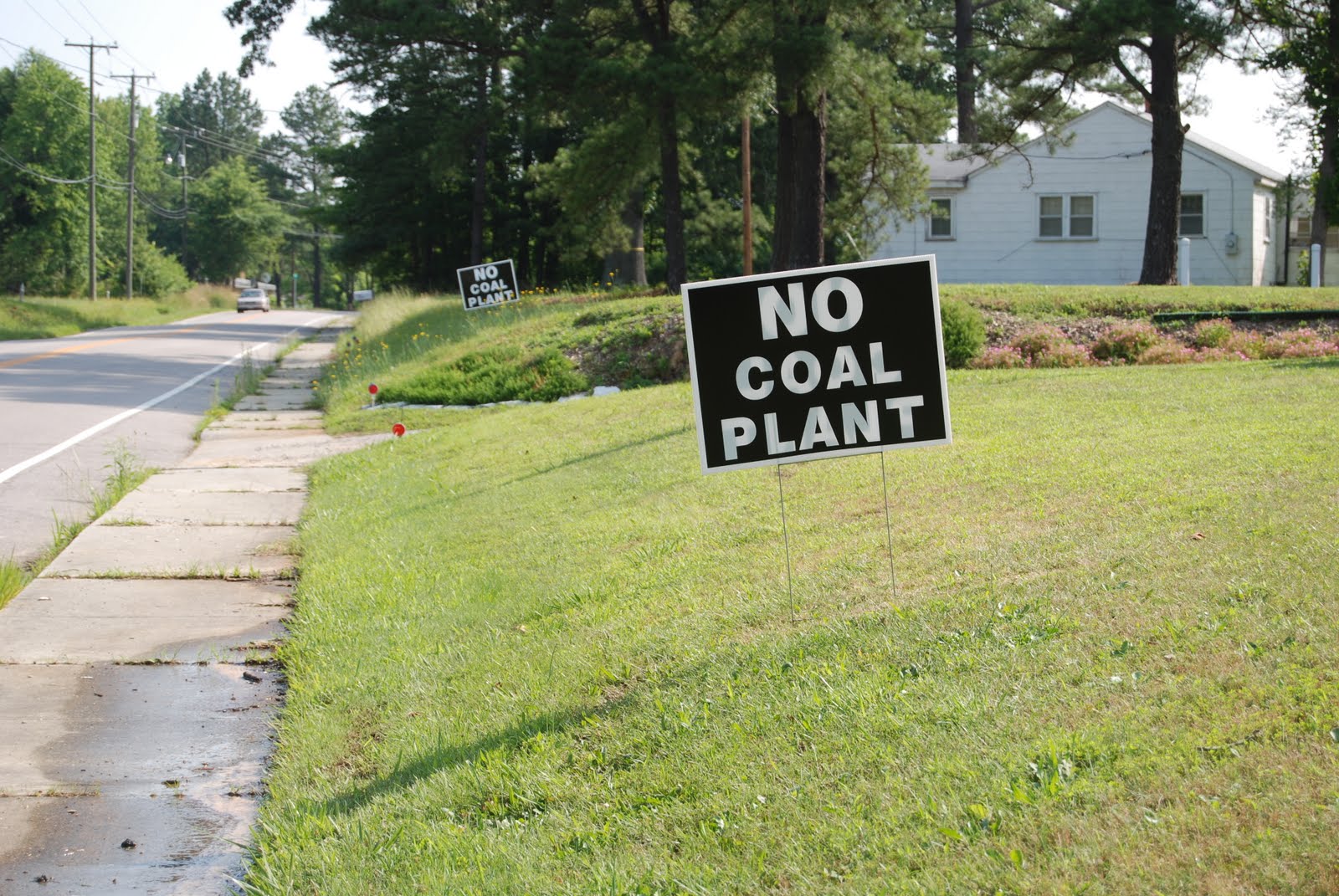
A Coal Plant Proposal Gets Even Dirtier
Coal-burning electricity plants are a hot button for environmentalists who somehow have shown more interest in Dominion Virginia Power’s $1.5 billion station in Wise County than the much bigger, $5 billion plus one planned by a group of electrical cooperatives not all that far from Colonial Williamsburg.The project is planned by the Old Dominion Electric Cooperative which is based outside of Richmond and represents 14 coops in Virginia, Maryland and Delaware. The plan is for two, 750-megawatt coal plants in the little town of Dendron in Surry County.What is curious about the ODEC project is that it is much closer to tourism attractions and theme parks in Williamsburg, Jamestown and other spots. It would be the state’s biggest polluter and when I covered the issue earlier, state air pollution officials told me flatly that the amount of toxic mercury the plant would emit is many times too much. The mercury would shoot into the atmosphere and then fall as tiny particles on the already pollution-stressed James River and Chesapeake Bay.So, it is intriguing that The Virginian-Pilot has a story that takes the issue to new dimension, such as that ODEC’s plan is splitting Surry County’s 6,000 plus folk along black and white and have and have not lines.The Pilot says that blacks tend to want to plant because it would provide about 200 permanent jobs not including the 3,000 temporary construction jobs. Whites tend to oppose it because it will be huge, polluting and require about 500 noisy and dusty gondolas of coal coming in from the Norfolk Southern mainline every week.Some of the haves say they don’t want their retirement homes in sleepy Surry squandered. Some of the have nots say they’d rather get a well-paying job at the plant rather than have to wake up before dawn to catch the Jamestown Ferry so they can change bed linen at the posh Williamsburg Inn.And so it goes. There have been accusations of subterfuge and even bribery. ODEC, which needs about 50 permits for the behemoth, has launched an aggressive campaign for it, such as inviting ministers out for fried chicken and barbecue suppers.I know how they operate. A year ago when I proposed doing a story about the project for Richmond magazine, ODEC immediately called and emailed (mispelling my name) the magazine’s publisher and editor saying I was biased because I had blogged on the Wise County plant. Richmond magazine balked.When I went to Style Weekly, where I am now a contributing editor, they had no qualms. And when I learned that ODEC had sent similar warnings to Style, I called ODEC and threatened legal action. They shut up. Funny that I never get that rude treatment from Dominion. But it says more about weak-kneed Richmond magazine, which is better off sticking with light-weight stories about kitchen remodeling.Besides their odd PR, ODEC does have some other issues. One is economic. One wonders why a collection of coops needs such a big plant. In late 2008, their biggest customer, the Northern Virginia Electric Cooperative, cut their ties with ODEC over a contract dispute. More likely is that ODEC plans to market the electricity to other utilities if it gets the plant. It also stands to reason that ODEC needs some partners, but who they might be, ODEC hasn’t said.The class and caste issue in Surry County is an interesting development. But it, too, has its oddities. Unemployment there is about 7 percent or about the state average. It isn’t in the double digits as it is in Southside areas like Martinsville and Henry County.Is the have and have not issue real? Or is it something ODEC has created and exploited?Peter Galuszka