By Steve Haner
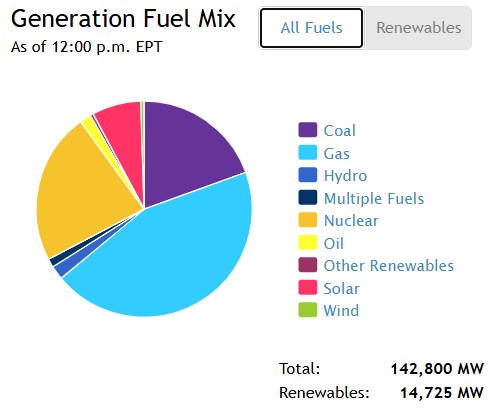
Once again, a spell of hot weather has proven that our economy and comfort depend on hydrocarbon fuels. As you can see from these simple pie graphs from the PJM regional energy market, two-thirds of the electricity sustaining Virginia on a recent hot afternoon was produced by natural gas, oil and coal.
One graph shows wind and solar provided a pittance of power, a nominal, merely symbolic amount. Wind energy is notorious for fading during hot spells. And the disappearance of solar from the grid as the sun sets can produce incredible spot prices for additional megawatts of electricity that then become needed. The marginal price in Virginia exceeded $3,000 within the PJM trading network earlier this week.
That is $3 per kilowatt hour, not the 15 cents per kilowatt hour most Virginians usually pay for the power itself. Yes, sometimes solar power is cheap. Then it dies in the dark and the cost to replace it will crush our economy and wallets. Gas, coal and nuclear power run our world and cool our houses, and they don’t go down at sunset or when the wind dies.
The PJM Interconnection, which includes Virginia among its 13-state operations region. apparently functioned well in the hot spell. It was not any hotter than we see most summers, but PJM was hitting records. There were times on the public metering of PJM when it was clear the reserve margins were getting tight. An unexpected disruption – a failed power plant or transmission line – could have triggered brownouts or worse.
Additional generation is needed, preferably inside Virginia, and it must be reliable and dispatchable (works on demand). The time to start was two or three years ago, but so far only solar and wind are being added. The quickest dispatchable option is natural gas. The impediment to getting it is the obsolete Virginia Clean Economy Act (VCEA).