

Is the Virginia Military Institute a racist institution that warrants General Assembly intervention? Maybe the Virginia legislators should ask these two young men.
Is the Virginia Military Institute a racist institution that warrants General Assembly intervention? Maybe the Virginia legislators should ask these two young men.
by Kerry Dougherty

It was late Sunday night when my son blew in the back door. I was standing just inside, fleece, rain jacket, hat and mittens on, leashes in hand, about to walk the dog.
“Wanna come with me?” I asked.
“Sure,” he replied to my surprise.
It was about 38 degrees and drizzling. The exact sort of raw weather that makes me wonder why anyone thinks Virginia Beach is a 12-month destination.
It’s not.
“Grab a jacket,” I said, gesturing to the coat rack bursting with an assortment of foul weather gear.
“I’m fine,” he said, adding the obligatory, “I went to school in Buffalo, remember?”
That again.
Every time my kid ventures out – underdressed – into the cold, he reminds me of the four years he spent in God’s refrigerator.
And as usual, my 20-something son was wearing his year-round uniform: T-shirt and shorts.
I didn’t glance at his feet. But a few minutes into our walk, when he stepped into a deep puddle and let out an involuntary WHOA, I realized he was wearing flip-flops.
by Derrick A. Max
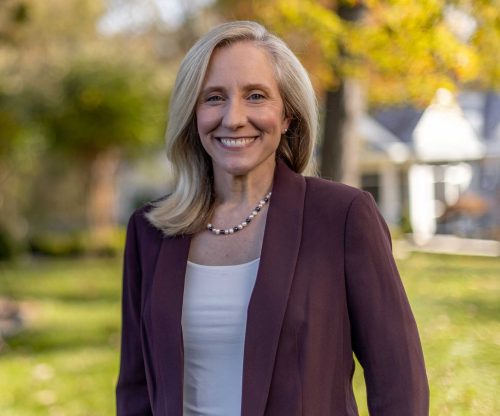
Governor Abigail Spanberger campaigned on a promise to sign “paid family and medical leave” when it reaches her desk. But popular vote-getting concepts often ignore the damaging impact such policies have once they are implemented. Virginia’s paid family and medical leave program (Senate Bill 2/House Bill 1207) is a case study in how expansive design choices can turn a popular benefit idea into a long-term economic liability.
SB2 appears straightforward: a state-run insurance program providing up to 12 weeks of paid leave, funded through payroll contributions. Look closer, however, and the bill reveals a combination of unusually broad eligibility, weak gating mechanisms, near-universal employer obligations, and a built-in funding escalation clause that sets the stage for rising costs and growing burdens on employers — particularly small businesses.
The House version of the bill was cleared by a subcommittee yesterday and will be considered by the House Labor and Commerce Committee Tuesday. The Senate version is on the docket for Senate Commerce and Labor Committee Monday.
A Generously Designed Program, Ripe for Growing Utilization
SB2 offers wage replacement at 80 percent of a worker’s average weekly wage, capped at the state average weekly wage (a generous $1,463 in 2025). That provision places it among the most generous state PFML programs nationwide. Generosity does not stop with benefit levels.

America’s Teachers Are “Drunk” on Inquiry-Based Learning: Why Virginia Should Include Social Studies in its Accountability Standards
by Jaime Osborne
I attended the recent National Council of the Social Studies (NCSS) annual conference in Washington, D.C., an event that draws thousands of educators from across the country. Unsurprisingly, inquiry-based learning dominated the agenda. Even sessions not explicitly labeled as such framed inquiry as the preferred—if not superior—mode of instruction. The message was unmistakable: Inquiry-based learning is no longer one approach among many. It has become the orthodoxy in social studies education.
For those unfamiliar with it, inquiry-based learning is a way of learning that starts with questions instead of answers. Rather than a teacher just saying, “Here are the facts,” they ask questions like, “Why do you think this happens?” They encourage students to explore, ask questions, try things out, and find answers on their own, with the teacher acting more like a guide on the side.
My skepticism of this trend had been building for years. It crystallized at the NCSS conference in Nashville, Tenn., two years ago, when I stopped by the National Assessment of Educational Progress (NAEP) booth and spoke with a representative about widespread learning losses, particularly among economically disadvantaged students. One exception stood out; namely Catholic schools. “Everyone is wondering what Catholic schools are doing differently,” the NAEP representative remarked.

As an adjunct professor in a school of education, I wasn’t surprised. Catholic schools tend to emphasize direct instruction and content-rich curricula. Their success aligns with decades of cognitive science research—most notably the work of E.D. Hirsch—showing that background knowledge is a prerequisite for reading comprehension and higher-order thinking. Critical thinking is not a generic skill that can be taught in the abstract; it is domain-specific and depends on what students already know. Yet many schools have become so enamored with vague “21st-century skills” that they have sidelined content knowledge, despite clear evidence that knowledge still matters.

Written by the Jefferson Council
A rumor circulated this week claiming that the Board of Visitors has developed a short list of candidates for a future University presidency, despite the recent appointment of Scott Beardsley. At the top of the list allegedly is Risa Goluboff, former Dean of UVA Law from 2016 – 2024. After hearing this whisper campaign, we feel it is an appropriate time to educate the University community as to the back story that underlies the rumor and helps to explain many of the recent machinations at The University.
For some time, we have heard from knowledgeable sources that Jim Ryan had identified Risa Goluboff as his preferred successor whenever he chose to step down as President–which according to his own statements was in the not-too-distant future. The first step in implementing this plan was to have Ms. Goluboff appointed as the new Provost to succeed Ian Baucom. While Ms. Goluboff is considered to be an intelligent and affable person by many, her greatest asset may have been her close alignment with Ryan and her full buy-in to his politicized “great and good” agenda.
Unfortunately for the preconceived Ryan succession plan, that was not sufficient for her peers, as they apparently did not believe she had the credentials to be the Provost. Accordingly, Goluboff was neither the search committee’s choice for Provost nor, allegedly, even a finalist. Then, in a resulting huff, Ryan refused to accept the search committee’s actual nominee choice, resulting in a failed Provost search to the detriment of the University. This would help explain why the University community has been given no transparency whatsoever regarding what occurred during the initial search and why it failed.
(more…)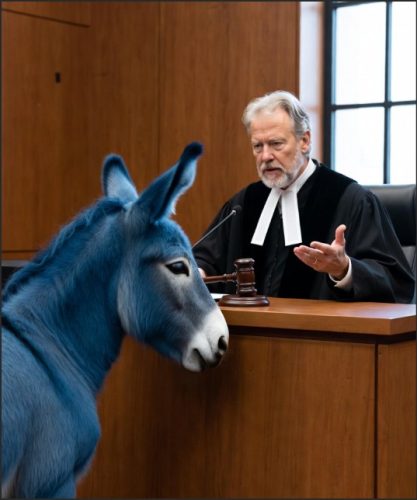
by Kerry Dougherty
Finally.
A common-sense court decision that derails the Democrats’ redistricting chicanery in Virginia.
For the time being, at least.
The radical left in Virginia is so determined to deprive conservatives of proportional representation in Congress that they intend to appeal the circuit court ruling that came down Tuesday.
The issues are really quite simple: In 2000 Virginians voted overwhelmingly to abandon gerrymandering and go to a non-partisan method of drawing congressional districts.
Districts are redrawn after each census, so another is not due until 2030.
Presently Virginia is represented in Washington by six Democrat members and five Republican. About right when you consider that in the last presidential race, the Democrat won with just 51.8% of the vote.
Drunk with power now that they control all branches of state government, hard-core leftists such as State Sen. Louise Lucas want to amend the constitution AGAIN to return to gerrymandering and create 10 Democrat districts and just one Republican.
It’s a naked undemocratic power grab and the shameless way Dems went about it is repulsive and violates the spirit, if not the letter, of Virginia’s Constitution.
Thank God a judge has blocked it. Hopefully, higher courts will follow the law and not be swayed by political pressure. Continue reading.
by Dick Hall-Sizemore

The Trump administration has to know it is in trouble when Hanover County opposes the establishment of an immigrant processing center within its boundaries.
Hanover is the most reliably Republican jurisdiction in the Richmond area and one of the most reliable in the state. In each of the last three Presidential elections, Trump won about 62 percent of the votes in the county. Yet, Wednesday night, the Hanover County Board of Supervisors told the U.S. Dept. of Homeland Security (DHS) that it did not want a gigantic ICE “processing” center in its jurisdiction.
On January 22, DHS notified Hanover County that it was proposing to purchase a large warehouse in the county “in support of operations.” The federal agency informed the county that, based on its research, in accordance with federal regulations, it had determined that no historic properties would be affected. It invited the county to provide any comments on the undertaking within 30 days. The title line on the letter referred to the “ICE Washington DC Processing Center.”
(more…)A General Assembly subcommittee Tuesday derailed a simple energy transparency bill calling for an annual report on how well utility generation units perform. “The juice isn’t worth the squeeze,” sneered an environmental lobbyist just before the vote to table House Bill 766.
It is solar “juice” that isn’t worth the squeeze, and the bill would have made that data easy to find.
Each generating plant, whatever the energy source, has an advertised maximum output in megawatts per hour (say 2,600 megawatts for the offshore wind turbines now being built), but they never achieve 100% of that 100% of the time. The actual energy produced when measured against the maximum possible output produces a percentage “capacity factor.” In the case of the wind project, that should be between 40 and 45% over a year.
That is incredibly efficient compared to the utility-scale solar projects popping up all over Virginia, which are going to have to multiply like rabbits to meet the demands of the Virginia Clean Economy Act. Their capacity factors are abysmal, embarrassing — usually below 25% — and of course during the height of the storm all day Sunday they stood at zero.
The table reproduced below is exactly the kind of information the solar industry and the utilities earning annual profits on their low-energy solar investments do not want anybody to see. So, I will show it to you again below. At this link you can see another similar table that shows how that actual output from Dominion Energy’s solar plants has failed to meet initial expectations. That was true of all of them.
(more…)by Dick Hall-Sizemore

A Tazewell circuit court judge has ruled that the attempt by the General Assembly Democrats to amend the state constitution to allow for a redistricting of Congressional districts this year is invalid, both on unconstitutional and statutory grounds.
He based his ruling on three issues:
Legislative rules of procedure—The original resolution establishing the 2024 Special Session limited its action to budgetary measures. Therefore, it was not authorized to enact a proposed constitutional amendment. This basis is a little shaky. The judicial branch has traditionally been reluctant to overturn legislation because the internal rules of the legislature were not followed. The judiciary usually gives deference to the legislature to use whatever procedures it wants as long as they do not violate law or the constitution
(more…)by Chris Saxman

Economist Thomas Sowell’s famous line “there are no solutions, only trade offs” came to mind while watching the House Labor and Commerce Committee debate the upcoming increase to Virginia’s minimum wage.
HB1 would incrementally move Virginia to a $15 per hour minimum wage by January 1, 2028.
Why $15? No idea… oh, wait… It was Bernie’s campaign – Fight for 15! Alliteration sells. Hey, he’s not America’s most famous and lovable millionaire Socialist for nothing!
Proponents of the bill focused on how this would increase take-home pay of low skill, low wage workers.
What they neglected to mention was that the minimum wage is a wage floor that moves up most hourly wages, not just those who actually earn the current minimum wage of $12.77 an hour.
Virginia’s minimum wage floor has been moving up incrementally due to previous legislation. Begs the questions:
Why incremental?
Why not just raise all wages?
Why stop at $15?
(more…)
by Kerry Dougherty
Fifty years ago, no one would have predicted that teachers and nurses would represent a chunk of America’s radical left.
Yet here we are.
Teachers have been leftists for decades, with their unions pouring money into Democrat coffers and their unions fighting to trans the kids and put porn on school library shelves.
But nurses?
Until recently they were favorably regarded as the heirs of Florence Nightingale, dishing up skilled nursing care and kindness.
But in the past several weeks we’ve had shocking reminders of just how radical the nursing industry has become.
In fact, there’s a new trend of some nurses grotesquely fantasizing about hurting people who don’t share their radical politics. .
Take Alex Pretti, for instance. Repeatedly described as an “ICU nurse” – as if that confers some sort of sainthood upon him – the 37-year-old anti-ICE agitator was shot dead Saturday. Whether or not the shooting turns out to be justified, fact is, Pretti was on the streets engaging in illegal behavior at the urging of Minnesota’s governor and lieutenant governor.
The ICU nurse died trying to block federal agents from apprehending an illegal alien who was also a domestic abuser.
What a waste of life.
This wasn’t this nurse’s first encounter with ICE, either.
CNN reports that Pretti sustained a broken rib a week earlier after a violent encounter with ICE agents.
It appears that Pretti’s day job was caring for the sick while his hobby was acting as a street goon.
OK, here’s another nurse story.
Does anyone know “Melinda”? Any way we can get her fired? She’s reportedly been placed on administrative leave but nothing short of stripping her of her license should suffice. This woman should never care for another patient.
She’s supposedly a nurse in the Virginia Commonwealth University Health system. This week Melinda made a chilling video full of helpful pointers for nurses who are treating ICE agents. She suggests administering a paralytic drug and then dousing the patients in poison.
Sick. Continue reading.
by Steve Haner

Dominion Energy is likely to miss its Virginia Clean Economy Act targets, and in a decade, the financial penalties of that law will begin to pile up on the company’s ratepayers, a State Corporation Commission (SCC) staff assessment has concluded.
“…despite building 17.5 gigawatts (“GW”) of solar and 3.4 GW of wind, the Company will not procure sufficient renewable energy credits (“RECs”) to meet the RPS (renewable portfolio standard) requirement starting in 2036. Customers will be paying significant deficiency payments starting in 2036, through the end of the modeling horizon. The total deficiency penalty ratepayers will be responsible for is approximately $5.32 billion…” wrote one staff analyst in publicly filed testimony.
He added elsewhere: “Ultimately, the Company’s ratepayers have no control over whether the Company meets its RPS obligation or not. However, it is the ratepayers, and not the Company, that are penalized through the assessment of deficiency payments when the Company fails to meet the RPS requirement”.
The staff was commenting to the judges and senior staff of the regulatory commission on Dominion’s most recent application for new solar and battery assets that will help it meet the law’s goals. The law orders them to steadily reduce reliance on coal and natural gas generation and eventually eliminate them. A hearing on the application will start February 17.
This round, Dominion has applied for approval to own or lease about 1.3 gigawatts (nameplate value) of solar assets and 620 megawatt-hours of battery storage. The SCC staff recommends rejecting 17 of the 21 individual projects due to high cost, including the two battery projects. The reasoning mirrors that used by the full commission last year in rejecting similar proposals from the Appalachian Power Company.
by Chris Saxman
Over the weekend, I was asked by a Virginia business leader how the first week of the General Assembly Session was going.
This is my reply. At the outset of EVERY Session, there are bills that are dropped in that, to say the least, grab headlines. With social media these days, it’s a constant barrage of outrage and mistaken blame.
“Did you see what Abigail Spanberger did in Virginia?”
Boom.
Fox News then runs segments basically ReTweeting, now called RePosting, a listing of various bills submitted by Spanberger’s party which now controls the House and the Senate.
Whoa. Hang on a tick.
No – Spanberger hasn’t signed one bill into law. In fact, very few votes have actually been taken by anyone.
Without concurrent offsetting reforms, Virginia’s ranking is likely to decline from #4 (2025) into the #12–#18 range over the next two ranking cycles, with downside risk approaching the low teens.
She signed some executive orders and if you have any questions about them, let ‘em rip. Hit reply and leave me a message.
To review, proposed legislation almost always submitted by members of the legislative branch and is sent to committees of jurisdiction (yes there can be more than one).
Every subcommittee and committee of both chambers acts as a filter that refines/clarifies legislation such that it can continue through the alimentary canal that is the legislative process.
The final legislative product is then sent to the executive branch for final filtration.
(more…)The year: 2075. The American colonies on the Moon are getting restless under Washington’s tyrannical rule….
This second edition of “Dust Mites” has a snazzy new cover, includes helpful lunar maps, and is 5,000 words tighter than the original. The sequel, “Trogs,” is scheduled for publication this summer.
Bacon’s Rebellion is Virginia’s leading politically non-aligned portal for news, opinions and analysis about state, regional and local public policy. Read more about us here.
Shake up the status quo! Your contributions will be used to pay for faster download speeds and grow readership. Make a one-time donation by credit card or contribute a small sum monthly.
Enter your email address to receive immediate notifications of new posts by email.
SUBSCRIBE
Protecting Thomas Jefferson’s Legacy at the University of Virginia

Shoot me an email and I’ll generate a new password for you.
