Garrison Coward oversees Gov. Youngkin’s Partnership for Petersburg initiative – photo contributed to the Progress-Index
by James C. Sherlock
I have written in this space many times about the struggles of Petersburg.
Petersburg is blessed in one way.
The Progress-Index’s Bill Atkinson and Joyce Chu may be the best pair of local news reporters working in Virginia.
Mr. Atkinson, in a series of reports, has detailed the continuing struggles of that city to get a grocery store downtown.
The big grocers surround the center of the city in more prosperous, safer areas but have not entered there.
Food Markets in Petersburg courtesy of Bing Maps
It is no secret why. Poverty and crime do not attract retailers vulnerable to shoplifting and worse. And Petersburg is among the poorest and most crime-ridden in Virginia.
A recent Petersburg solicitation for interest in building a grocery store downtown drew no bidders.
The Governor has a broad Partnership for Petersburg initiative to help Petersburg help itself It is run by Garrison Coward, an external-affairs senior advisor to Gov. Youngkin.
He reports that the Governor is “hell-bent” on seeing a grocery store built there.
Imagine for a moment that you are the victim of a violent crime. The perpetrator has been arrested and you thought he was about to go on trial when you learn that your local prosecutor — one of those squishy soft-on-crime types who was bankrolled by George Soros — already entered into a sweet plea deal with your attacker. You were never notified, so the judge signed off on it.
Now this predator is back on the streets.
It happens. And Virginia has several prosecutors who fall into the criminals-first-victims-second camp.
Well, thanks to bipartisan efforts by the General Assembly, this sort of chicanery is over.
SB 989, a bill that just passed both houses of the state legislature and is certain to be signed by Gov. Glenn Youngkin, requires prosecutors to contact crime victims BEFORE they enter into plea agreements.
Commonwealth’s attorneys are not obligated to do what the victim wants, but they have to listen. Current Virginia law only requires prosecutors to notify victims if the victims ask to be notified.
The best part of this bill? It passed with overwhelming majorities in both houses. Introduced by Sen. Mark J. Peake, a Republican from Lynchburg at the behest of Attorney General Jason Miyares, the measure sailed through the House of Delegates 79-20 and the Senate by a vote of 30 to 10.
Shoot, even Louise “Brick Wall” Lucas voted for it.
Who would vote against such a common-sense, pro-victim bill?
Newly elected Sen. Aaron Rouse, who represents the 7th District that includes part of Virginia Beach and Norfolk, that’s who.
Congratulations, voters of the 7th. You replaced tough-on-crime Jen Kiggans with someone who doesn’t even want prosecutors to speak with crime victims before entering into deals that are favorable to the criminals who hurt them.
From pristine beaches to rolling hills and picturesque mountains, Virginia has a lot to attract residents. Combine that with a strong economy and Northern Virginia’s close ties with Washington, D.C., Virginia should be an attractive destination.
But surprisingly, that’s not the case. Despite strong economic performance and a high quality of life, more people are leaving Virginia than moving into the commonwealth. There may not be one silver bullet to reverse this trend, but the legislature just took an important step helping people move to Virginia by recognizing out-of-state professional licenses.
In 2021, Virginia experienced net out-migration. Many of us are puzzled by this trend, blaming some combination of housing prices, remote work, taxes, and weather for enticing people to leave Virginia. Unnecessary barriers for those considering a move into Virginia are also a contributing factor.
If you work in a licensed profession and wanted to move to Virginia in the past, it wasn’t easy to start working in your new home. First, you would have to reapply for a license, paying fees and waiting months for the application process. Sometimes, you would even have to go through training or education again and retake exams, no matter how long you’ve been working, adding time and money to an already expensive process.
The hassle created by the need to reapply for licensure had a real effect on people’s decision to move. Economists estimate that occupational licensing reduces migration by seven percent. Anyone who has moved knows it’s a costly and time-consuming process. Making it difficult to start working is enough to push some people over the edge and prevent them from moving entirely. (more…)
As usual, some local news outlets missed the real story.
They were so starstruck by President Biden’s taxpayer-funded, Republican-bashing campaign stop in Virginia Beach on Tuesday that they didn’t notice that the city ground to a halt for hours Tuesday afternoon.
It was a giant clusterfart.
From one end of Virginia’s largest city to the other, traffic was gridlocked. Businesses lost money, appointments were missed and untold gallons of gas were wasted as fuming motorists stewed in traffic, unsure of what was going on.
A nuclear attack? A massive 100-car-pile-up? Fugitives on the loose?
Nope, just the president on a last-minute trip to Virginia Beach to rant about how the GOP wants to slash spending on health care.
Several television stations reported on the bumper-to-bumper traffic caused by rolling closures along the interestate. The print media? Nah. Not that I could find, anyway.
Biden flew into Oceana NAS around 2 p.m. and his motorcade headed to the Kempville Rec Center on Monmouth Road, 10.4 miles away, where he made a speech. Secret Service and various law enforcement agencies whose task it is to protect the life of the president, ordered parts of the interstate closed. (more…)
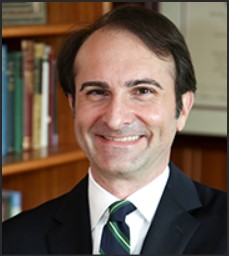
Jim Ceaser runs the Program for Constitutionalism and Democracy at the University of Virginia, which provides civic education on American ideas in politics and political economy. The courses are unusual these days in surveying the thought of mostly dead White men: from Aristotle and Montesquieu to Edmund Burke and Alexis de Tocqueville. The courses are remarkable also in giving equal time – in many instances even more than equal time — to thinkers most people today consider conservative and who, he believes, receive less attention than they merit.
Ceaser is a fully tenured professor, which provides significant protections against being fired. As for the program he directs, which reaches a large number of students, all of the funding comes from private donors and foundations from outside the university. Having started teaching in 1975, he’s reached retirement age.
If not cancel-proof, he is cancel-resistant. That makes it easier for him to refuse to fill out questions in a “peer review evaluation form” that probe his thinking about Diversity, Equity & Inclusion.
The form requires faculty members to describe their teaching, advising, research and service activities in the previous year. For each of those topics, faculty are told to describe their efforts on behalf of Diversity, Equity & Inclusion. For example: (more…)
In a stunning display of how New York politics work, two of the state Legislature’s most outspoken opponents of charter schools are also among the biggest recipients of campaign cash from New York’s teachers’ union and its political action committee.
State Sen. John Liu (D-Queens), chairman of the New York City Education Committee, has raked in $33,300 since his first Senate race in 2018, putting him in the No. 3 spot behind Sen. John Mannion (D-Syracuse), who got $35,100 during the same period.
The money for the anti-charter pols came from both the New York State United Teachers — parent of the city’s powerful United Federation of Teachers — and its Voice of Teachers for Education PAC, state Board of Elections records show.
“Stunning,” they wrote.
Pikers.
Now I happen to agree with the Post’s position supporting charter schools. But the writers of the article are spoiled by New York’s campaign finance laws.
They need to come to Virginia to see what real financial influence in politics looks like. (more…)
The Bluestone Town Center (BTC), according to council members who voted 3-2 to approve it, was decided in secret meetings between those council members and the applicants. At Tuesday’s open meeting in which they voted to approve BTC, those council members rather shamelessly admitted to those sessions.
City staff and the city manager effectively sat on their hands during the discussion, which brought questionable numbers and questionable rhetoric from rookie council members Dany Fleming and Monica Robinson, respectively. It was left to Councilman Chris Jones and Mayor Deanna Reed to present the arguments against the development with an assist from City Attorney Chris Brown.
The city manager was mostly silent throughout the conversation.
Also mostly silent was Councilwoman Laura Dent. She made the motion to grant the rezoning BTC sought, and followed the motion with a rambling explanation of what she seemed to say was one of the best things about the project for her, the promise of solar energy panels. Her motion effectively released the developers from their legally binding proffer to provide the panels, but she said she believed they would be installed anyway based on her private discussions with the developers. (more…)
The National Incident Management System Preparedness Cycle
We could see it wasn’t right as it unfolded.
Virginia’s flawed response to COVID was slow for all Virginians.
Fatal for some.
But the public just saw the broad stroke external effects.
We saw executive orders that seemed sudden, sweeping, and disconnected from the information we had. It turns out that often the governor himself was operating in an information vacuum.
In the pandemic’s early phases, the Commonwealth finished last or next to last among states in crucial responses like testing and vaccination program rollouts. Everything seemed to be invented ad hoc rather than from a plan. It turns out that was true.
There was a prescient and well-drawn pandemic operationsplan that had been produced by a contractor, but virtually no one in the administration knew what it required, and certainly had never practiced it in any meaningful way or fine-tuned it based on realistic exercises. When BR found and reported on that plan in 2020, it was pulled from public view.
It is important to make sure that doesn’t happen again, whether in another pandemic or in a cyber attack, hurricane, flood, mass shooting, kinetic terrorist attack, nuclear plant emergency, or something else.
In response to my request, a very cooperative Virginia Department of Emergency Management (VDEM) FOIA official has provided a remarkable and profoundly disturbing two-volume series detailing a running history and operations analysis of what happened inside the government.
It is titled “COVID-19 Pandemic History and After Action Report” Vol. 1(covers 2020) and Vol. 2. (covers 2021) hereafter referred to as the HAAR.
It was compiled and written under contract by CNA, a highly regarded federal contractor, who had people on site in Richmond during the COVID response.
The HAAR describes and assesses a series of widespread and seemingly endless internal and external government breakdowns that compromised the health and lives of Virginia’s citizens.
Management turmoil in the state government during COVID was so extensive as to be almost indescribable by any group with less talent than the CNA team.
The HAAR documents that Virginia’s COVID response was hamstrung by a lack of operations management experience in the leadership.
I understand that with authority comes responsibility.
But the governor, his Secretary of Health and Human Resources, and his Health Commissioner were effectively the chain of decision makers during COVID. All three were physicians.
But that is one reason we have a civil service.
Virginia’s civil service failed to prepare for its roles in emergency response long before Ralph Northam was governor. HAAR documents the complete inability of the bureaucracy to plan, organize and equip, train for, exercise and execute emergency plans.
It is clear to me that without capable civil service support, no administration would have fared well. I hope, by exposing this deadly failure, to prevent the same thing from happening again tomorrow.
I will make strategic recommendations here in this first part of what will be a series on this issue.
Jillian Balow, Virginia’s top K-12 school official, has submitted her resignation effective March 9. She gave no reason but appears to depart on good terms with the Youngkin administration.
In a press release, Balow thanked Governor Glenn Youngkin for the opportunity to serve, and pledged her support for the governor’s agenda of “raising standards and promoting excellence and expanding educational choice and opportunities for all students.”
Balow expressed particular satisfaction in the Virginia Literacy Act, which she said will become a model for other states, and the release of “Our Commitment to Virginians,” a roadmap for student success that empowers parents.
She said she and her family had “quickly developed roots in Virginia,” and, despite having family in the West — she had previously served as state school superintendent of Wyoming — “will continue to reside here in the commonwealth for the foreseeable future.” (more…)
Forty-seven University of Virginia students have been offered a room on the Lawn for the 2023-24 academic year. They were selected from a pool of 152 applicants, reports The Cavalier Daily. The number of applications was down from 189 last year and 221 two years ago.
Why the decline?
There was a time when residence on the Lawn was a coveted honor. Does the fall-off in applications reflect a sentiment among UVa students that life on the Lawn is less of a privilege than it once was? Are students today more likely to find the living conditions — such as the necessity to walk outside to reach a bathroom — too primitive for comfort? Alternatively, do some students believe the Lawn selection is stacked and see no point in applying?
The Cavalier Daily does not ask the question. Those of us who are not part of the selection process are left to speculate.
Here’s a clue: the newspaper article reports the demographic make-up of the Lawn residents. The collection and dissemination of such data reflects upon the priorities of those involved in the selection process. As the old saying goes, you manage what you measure. (more…)
Excellent reporting by the Virginia Mercury’s Jim Morrison highlights the debate in Norfolk over the rising homicide rate since 2020. In this two-part series (here and here) he describes how the city’s “progressive” Commonwealth Attorney Ramin Fatehi, who campaigned on the premise that structural racism is the root cause of criminality, has become the focus of the controversy.
Fatehi has championed a panoply of policies to combat “explicit and implicit bias, mass incarceration, the school-to-prison pipeline, and the criminalization of poverty, homelessness, mental illness, and substance-use disorder.” In practice that has meant seeking cash bail less often and charging suspects with lesser crimes, often reducing felonies to misdemeanors.
Norfolk’s 2022 homicide total, 63, was the highest the city had seen since the mid-1990s. In 2021, there were 62 murders. From 2012 through 2019, the city suffered between 29 and 43 murders annually.
Fatehi, of course, blames outside factors such as economic insecurity, the flood of guns, and the COVID pandemic. The spike in homicides has occurred in many places, he says, not just in cities with progressive prosecutors.
It is difficult to disentangle the “root causes” of the increase in homicides because the surge coincided with three social/economic tidal waves: the COVID-19 pandemic, the George Floyd protests in 2020, and the economy’s increasingly acute labor shortage in multiple professions including law enforcement. Fatehi did not assume office until January 2022. (more…)
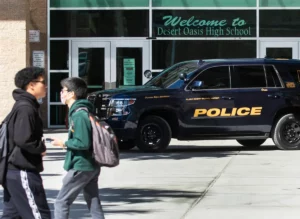
During the height of the war on drugs, schools adopted “zero-tolerance” policies. No student was allowed to possess any drug of any kind, even an aspirin or a prescription medication for which he had a prescription. Any such products had to be deposited with the school nurse and taken in the presence of the school nurse. This meant that a female student could not keep aspirin or Advil, for example, in her backpack to use to ease the pain of menstrual cramps. When the cramps became particularly bad, she had to go to the infirmary and retrieve her over-the-counter medications that she had left with the nurse.
Presumably, these policies were meant to show that the schools meant business when it came to drugs. I always thought it was a sign of cowardice. Schools and principals were not willing to use a little common sense and discretion. Rather than having to exercise some thought and judgment, they took the easy way—ban everything.
This still might the approach used. I don’t know. (more…)
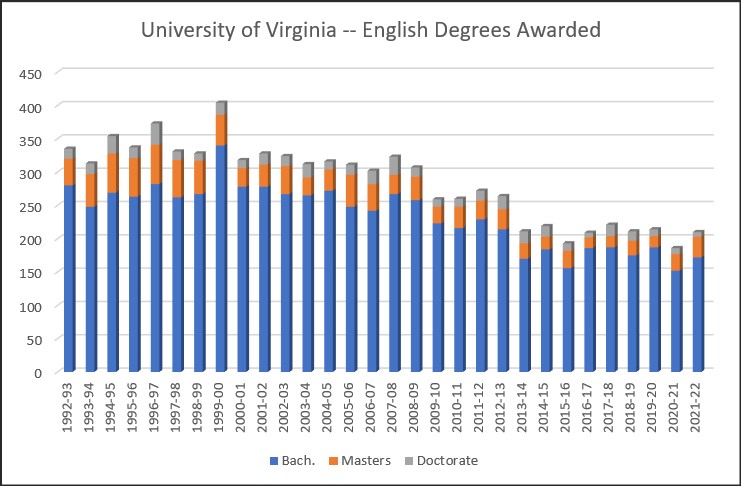
Once upon a time, the University of Virginia was known for the excellence of its English Department — one of the most highly regarded in the country. Perhaps it still is. But you wouldn’t know it from the decline in the number of students earning B.A. and graduate degrees.
The number of degrees awarded has declined by almost half — from 404 in the 1999-2000 academic year to 210 in the 2021-22 year, according data contained in the State Council of Higher Education for Virginia database.
To be sure, the precipitous decline in the number of students studying English at UVa reflects a national phenomenon. “During the past decade, the study of English and history at the collegiate level has fallen by a full third. Humanities enrollment in the United States has declined over all by seventeen per cent,” writes The New Yorker in “The End of the English Major.”
The article explores many potential causes: declining funding for the humanities; the rise of social media and diminishing attention spans; and the surging cost of a college degree and practical decisions by students to master disciplines with a greater financial payoff. (more…)
Available: Lovely Main Street office space, with views.
by Steve Haner
What the 2023 General Assembly didn’t pass is also an important Virginia energy policy story, starting with failure on its part to fill the two open seats on the crucial State Corporation Commission. This follows its failure last year to fill one open seat on the three-judge panel.
As reported yesterday, advocates for restored SCC authority over utility rates had more success this year than in a long time, largely because Governor Glenn Youngkin (R) was among them. The bills awaiting his signature may not mean much if the Commission itself is barely functioning. A string of major cases for 2023 was created by these new bills, with just one commissioner and perhaps some interim substitute judges to hear them. (more…)
On February 16, USA Today published a story by Jeanine Santucci. That is the latest in an excellent series of reports on the shooting of Newport News first grade teacher Abigail Zwerner.
Her article, “Virginia 6-year-old who shot his teacher exposes flaws in how schools treat students with disabilities.” raises questions that Virginians need to answer.
What, exactly, do we expect of special education teachers and what do we owe them?
What training and resources must we provide?
How do we keep them safe?
How do we get enough people to accept the challenges and risks?
Any school official or teacher will tell you:
That the best-organized parents in K-12 education are special-ed parents;
That federal law is very prescriptive and provides little room for error on the part of the schools;
That schools’ (meaning taxpayers’) liabilityfor error is open-ended; and
That special-ed continues to get more challenging, especially after COVID accelerated the number of emotionally disturbed children and adolescents.
Few school divisions will claim to have any of that under control.
JLARCin 2020 concurred with that assessment in Virginia.
Longstanding shortage of special education teachers persists, and many school divisions rely on under-prepared teachers to fill gaps.
IEPs are not consistently designed effectively.
School divisions are not consistently preparing students with disabilities for life after high school.
The year: 2075. The American colonies on the Moon are getting restless under Washington’s tyrannical rule….
This second edition of “Dust Mites” has a snazzy new cover, includes helpful lunar maps, and is 5,000 words tighter than the original. The sequel, “Trogs,” is scheduled for publication this summer.
Advertisement
Advertisement
Advertisement
Advertisement
About
Bacon’s Rebellion is Virginia’s leading politically non-aligned portal for news, opinions and analysis about state, regional and local public policy. Read more about us here.
Fund the Rebellion
Shake up the status quo! Your contributions will be used to pay for faster download speeds and grow readership. Make a one-time donation by credit card or contribute a small sum monthly.
Can’t wait until tomorrow
For your Bacon’s Rebellion fix?
Enter your email address to receive immediate notifications of new posts by email.
SUBSCRIBE
Search Bacon’s Rebellion
Categories
Archives
The Jefferson Council
Protecting Thomas Jefferson’s Legacy at the University of Virginia
Forgot Your Password?
Shoot me an email and I’ll generate a new password for you.


 by Kerry Dougherty



 by Dick Hall-Sizemore