by James A. Bacon
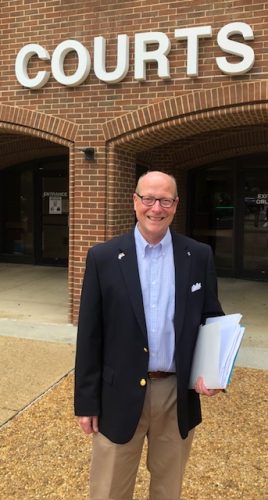
It was a quiet Monday afternoon in the Henrico County General District Court, and Walter Smith thought he might have the University of Virginia on the ropes. Smith, an attorney and retired insurance industry executive, had spent much of the previous three years using the Freedom of Information Act (FOIA), trying to pry open documents lending insight into UVA decision making. He had been stymied repeatedly on various grounds, including the assertion that the records he sought were exempt presidential “working papers.” But this case was different.
This time Smith had asked for text messages between University police chief Tim Longo to the Albemarle County Commonwealth’s Attorney Jim Hingely regarding a meeting President Jim Ryan had asked Longo to set up with the local prosecutor. The purpose: to discuss an April press release explaining why the University was withholding release of an independent report into the slaying of three football players in 2022. The local newspaper, The Daily Progress, had obtained the text messages through a FOIA request and published some of them, and Smith wanted to see the complete records. By the time he filed his request, however, he was told they no longer existed — even though, according to UVA’s records-retention policy, the University was supposed to keep text and email messages for three years.
UVA attorney Robert M. Tyler took on the awkward task of explaining to Judge B. Craig Dunkum why the texts were deleted: Longo’s phone, set on Apple’s default setting, auto-deleted them. There were no sanctions in the state code spelling out a penalty for such an occurrence.
Dunkum accepted Tyler’s argument that the deletions were not deliberate, but he pronounced himself “troubled.” “If you can delete the records … somehow, that doesn’t seem right to me,” he said. “It rewards bad behavior.”