• Kaine Submits Transportation Amendments

    I’ve received an e-mailed copy of Gov. Timothy M. Kaine’s press release (compliments of Barnie Day) outlining the details of his amendments to the GOP transportation package. It’s not live on the Governor’s Web page yet, so I’ll post it on the Bacon’s Rebellion website and link to it for your reading pleasure.

    I haven’t had a chance to dissect the Governor’s amendments yet, but I’ll return with comments when I can.

    …OK, I’m back. Here’s my insta-analysis before I have to run off to an interview and Little League.

    First of all, I’m confused. Kaine seemingly has back-tracked on two of the Democrats’ key rhetorical themes of the past few months. If I am missing something obvious, would someone please point it out to me?

    Question One: Gov. Kaine has excoriated Republicans for wanting to finance transportation projects with General Fund revenues, including one half of the ongoing budget surplus. Transportation, he said, should not have to compete with other needs such as schools, health care and law enforcement, and he didn’t think the surplus, which can increase or contract dramatically, was a stable, ongoing source of revenue. So, now he proposes to increase reliance on the budget surplus, tapping two-thirds of the surplus? The inconsistency is so jarring that I must be missing something critical. If someone can enlighten me, please post a comment.

    Question Two: Waving credit cards mockingly in the air earlier this year, Democratic legislators lambasted the Republican plan for “mortgaging our children’s future,” “putting state debts on the credit card,” and all manner of fiscal irresponsibility. Now comes Gov. Kaine, proposing to jack up transportation debt from the $2.5 billion the GOP legislators proposed to $3 billion. Again, a jaw-slapping inconsistency. Am I missing something?

    So much for Return on Investment Analysis. Gov. Kaine never made a big point of this, so I can’t accuse him of inconsistency. I just don’t agree. He proposes increasing the percentage of bonds going to transit capital from 15.7 percent to 20 percent, and he wants to dedicate two cents of existing recordation taxes to transit funding. I’ve got nothing against transit — I just think it should compete on a level playing field with roads. All projects should be ranked on a Return on Investment basis. Anything that arbitrarily increases or restricts funding for a major transportation category is a sure-fire recipe for making sure that higher Return on Investment projects get overlooked.

    Land use and traffic flow. There are shreds of good news. The Governor has signed side legislation (not part of the infamous HB 3202) that will accomplish a number of worthy goals:

    • Subdivision roads. SB 1181 strengthens standards for accepting subdivision streets into the state system by increasing connectivity standards for roads and subdivisions, enhancing the overall capacity and efficiency of the transportation network.
    • Corridor management. HB 2228/SB 1312 promotes traffic flow and interconnectivity on the state’s road system, ensuring that new and existing roadways are not degraded by the creation of too many and poorly spaced intersections, turn lanes, median breaks, and other impediments.
    • Incident management. HB 2163/SB 1144 allows VDOT vehicles to participate in clearing cars and restoring traffic flow after an accident, improving clearance time.

    The press release provides only a cursory summary of very detailed legislation, so the significance of many of the Governor’s amendments is not immediately evident. I await more details.

    The Governor’s press release is now online. Here it is.


  • Cool Idea: The East Coast Greenway

    David Brickley, a 62-year-old lawyer and former state legislator in Prince William County, is spearheading local efforts to tie Prince William and Virginia into the 3,000-mile East Coast Greenway that runs from the Canadian border to Key West, Fla. The Manassas Journal Messenger has the story here.

    The trail is a grassroots initiative working under the auspices of the non-profit East Coast Greenway Alliance to stitch together local owned and managed walking/biking trails. The Alliance website describes the greenway as:

    The nation’s first long-distance urban trail system; a city-to-city transportation corridor for cyclists, hikers, and other non-motorized users. By connecting existing and planned trails, a continuous, safe, green route 3,000 miles long is being formed… It incorporates waterfront esplanades, park paths, abandoned railroad corridors, canal towpaths, and highway corridors, and in many areas it it temporarily follows streets and roads to link these completed trail sections together.

    Already, 21 % of this route is along off-road trail and the aim is for it to be entirely off-road and traffic-free.

    (Click here to see a map of the Virginia segment. Click on the map to view a larger, clearer image.)

    I had never heard of this initiative before, but it sounds absolutely wonderful. What really impresses me is that the greenway is a private, grassroots effort. The federal government isn’t imposing this greenway on anyone. It isn’t taking anyone’s land. It isn’t hitting up taxpayers from other parts of the country to pay for the project. The greenway arises from the efforts and contributions of local governments and citizen groups. It may take longer to achieve the vision this way, but the citizenry will own the final results.

    (Photo credit: East Coast Greenway. Shows Roosevelt Island, in the Potomac River between Washington, D.C., and Virginia. I’m not sure I’d want to cycle along this particular stretch of road — but it’s the only Virginia shot I could find.)


  • Don’t It Make My Red State Blue?

    Is Virginia swinging from a red state to a blue state? Despite high-profile victories in campaigns for Governor and U.S. Senate, Democrats aren’t likely to take control of the General Assembly any time soon, writes Jeff Schapiro in the Sunday Times-Dispatch:

    Even with John Chichester, Vince Callahan and five other GOP legislators retiring, Democrats may be in for a rude reminder: that Virginia, at least at the General Assembly level, is Republican at heart.

    This has nothing to do with the disposition of voters and almost everything to do with redistricting. Current districts, drawn in 2001 by Republicans to protect Republicans, will give the party an important, albeit artificial, advantage in protecting its shrinking majority.

    Meanwhile, concludes Schapiro, the retirement of Chichester and Russell Potts suggest that a Republican-ruled state Senate will tilt to the right.

    Although I take issue with the biases embedded in Schapiro’s writing, I credit him with being a shrewd observer of Virginia’s political scene. He’s done a good job of anticipating political shifts inside the General Assembly throughout the transportation debate.

    Speaking of Schapiro’s biases, can there be any question as to where Schapiro’s sympathies lie throughout the transportation debate? Writing about a post-Chichester General Assembly, he says:

    Dead and gone would be the bipartisan coalition that collapsed this year because of the betrayal of Chichester over transportation by such supposed fellow centrists as Tommy Norment, Ken Stolle, Walter Stosch and Marty Williams.

    Got that? Norment, Stolle, Stosch and Williams — all four of them — “betrayed” Chichester by backing a compromise with conservatives in the House of Delegates. Chichester didn’t “betray” them by bucking the party and working with Dems to scuttle the GOP compromise.

    Norment, Stolle, Stosch and Williams have their centrist credentials called into question — they are only “supposed” centrists — because their plan would provide a mere $1 billion a year or so in tax/fee/penalty increases for transportation, plus borrowing $2.5 billion, while the true moderate Chichester has called in the past for tax increases significantly higher — tax increases that the Times-Dispatch’s own opinion surveys show are not supported by the public.

    The interesting question now, to my mind, is the impact of a Republican shift to the right. The atrocious transportation package passed by the General Assembly is the outcome of four years of Chichester-induced stalement. Were it not for that breakdown in the legislative process, GOP legislators would not have passed a panicky, patched-together bill to make it look like they’re “doing something.” As House Speaker Bill Howell grows into his job — even Warren Fiske at the Virginian-Pilot has noticed — the GOP may become more effective as well.

    If a more conservative GOP caucus focuses on devising imaginative, low-tax, market-based solutions for Virginia’s problems, Republicans might well receive a ringing endorsement from voters. If they settle for pushing hut-button issues dear to the cultural right but not the rest of the electorate, Democrats can start plotting the eventual take-over of the Assembly.


  • Fisher on HOT Lanes: Arguments Run Cold

    Marc Fisher, a metro columnist for the Washington Post, has launched a full-scale assault on the HOT lanes proposed for the Washington metro area, mainly on the grounds that they benefit only the rich and powerful. He uses three key arguments against the congestion tolls:

    1) Lexus lanes seem unfair to low- and middle-income commuters who can’t afford to shell out the big bucks. In Virginia, where prices could vary according to traffic volume, planners say it could cost up to $42 per day roundtrip between Prince William County and the Pentagon on the HOT lanes scheduled to be built along Interstate 95.

    2) Folks tend not to believe the new lanes would really save much time. After all, look how congested HOV lanes have become on I-95.

    3) The structure of these deals, with private companies winning the right to profit off traditionally public infrastructure, sets off many people’s stench meters. Because public dollars built almost all roads in the first place, exorbitant tolls feel like double taxation.

    None of Fisher’s arguments hold water. Point for point, here’s why

    1) Hot lanes unfair. HOT lanes along I-95 might cost $42 for commuting both ways, but few low/middle-income people would use it for that purpose. They would use the lanes only when time was at a premium. The lanes would give them an option they did not possess before. Insofar as new HOT lanes took traffic off existing lanes, low/middle-income motorists actually would benefit.

    If low/middle commuters do choose use the HOT lanes to cut the time of their drive to/from work, they can avail themselves of numerous options: car pooling, van pooling, buses and other forms of ride sharing in which riders share the cost of paying the toll. Ride sharing with one other passenger would cut the cost per person in half; sharing with two would cut the cost by two thirds.

    2) Hot lanes don’t work. If the lanes don’t save much time, then people won’t use them and they won’t have to pay the charge. D’oh! Ideally, tolls would be set at rates consistent with a level of traffic that optimizes traffic flow through the HOT lanes. If the lanes are congested and the traffic flow is sub-optimal, then the rates need to be raised until conditions improve. It’s called dynamic pricing.

    3) Stench meter. There is no intrinsic reason that HOT lanes must be privatized. VDOT could introduce congestion pricing just as easily as a private company could. The advantage of public-private partnerships is that the private sector would invest a billion or more dollars of private capital into upgrading the Interstates, doing what the state cannot afford to do.

    Fisher might argue that the state could afford to upgrade the Interstates itself if it just had more money. Why not raise taxes? Well, we could. Just two problems. First, you’d have to raise taxes a lot more than a billion dollars in order to generate a billion dollars for I-95 or I-495; state road revenues go through a complex distribution formula that makes it all but impossible to steer the money where it’s needed most. Second, just adding more lane-miles of Interstate doesn’t incentivize the kind of car pooling and van/bus riding that is essential to maximize the carrying capacity of the roads.

    Finally, as far as the “fairness” factor is concerned, I find the issue wearisome. The reason people spend years earning college degrees, working hard and saving their money is so they can have more money than if they don’t. The advantage of having more money is that you can afford things you could not otherwise afford. You can ride in a Lexus instead of a Hyundai. You call up a satellite-navigation map on your touch-tone screen instead of unfolding a paper road map. You can put a double latte from Starbucks in your cup holder instead of a cup of joe from Quick-Stop. And you can pay tolls to whizz along in HOT lanes instead trduging bumper-to-bumper in the congested lanes. That’s the whole point of making more money! Otherwise we’d all jump out of the rat race!

    (Hat tip to Tobias Jodter for passing along the story.)


  • MORE ON BROWN AND WILD PRAIRIE HAY

    In our current column at db4.dev.baconsrebellion.com (“Size Really Doesnโ€™t Matter: Autonomobility”) we profile the wisdom of WaPo Car Culture columnist Warren Brown. For more good Brown see todayโ€™s Column “Free to Speak Truth to Power.”

    Giving the editors of Outlook their due, Tilman and Hill do a nice job in “Corn Canโ€™t Solve Our Problem: Grass Is Greener Than Corn for Fuel.” We have been following Mayor George Fitchโ€™s bio-fuel plant idea and his advisors seem to come to the same conclusions.

    Brown put his finger on the bigger problem. Governance practitioners, especially elected ones avoid making the rational choices.

    EMR


  • Salvaging U.S. 29 North

    Albemarle County is one of the most beautiful counties in Virginia, and Charlottesville is one of its coolest small cities. But the strip development on U.S. 29 North is one of the most god-awful products of the contemporary “planning” process you can find anywhere in Virginia. It’s as if Charlottesville/Albemarle took anything that could be remotely ugly or dysfunctional and smooshed it into an eleven-mile strip of state highway north of town Unfortunately, if you live in the region or travel through it, there is no escaping this horror.

    Citizens seem serious about doing something, although there doesn’t seem to be a consensus about what to do. The Daily Progress has published a lengthy article describing the Places29 initiative and the controversy it is generating.

    Places29, the product of local planners, provides what sounds like an attractive vision for the corridor (although the devil is in the details):

    Electric lines vanish. New roads appear, giving drivers a way to avoid 29. Some commuters simply avoid the hassle by riding the bus. Walking is encouraged, because residents work, shop and play in coordinated communities.

    And all it will cost is some $400 million.

    The usual NIMBYs object to anything that might impact their neighborhoods, oblivious that by-right development will impact their neighborhoods anyway. And there’s always some joker — in this case John J. โ€œButchโ€ Davies III, the local representative to the Commonwealth Transportation Board — who wants “Richmond” to pay to clean up the mess.

    There are no magic wands for a place like U.S. 29 North. Fixing that monstrosity is going to cost money, and it’s going to take doing things differently than in the past. The longer the region delays in implementing a new vision, the more dysfunctional development that will take place. It’s critical to minimize future costs by getting landowners and developers to buy into a new vision as soon as possible. Then, through the use of Community Development Authorities, municipal bonds and some 30 or 40 years of re-development, the corridor might have a fighting chance. If key players are unwilling to adopt a long-term time horizon, any spasmodic effort at cleaning the place up is bound to be cosmetic and a waste of time.


  • Who Will Gather the News: Media General on Credit Watch

    Media General Inc., owner of the Richmond Times-Dispatch and newspapers in Charlottesville, Lynchburg, Danville, Bristol and other Virginia communities, has been placed on S&P credit watch following an announcement that it would post a 1Q loss this year. Writes the Associated Press:

    The ratings agency said it would keep the newspaper and TV broadcast company credit rating at ‘BBB-‘ shortly after the company lowered its guidance for the first-quarter to a loss of 26 cents to 30 cents per share. Analysts polled by Thomson Financial had been looking for a profit of 20 cents per share.

    Revenues at Media General’s broadcast division got hammered the worse, suffering a 27.4 percent decline in revenues. I don’t spend much time watching local television news, so cutbacks in the coverage of murders, traffic accidents and thunderstorms doesn’t particularly distress me. But revenues continue to erode — 4.2 percent — in the publishing division. That’s where the serious news gathering takes place.

    It can’t be much fun working for Media General right now. Said CEO Marshall N. Morton in a prepared statement: “We have implemented an aggressive plan to align our cost structure with the revenue environment we are experiencing. Our goal is to restore profit-performance to our original expectations for the year.” Translation: More budget cuts. Newsrooms will not escape the budgetary axe.

    There’s not much chance that the Interactive Media Division will ride to the rescue. Revenues did increase 28.6 percent, but that was on a tiny revenue base. Essentially, IMD is a parasite. The vast bulk of its content is generated by broadcast and print. If the traditional media can’t produce as much content, IMD lacks the resources to make up the difference.

    As much as I tout the Internet and blogosphere, I take no joy in this. Many of my friends work for Media General. I’m planning to get a pension one day from Media General. And I have yet to see signs of an Internet business model that can come close to delivering the content that we take forgranted from the Mainstream Media. I have my quarrels with MSM reporting, but I hate to see newspapers wither away.


  • Kaine, GOP Lawmakers Talk Transportation

    How refreshing. Gov. Timothy M. Kaine and Republican leaders in the General Assembly are finally talking to one another about transportation — and doing so cordially, no less. Judging by the multiple news reports, the lawmakers’ closed-door meeting yesterday was fairly productive.

    Kaine must submit his amendments to HB 3202 by Monday, and the legislature has until April 4 to accept or reject them. Apparently, much of the conversation centered on finding areas of common ground.

    Michael Hardy and Jeff Schapiro report in the Times-Dispatch: “The lawmakers indicated that there appeared to be major progress toward reaching a transportation agreement on a batch of regional tax and fee increases to raise more than $400 million a year for Northern Virginia and $200 million for Hampton Roads.”

    Christina Nuckols reports much the same in the Virginian-Pilot: “Several of the 10 lawmakers participating in the latest meeting said they do not expect to reach compromise on every change the governor wants to make. However, they said they have agreed on most details of the regional funding plans for Hampton Roads and Northern Virginia.”

    Seth McLaughlin at the Washington Times notes areas of continued disagreement: “Mr. Kaine opposes paying the state’s debt with money from the general fund, which primarily pays for schools, police and social services. He also has legal concerns about charging repeat driving offenders larger fines and wants to reduce or eliminate the option for Northern Virginia localities to increase the commercial real estate tax. “

    If this legislation passes, my concern is that legislators will declare victory and move on to other topics. My sense is that everyone has had a belly full of the transportation issue over the past three or four years, and that there will be little appetite to follow up with a second round of reforms. While HB 3202 does do some useful things — particularly in prioritizing road projects and devolving more responsibility for secondary roads to localities — it doesn’t come close to “fixing” the problem. More roads will get built, but congestion will not improve. Taxes will rise, but they won’t prove sufficient.


  • VA Club for Growth TV Ad

    The Virginia Club for Growth released today a TV ad that will be broadcasted across the state in different television markets. The ad urges Gov. Kaine to veto the HB 3202, the Transportation Compromise Bill (AKA Bill Howell’s tax increase).

    In the interest of full disclosure, the poster of this entry, Phil Rodokanakis, wants to remind everyone that he is also the President of the Virginia Club for Growth.


  • MEDIA NOTES

    Quote of the Day:

    “What kind of a person sends her own granny up a cul-de-sac.?”

    Ms Doonesbury, an MIT Freshperson

    ……………..

    Philip Kennicott the WaPo movie critic suggests (“Rose-Colored Lens: In Louisiana, Environmental Distruction Neever Looked So Pretty”) that the new Smithsonian IMAX feature “Hurricane on the Bayou” deserves a miss. See “Down Memory Lane with Katrina” at db4.dev.baconsrebellion.com

    Kennicott, by the way, will receive a major nomination soon for Best Reporting on human settlement pattern issues.

    …………….

    RINO Hunters on the Endagered List

    Community papers suggest that as RINOs become more rare, the RINO Hunters are coming under attack. The word is that to save their skins the RINO Hunters will have to put on RINO costumes. Advocates of “No Crazies to the Right” may have died in Afghanstan and Iraq.

    EMR


  • Rural Virginia Fights Back

    It’s interesting to see the line of argument developing in rural Virginia regarding the GOP’s transportation funding plan: There’s not enough money in the plan for non-metro areas. And Gov. Timothy M. Kaine is pushing the angle hard.

    How can rural Virginia justify demanding more, when it already benefits disproportionately from the allocation of state highway dollars? It’s all about safety. Read this article in the Martinsville Bulletin.

    Rural Virginia would get about one-fourth of the money the legislative transportation plan would yield, even though 61 percent of the stateโ€™s traffic fatalities from 2000 through 2005 occurred on rural roads, according to federal highway safety data. …

    During a stopover in Stuart last week on his โ€œlistening tourโ€ to gather input on the proposed $2.5 billion transportation bill, Kaine criticized the bill for its omission of significant help to rural areas. โ€œWhatโ€™s in this (bill) for rural Virginia?โ€ Kaine asked, adding that the one-fourth earmarked for rural Virginia could only be spent on primary roads and interstates, under the current wording of the bill.

    Of the 5,593 people killed in Virginia car crashes from 2000 through 2005, more than three-fifths โ€” 3,398 โ€” died on roads U.S. Department of Transportation highway accident data classifies as rural, according to a computer analysis by The Associated Press.

    Crashes in rural areas are more often lethal because drivers reach greater speeds on the open roads, said Ray Pethtel, associate director of the Center for Transportation Research at Virginia Tech. Driver distractions, which cause most crashes, occur in rural areas and urban ones, Pethtel said. … โ€œYou donโ€™t have on the rural roads the same safe design characteristics that you do on major arterials like interstates,โ€ he said.


  • A Growth Slowdown in the Making?

    Signs of the times from Northern Virginia and Hampton Roads…

    Scholars at the Brookings Institution see indications that the “galloping growth” of Washington’s Virginia suburbs is slowing. The Washington Post quotes William H. Frey, a demographer at Brookings:

    “There’s still growth in the Washington region, and there’s still migration from the inside of the doughnut to the periphery. But it’s kind of slacking. From being a very fast-growing exurban place, Washington has now come down to more normal levels.”

    Meanwhile, the Virginian-Pilot reports that, according to newly released Bureau of Census estimates, Norfolk and Virginia Beach are actually losing population.

    According to the new estimates, Virginia Beach, the regon’s most populous jurisdiction, lost 1,402 residents in 2006. Its population now stands at 435,619. Norfolk lost about 1,663 residents in 2006. Its population stands at 229,112. The Weldon Cooper Center, which tracks Virginia’s population, believes that Norfolk and Virginia Beach actually gained a small number of inhabitants last year.

    What seems indisputable is that growth in Hampton Roads appears to be shifting to the metropolitan periphery. Chesapeake has gained 21,000 residents since 2000, while Suffolk has gained 17,000. The Pilot’s article does not indicate whether that represents a continuation or a slowdown for the metropolitan area as a whole.


  • Henrico: Doing It Their Way

    One of the main threads of controversy in the transportation debate right now is the propriety of devolving responsibility for building and maintaining secondary roads to local governments. Many local officials have objected to the transfer of authority, fearing that the state won’t send along the money to match. Remarkably, no one has seen fit to ask local officials in Henrico or Arlington Counties what they think of the idea. They would seem to be logical people to ask — after all, they have been handling their own roads for the past 75 years.

    So, that’s what we’ve done. Bacon’s Rebellion dispatched Bob Burke to look into the experience of Arlington County and Peter Galuszka to take a look at Henrico.

    Peter has filed his article about Henrico: “Doing It Their Way.” One message came through loud and clear: Henrico County officials like having control over their secondary roads. They say they can make better decisions and faster decisions, and that they can be more responsive to local constituencies than VDOT can. Henrico officials also like to set their own standards, which often exceed VDOT’s.

    However, there doesn’t seem to be any way to quantify whether or not Henrico is doing a better job than VDOT would. Has the ability to align transportation and land use planning resulted in less traffic congestion? Can’t say. We asked for “levels of service” data, but Henrico hasn’t compiled it. Has local control resulted in more efficient expenditure of road dollars? Can’t say. Henrico hasn’t done the studies.

    Bottom line: We can’t get answers to fundamental questions. Little wonder. No one in local government seems to be asking the questions, so no one is collecting the information. Meanwhile, lawmakers in the General Assembly — both those in favor of devolution and those opposed — are flailing in the dark. They’re basing their positions on hunch, intuition and anecdote, not hard data. We don’t have a prayer of solving our transportation problems in Virginia without the basic information we need to make informed decisions.


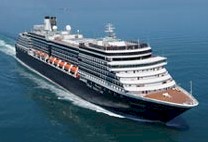
  • Earthship Westerdam

    Comparing human settlement patterns on the luxury liner Westerdam with towns and cities in Virginia, as I’ve done in my most recent column, “Earthship Westerdam,” may seem a bit of a stretch. I certainly don’t advocate modeling Virginia communities on a cruise liner with midtown-Manhattan levels of density. I regard the article as more of a brain bender. Sometimes it helps to take a look at familiar problems from radically different perspectives.

    A number of observations come out of the story.

    • The autocentric society. It’s amazing what happens when you take cars and supporting infrastructure (roads, parking spaces, driveway and garages) out of the equation. The need for space is drastically reduced. Layer 15 decks (11 above the waterline, four below) on top of one another, link them vertically with stairwells and elevators, and nearly all destinations required for a population of 2,700 are within a five-minute walk of one another.
    • Private space/personal space. It’s remarkable how much you can shrink private space (personal residences) if you compensate with quality public spaces. In America, we buy ever bigger houses that incorporate an increasing array of once-public functions; all the while, the public realm suffers. Spaceship Westerdam does the opposite, cramming passengers into tiny staterooms but providing an extraordinary array of amenities from pools to casinos, concert halls to gourmet restaurants. And bars. Lots of bars.
    • Conservation and environmental protection. It’s incredible what a community (and a cruise liner is a community) can do with just one environmental officer among its 800-person crew and staff. The Westerdam has recycling and water treatment capabilities you won’t find in towns or cities 10 times its population. The lesson for Virginia: Set environmental goals, measure your progress in achieving them, and then ratchet your goals higher as you succeed. By cutting energy consumption and waste disposal costs, conservation often pays its way.

    Please note: I do not believe in social engineering. I do not want to turn our towns and cities into replicas of cruise liners. I just think that there may be perspectives worth borrowing as we visualize the kinds of communities we want to build and live in.

    (Photo credit: Holland-America Line)


  • Washed up from Sea: Bacon’s Rebellion

    Well, better late than never. I didn’t get back from vacation until late Sunday night, and I’ve had a devil of a time getting the e-zine published. But it is at last: the March 21, 2007, edition.

    Earthship Westerdam
    The Westerdam isn’t as self-contained as a spaceship, but it’s as close as anything you’ll find on the planet. Virginians have much to learn from the cruise liner about sustainable human settlement patterns.
    by James A. Bacon

    Tunnel Vision
    A shovel in the ground early in 2008 is the right answer for the Rail to Dulles project.
    by Doug Koelemay

    Size Really Doesn’t Matter
    Yes, the world would be better off if everyone drove smaller, fuel-efficient, non-polluting cars. But even small cars can’t solve traffic congestion. Only functional human settlement patterns can do that.
    by E M Risse

    HOT to Trot
    A decade of data from southern California proves that HOT lanes provide time-sensitive drivers, regardless of income, an alternative to driving in congestion. Virginia, let’s get moving!
    by Geoff Segal

    Politics with a Capital “P”
    The Republicans’ transportation bill is a farce but fighting it is a political loser. Gov. Kaine ought to sign it and move on to other issues.
    by Barnie Day

    Nice & Curious Questions: From Smarts to Smokers: How the Old Dominion Rates
    by Edwin S. Clay III and Patricia Bangs

    Road to Ruin: Doing It Their Way
    Since 1932, Henrico County has been building and maintaining its own roads. Local officials like the arrangement, but it’s not clear whether driving conditions are any better as a result.
    by Peter Galuszka