• Stacking the Deck

    Gov. Timothy M. Kaine has appointed a 32-person task force, the Commission on Climate Change, to provide guidance on how to address the challenge of Global Warming. The group has a broad-based membership that, according to the governor’s press release, “includes state legislators; scientists; economists; representatives from the energy, transportation, manufacturing, development, and agriculture industries; representatives from environmental organizations; and local government representatives.” (My italics.)

    Kaine is certainly correct to include scientists in the mix: One would hope that the Commission will be informed by the latest scientific findings relating to climatology, as opposed to, say, the latest cover story on Newsweek — especially when a stated goal of the administration is “to reduce greenhouse gas emissions by 30 percent by 2025, bringing emissions back to 2000 levels.” The stakes are massive.

    So, it’s worthwhile to ask, who are the scientists on the commission, and what are their fields of expertise? It turns out that there are two scientists:

    • Jack Gibbons, of Fauquier County, was trained academically in mathematics and physics, worked in a research capacity in energy and the environment, and served in a high-ranking technology policy-making capacity in the Clinton administration.
    • Roger Mann, of Mathews County, is director of research and advisory services at the Virginia Institute of Marine Sciences.

    That’s it: two scientists, neither of whom is a career climatologist. While both men undoubtedly can speak authoritatively about the impact of climate change on the environment, neither one is accomplished in the actual field of climatology.

    It so happens that Virginia has a state climatologist (or its close equivalent). I’m not referring to Patrick Michaels, the former state climatologist and high-profile Global Warming skeptic. I’m referring to Philip J. “Jerry” Stenger, who took over the position after Michaels departed and the office was re-named the climatological office of the University of Virginia. Stenger, a 25-year-veteran, is not, to the best of my knowledge, ideologically suspect.

    I can understand that the Kaine administration wouldn’t want to burden itself by including Michaels in the commission. He’s no wall flower, he’s media savvy, and he disputes many aspects of global warming orthodoxy. Indeed, a perusal of his blog, World Climate Report, will show just how much disagreement there is among climatologists. (A quote from his most recent entry: “Rarely does anyone seem to question the quality of the temperature data, and yet, articles appear regularly in the scientific literature showing that the near-surface air temperature measurements are fraught with errors, gaps, and any number of inhomogeneities.”)

    If Michaels were appointed to the Commission, Michaels would end up as the story. But why not appoint Stenger, or someone else, who is familiar with the scientific aspects of the Global Warming debate and has a command over Virginia’s meteorological history? As the commission now stands, outsiders cannot be blamed for fearing that its agenda will be driven not by science but by the ideology and self interest of its members.


  • A SECOND TEST FOR INSANITY, SMOKING OUT HUMPTY DUMPTY

    Doing the same thing over and over and expecting a different result โ€“ for example, building more roadways and expecting traffic congestion to go away โ€“ is often cited as a threshold test for insanity.

    There is a second test that is useful to apply in the Blogosphere. This test is:

    Attempting to describe, discuss or arrive at a well-considered public judgement on complex topics in cases where:

    1. Key words / phrases are known to have different meanings to different people, or

    2. A person or group of persons uses the same word / phrase to describe different places, actions or conditions

    According to Lewis Carroll, Humpty Dumpty, when challenged on the confusing use of Vocabulary stated: “That word means exactly what I want it to mean, nothing more, nothing less.” In fact, Aliceโ€™s Wonderland is the only place such use of Vocabulary is appropriate.

    Failure of the Vocabulary test of mental capacity is especially prevalent in discussion of human settlement patterns. Why is this failure to understand the need for a functional Vocabulary so prevalent in the realm of human settlement patterns?

    First, and most obvious, the offending participants do not want to “understand.” Often this is because they fear an understanding will require abandonment of ideas and theories with which they have organized their lives.

    The unfounded actions were often thought to have been taken in pursuit of the actors best interest. No one likes to find out that they have been acting in ways which turns out to harm their long-term self-interest and those of their Household.

    Adherents of The Big Yard Myth and The Private Vehicle Mobility Myth are often in this category. Believers defend their pet Myths with religious tenacity.

    Second, most of the commentators deem themselves to be experts “because they live there.” They apply their observations and experience in the context of the Myths they so want to believe.

    Third, there are those who do not want to understand because they profit (or hope to profit) directly or indirectly from continuing confusion, debate and failure to reach a consensus on the most intelligent course of action for the majority.

    This class of Humpty Dumpty adherents often know their statements are at best uninformed opinion and at worst deceptive.

    Finally there are those who are offended that someone โ€“ anyone โ€“ would suggest they need to change their Vocabulary in the consideration of topics that they believe they understand as well as anyone.

    Doctrinaire defense of “simple” language with respect to human settlement pattern discussion is a sure-fire way to identify Humpty Dumpties.

    A great Holiday pastime is to see how many Humpty Dumpties you can identify at the gatherings you attend.

    Happy Holidays.

    EMR


  • HOT Lanes on the Capital Beltway Only Five Years Away

    This is a great day for Virginia. The Kaine administration has finalized all the agreements needed to start construction in the spring on the $1.4 billion HOT-lanes project on the Washington Beltway. The public-private partnership will add two lanes in each direction along the 14-mile stretch of the Capital Beltway, increasing capacity from 8 lanes to 12, upgrade 12 interchanges, and invest $250 in upgrading bridges, overpasses and signs. Construction is scheduled for completion by 2013.

    Virginia will partner with two companies, Fluor and Transurban, under an 80-year agreement in which the partners will collect tolls from motorists using the HOT lanes. Toll prices will vary according to traffic volume, set to levels that will ensure the free flow of traffic. Rush hour fares could reach $5 to $6, reports Tim Craig with the Washington Post.

    The lanes will be free for carpools of three or more people and make bus service practicable. Buses don’t serve the Beltway currently because traffic jams make scheduling impossible. If bus ridership on the Beltway reaches the same levels as on Interstates 95/395 (see “Interstate 95: Kissing Good-Bye to the Solo Commuter?”) the project could do even more to relieve traffic congestion than implied by the 50-percent increase in the number of lanes.

    The federal government will contribute $209 million towards the project, and the state another $200 million. The Commonwealth of Virginia will continue to own the Beltway, while Fluor-Transurban functions as a private contractor. “It is a very, very complicated project and a very, very complicated financial transaction,” said Secretary of Transporation Pierce Homer. “There are now hard financial commitments. This is a construction and a financing contract.”

    Bacon’s Bottom Line: This project represents one of the signature achievements of the Kaine administration. Although the idea originated in the Warner era, it took enormous work to hammer out the details. The Beltway HOT lanes will provide the first major expansion of Interstate capacity in Northern Virginia in many, many years. More importantly, the project acknowledges that the Commonwealth cannot address the increasing number of cars on the road through open-ended increases in highway capacity. The deal uses congestion pricing to allocate scarce highway capacity while also encouraging people to carpool, ride in vans or take the bus.


  • SCC Approves Highland Wind Farms

    Highland New Wind Development can proceed with its $60 million, mountaintop wind farm, ruled the State Corporation Commission, on the condition that it develop a “post-construction bat and bird mitigation plan.”

    The project calls for building 19 windmills reaching 400 feet tall in Highland County — enough to power 20,000 homes. The whirring blades are expected to be deterimental to flying wildlife, however. The SCC order will require Highland New Wind to spend roughly $2 million over 20 years on monitoring, roughly $50,000 a year on measures to minimize the impact on wildlife, and fines of up to $1,500 for the death of rare or endangered birds.

    Bacon’s Bottom Line: If we want more renewable energy, we can’t let NIMBYs kill every project that threatens their aesthetic sensibilities. If the windmills can been seen in the far distance from Rt. 250 in the hamlet of Monterey, well, I’m sorry. But wildlife protection is another matter entirely. The SCC has struck a reasonable balance.

    Read more details at the Times-Dispatch and Roanoke Times.

    (Photo credit of West Virginia windmills: NPR.)


  • More Budget Rumbles

    The escalating war of words between GOP legislators and Gov. Timothy M. Kaine over Kaine’s proposed budget is getting some attention in the press. Garren Shipley at the Northern Virginia Daily and the editorial writers at Washington Examiner focus on the $180 million in transportation spending that Kaine wants to defer. The issues don’t appear to have evolved much since we covered them in this blog, but the differences are getting aired.

    Meanwhile, Chelyen Davis at the Free Lance-Star gives ink to the unease that GOP legislators have with Kaine’s two-year revenue forecasts.

    In a letter to the govenror, House Speaker William J. Howell, R-Stafford, and House Appropriations Chairman Del. Lacey Putney expressed concern that the Governor’s revenue forecasts are not based on the most current expectations of economic performance. Since the November 19 meeting of the Governorโ€™s Advisory Council on Revenue Estimates (GACRE), “the national economy has continued to see wild swings,” while “the sustained decline in the housing and subprime mortgage markets further affect consumer and financial confidence.” The lawmakers continue:

    Subsequently, the Commonwealthโ€™s economic and forecasting consultant Global Insight has updated their forecast based on more recent economic data, including assumed GDP growth of less than 1 percent over the next three quarters. In turn, these financial experts have raised the probability of a recession from 30 percent to 40 percent.

    Howell and Putney called upon the Governor to reconvene a meeting of the Advisory Council in January to update the budget projections on the basis of the most current data.

    According to Davis, Kaine spokesperson Delacey Skinner responded that GACRE met in November, and agreed then to stick with the revenue forecast from August, which reflected the weakening economy. The governor’s office has a regularly scheduled review of the forecast in mid-February, and that it wouldn’t be prudent to call another meeting of GACRE just a month beforehand. Said Skinner: “Calling a special meeting would send a message to the public that we’re panicked, and that would be an unwise message to send.”

    Bacon’s bottom line: So, Skinner doesn’t want to send a message that, “We’re panicked.” Personally, I think it would send a message that, “We’re prudent.” Instead, Skinner prefers to send a message that the Kaine administration is content for budgetary deliberations to rely upon what will be, by January, five-month-old data. Given the volatility of the economy, I think the Howell/Putney proposal makes sense.


  • Mini Nuclear Reactors for All?

    Via Instapundit, comes an item sure to make some scream, and others cheer:

    Toshiba has developed a new class of micro size Nuclear Reactors that is designed to power individual apartment buildings or city blocks. The new reactor, which is only 20 feet by 6 feet, could change everything for small remote communities, small businesses or even a group of neighbors who are fed up with the power companies and want more control over their energy needs.

    Now that’s cool. Or hot. Or at least fissionable.


  • Home (Zones) Alone

    Members of the Greenbriar neighborhood in Chantilly would like to strike a sensible balance between the rights of drivers and pedestrians. The community gets a lot of cut-through traffic, but, as the Fairfax Times puts it, “The use of random, time-consuming, and expensive traffic calming measures on a case-by-case basis is only a Band-Aid to a serious wound in Virginia’s current approach to resolving residential neighborhood traffic problems.”

    Robert Mason, a member of the neighborhood’s traffic calming committee, has asked Del. Chuck Caputo, D-Chantilly, to introduce legislation developing Home Zones in Virginia. The idea comes from zones in European countries for streets shared equally between pedestrians and motorists. Caputo says he has asked the General Assembly staff for recommendations that can be introdued as legislation.

    From the Home Zones website in the UK:

    Home Zones work through the physical alteration of streets and roads in an area. These alterations force motorists to drive with greater care and at lower speeds. Many countries support this with legislation allowing the Home Zones to enforce a reduced speed limit of 10 miles an hour. The benches, flower beds, play areas, lamp posts, fences and trees used to alter the streets and roads offer many additional community benefits to the Home Zones and are considered to enhance the beauty of an area and increase the housing prices.

    Home Zones, while on the surface offer substantial benefits to an area, are the source of some controversy. It has been reported that such schemes have delayed the response rates of the emergency services to the streets within the Zone. Other reports describe local authorities being inundated with complaints from residents demanding that the road humps and chicanes be removed as they are causing huge tailbacks through the streets. People have shown concern that encouraging children to play in roads, even specially adapted roads such as Home Zones, has introduced a danger which was not previously there. It has also been reported that the residents of a home zone in America are actively campaigning to have the road alterations removed as they can no longer park near their houses.

    (Credit for photo of a Danish home zone: Picasa.com)


  • More Monkey Business: Update on that $180 Million

    It looks like we have more than a misunderstanding on our hands: GOP legislators and the Kaine administration are spoiling for a fight. The Free Lance-Star and Examiner.com have the latest details (slightly updated from our account Tuesday) on the disposition of $180 million set aside for transportation projects this year.

    Here’s how the debate stands: GOPpers are outraged that Gov. Timothy M. Kaine would remove the desperately needed transportation funds from the budget. Kainiacs respond that the roads aren’t ready to build yet, and the funds will be restored in 2010 when the projects are ready to proceed. GOPpers retort that Kaine’s 2010 revenue forecasts are too optimistic and the money may not be there when 2010 rolls around — but Kaine will be gone, and it will be someone else’s problem.

    Bacon’s bottom line: That’s what you get when you fund transportation projects out of the General Fund. That’s why we need a segregated funding source for transportation (based on user-pays principles) and there needs to be a constitutional lockbox to prevent this kind of monkeying around.

    Question of the day: What ever happened to the constitutional lockbox for the Transportation Trust Fund? Apparently, it died a poor orphan child in some Senate subcommittee. If the lockbox was so important during Tim Kaine’s gubernatorial campaign, why hasn’t the Governor resurrected it? If transportation funding is so sacred, why haven’t House Republicans reintroduced the lockbox legislation?

    (Photo credit: Freeslideshow.com.)


  • JUST A QUESTION

    We wonder why this Blog was overrun with folks praising the citizens of Oregon for passing Measure 37 in 2004, but

    Not a peep when Measure 49 rolled back most of the provisions in 2007?

    Turns out Measure 37 was in fact paid for by speculative owners outside the logical location of the Clear Edge.

    And they were the majority of those who filed claims under Measure 37.

    It was never about elderly ladies who lost their retirement savings.

    As I recall that was our point at the time.

    EMR


  • What Strong Leadership in Schools Can Accomplish

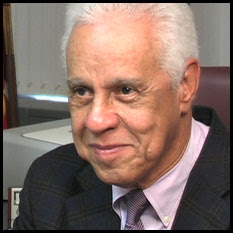
    Mayor L. Douglas Wilder may have little nice to say about the Richmond School Board or educational bureaucracy, but he is fulsome in his praise of individual educators. In his recent newsletter he lauds Dr. Irene L. Williams, principal of the Fairfield Court Elementary School, located in one of Richmond’s most notorious, poverty- and crime-ridden neighborhoods.

    The Mayor dropped in unexpectedly on the school one day recently. Writes Wilder:

    The school was clean, students well-dressed, well-behaved, orderly, and well-mannered. There was excitement in their eyes and they were marvelous to behold. I subsequently discovered some of the reasons: the academic standards are strong with daily data reports on the walls aligning the corridors. The expectation for student success was equally strong. …

    [Williams] draws nor seeks no additional pay for all of her “extra” time and refers to her students as “my children.” They reciprocate individually by greeting or leaving her by calling her “Dr. Irene” or “Mamma Irene.”

    This highly-motivated and selfless devotion to cause and to duty impressed me beyond measure. Here is a school in the shadow of public housing units portraying to all who would care that yes, these young people can learn. They can show that it doesn’t matter where you were born or your economic status – you can achieve and overcome and become outstanding contributing citizens.

    While I regard the entire K-12 school model, both public and private, as an industrial-era relic in desperate need of reform, it clearly is possible to improve the performance of the existing system. Leadership at the level of individual schools is critical. Former Gov. Mark R. Warner recognized that when he spearheaded the creation of a special program for school principals at the University of Virginia back in 2004 (profiled in “Teaching Old Dogs New Tricks.”) I wonder if Williams is an alumna of that program. I wonder if the program even survived Warner’s tenure.
    (Click on the image of Mayor Wilder to view his video commentary.)

  • Science Museum Foundation Forced to Pay-Up

    The ever-alert Jon Baliles pointed me to this item in the RTD regarding the outcome of a city investigation into Richmond clothing magnate Stuart Siegel’s clear-cutting along the James River. The conclusion? The property owner, the Science Museum of Virginia Foundation, has to pay-up…not Siegel:

    In a letter to the foundation, the city said the organization, as owner, was responsible for the clearing. The letter was dated Dec. 13 and released yesterday.

    “We were able to conclude that unauthorized clearing had, indeed, been done” on about an acre in a legally protected buffer zone, said the letter from Stewart D. Platt, a city engineer.

    Julia M. Carr, executive director of the foundation, said the group plans to comply with the city’s orders.

    They have little choice. However, wouldn’t it make more sense for Siegel to pay for the replanting? Maybe (and one would assume) the SMVF’s development people have already thought of that, and Siegel will pay for the repair work, indirectly.


  • Payday Lending, Do-Goodism and Unintended Consequences

    You can’t accuse Donald P. Morgan and Michael R. Strain of being on the payroll of the payday lending industry. They are staff economists of the Federal Reserve Bank of New York. That’s why we need to pay attention when they conclude in a November report, “Payday Holiday: How Households Fare after Payday Credit Bans,” that payday lending is less burdensome on the poor than cutting off their credit.

    Do Gooders have trashed the payday lending industry for usurious terms and conditions that allegedly mire poor and working-class citizens in a “debt trap.” Buying that logic, the state of Georgia permanently closed all payday lending in 2004, and North Carolina followed in 2005. (Virginia is still debating the issue.)

    Morgan and Strain ask the question: Are poor/working class people better off as a result? The answer: No. In both states, the economists documented that the number of bounced checks, complaints against debt collectors and personal bankruptcies increased in Georgia and North Carolina relative to other states.

    The main beneficiaries of the ban, it turns out, are conventional banks. Write Morgan and Strain: “On average, the Federal Reserve check processing center in Atlanta returned 1.2 million more checks per year after the ban. At $30 per item, depositors paid an extra $36 million per year in bounced check fees after the ban.”

    Bacon’s bottom line: Poor people don’t need Do Gooders meddling in their affairs to pursue their own economic self interest. Let the payday lenders stay in business. The only legitimate role of government is to ensure transparency — to make sure borrowers understand the terms and conditions of the loans — and to prevent fraud. Otherwise, government meddling doesn’t help the poor, it hurts them.

    (Hat tip: Chris Saxman. Photo credit of Advance America: Andrew Bain.)


  • North Anna 3: $500 Million Before Construction Even Begins

    Sen. Ken Cuccinelli, R-Fairfax, has maintained an interest in nuclear energy since his days as an undergraduate engineering student at the University of Virginia when he took a course in nuclear engineering. Now the Northern Virginia intellectual property attorney, who sees potential to build a formidable nuclear industry cluster in Virginia, is reimmersing himself in the subject.

    Most recently, Cuccinelli has focused on Dominion’s proposal to build a third nuclear reactor at its North Anna complex using a commercially untested technology developed by General Electric and Hitachi. In correspondence with Dominion, Cuccinelli has surfaced details of the project that are either new or under-reported:

    Ownership. Assuming Dominion makes the decision to pursue the project, it will own 88.4 percent of the facility, with the Old Dominion Electric Cooperative owning 11.6 percent.

    Up-front costs. The project will incur $500 million in preliminary engineering, design and regulatory costs before construction even begins. The Department of Energy will pay 50 percent, Dominion will pay $60 million net, while GE-Hitachi Nuclear Energy and its subcontractors will fund the balance.

    Those costs, according to Dominion spokesman Bill Byrd, include:

    • Preparation of the Combined Operating License application, and the U.S. Nuclear Regulatory Commission’s fees for review of the application.
    • Submittal of GE’s application for design certification of its Economic Simplified Boiling Water Reactor (ESBWR) design, and the review fees for that application. The reactor design must be approved for Dominion’s project to be licensed.
    • Detailed engineering of the ESBWR design that will be used to produce the construction drawings needed to build the plant.
    • Detailed engineering for specific features of the North Anna site, such as cooling tower design.
    • Economic and financial risk analyses to determine the feasibility of construction.
    Bacon’s bottom line: There are significant costs associated with being the first guy to try out a new technology like GE-Hitachi’s design for cheaper, safer nuclear power generation. Luckily for Virginia electric rate payers, the DOE and the developers of that technology are paying for nearly 90 percent of the cost of working through a lot of those issues. … On the other hand, I can see why proponents of renewable fuels call for tax breaks and subsidies. Nuclear power, they say, is heavily subsidized, too, so there’s no level playing field.

    (Heads up: If you’re interested in the future of nuclear energy in Virginia, don’t miss the upcoming column by Peter Galuszka in the Bacon’s Rebellion e-zine.)


  • Pork-Free Diet

    Like his budget or hate it, give Gov. Timothy M. Kaine credit for one thing: It’s nearly pork free. As Tyler Whitley notes in the Times-Dispatch today, the budget the Governor proposes for FY 2009-2010 includes only $5,755,000 for museums, cultural institutions and other non-state entities — down from $37 million in the current two-year budget.

    In a $78 billion budget, the dollars aren’t large, but the symbolism is important: State government should focus with unrelenting clarity on its core missions. For the most part, museums, ballets, theaters, opera and the like serve the regions of which they are a part and should rely upon community support.

    State funding should be limited exclusively to educational outreach programs in which museums enrich school curricula on such topics as science, natural history and the arts — and I’m willing to wager that’s exactly what the $5.8 million in Kaine’s budget is reserved for.

    (Photo credit of the Virginia Marine Science Museum: Destination 360.)

  • About that $180 Million…

    There’s a story hurtling around the Internet that’s taken on a life of its own. But it’s not entirely accurate, and I’m trying to get to the bottom of it. Republicans are working up a good head of steam — as was I for a while — over a statement by Del. Lacy E. Putney, I-Bedford, the incoming House Appropriations Chairman. In a letter distributed by the General Assembly Republican leadership yesterday, he asserted:

    [Gov. Timothy M. Kaine] plans on diverting $180 million from the Transportation Trust Fund in Fiscal Year 2008 so he can fund new or expanded non-transportation programs.

    Similar claims were made in electronic newsletters distributed by at least two Republican members of the General Assembly.

    If that statement were accurate, it would represent an astounding about-face for Kaine, who campaigned on a promise to create a constitutional lockbox to prevent the legislature from ever raiding the Transportation Trust Fund again. The constitutional lockbox has since died a quiet, whimpering death — it crawled into a corner never to be seen or spoken of again. Even so, a raid on the Transportation Trust Fund would constitute a staggering betrayal by the Governor.

    Well, it turns out the story isn’t completely accurate true. I checked with Gordon Hickey, Kaine’s press secretary, who categorically denies that Kaine is taking any money out of the Transportation Trust Fund. The $180 million, Hickey says, is coming out of General Fund dollars allocated to transportation. And the reason is that the transportation projects simply aren’t ready to be built. The Governor moved the money to 2010 because that’s when the projects will come on line.

    Did the Republicans make a mistake? Well, let’s say they’ve back-pedaled some. They’re conceding that the money is coming out of General Fund, not the Transportation Trust Fund. But they’re still fighting mad.

    Here’s how Lt. Gov. Bill Bolling explained the situation to the recipients of an e-mail exchange that I was privy to. I literally received this while typing this post, so this is fresh:

    The money the Governor is diverting from the general fund transportation allocation is being spent on other things. Specifically, it is being used to help eliminate the remaining budget shortfall in the current fiscal year, along with $261M from the rainy day fund. While the Governor has promised to replace the money in 2010, the problem with that is twofold. First, we have to trust him to do it and not change course and redirect the money somewhere else. Second, he can only do it if his very optimistic revenue projections of 6.6% revenue growth come to pass, and many of us feel that those revenue projections are overly optimistic given the general economic downturn we are facing.

    In the final analysis, our complaints against the Governorโ€™s budget come down to the following:

    First, we are concerned that he is trying to close the budget shortfall in the current fiscal year by taking money out of the rainy day fund and out of the general fund appropriation for transportation, rather than making additional spending reductions.

    Second, we are concerned that his biennial budget includes hundreds of millions of dollars in spending on new and expanded government programs in the second year of the biennium, which appears to be financed by overly optimistic revenue assumptions and an excessive reliance on more than $3B in new debt.

    Bottom line: This isn’t the political dynamite that I — and others — initially thought it was. But a strong case can be made against the maneuver. Here are follow-up questions I should have thought to ask Hickey: (1) Which specific projects were to be funded by this $180 million, and (2) what guarantees are there that a future governor (Kaine will be gone in 2010) will put the money back in?