
• More on Landmark’s Plans

    The biggest interest in the possible sale of Landmark’s media assets centers on the Weather Channel and its companion website, weather.com. That’s not surprising. In today’s Wall Street Journal, there’s some guesswork from SNL Kaine’s Derek Baine on how to value those two properties, and the result is rather amazing:

    …the Web business may be valued at $3.5 billion while the television operation could be worth $1.5 billion. He notes that the channel, while generating lots of cash, is no longer a growth business.

    A website that’s worth more than a cable channel. Now that’s a sure sign of how the media landscape has changed. So where does that leave Landmark’s newspapers?

    Potential buyers for the newspapers could include Gannett Co., MediaNews Group Inc. or Media General Inc., said John Morton, president of Morton Research Inc., a media consulting firm in Silver Spring, Md.

    Low valuations for newspapers may broaden the pool of potential buyers “but make it that much more painful for Landmark to part with them,” Mr. Morton said.

    Representatives for Gannett and MediaNews Group declined to comment. Media General didn’t return calls for comment.

    Print isn’t dead. But newspapers can’t command a premium in the marketplace (unless you’re Rupert Murdoch, or the Journal). The question then becomes whether Landmark will be willing to unload its papers at any price, or hold them in hopes of grinding out whatever profits it can.


  • Arlington, Immigrants and Granny Flats

    Walter Tejada, the new chairman of the Arlington County Board of Supervisors, is promoting a worthwhile idea — allowing homeowners to build small “accessory dwelling units” on their properties. Unfortunately, he’s diluting the proposal with a highly controversial agenda, and he appears to be basing his justification for the accessory dwelling units on a fuzzy call for social justice instead of individual liberties.

    As Kirstin Downey writes for the Washington Post, Tejada wants to eliminate smoking in public places and ban trans-fats from restaurant foods. A native of El Salvador, he also is an outspoken advocate of Arlington’s Hispanic residents. Responding to the plight of immigrants who were displaced when garden-style apartments were torn down to make way for upscale condominiums, Tejada wants to require landlords to make tenant-relocation payments. The plight of displaced tenants is all too real, but the proposed remedy is a form of social engineering that undoubtedly would have unintended consequences if enacted — the topic for another blog post some day.

    To replace some of the torn-down units, Tejada also proposes that the county permit homeowners to add accessory dwelling units, such as in-law apartments or English basements, in residential neighborhoods. Arlington County considered the idea some two decades ago but dropped it in the face of heated opposition — presumably from homeowners worried about the impact on their neighborhoods.

    Accessory units like granny flats and garage apartments are wonderful things. They provide a wider range of housing options for lower-income individuals, they allow for a diversity of ages and income groups in a neighborhood, and they create an income-producing opportunity for homeowners. If neighbors are concerned that a basement apartment might become home to a dozen immigrant day laborers sleeping in shifts on mattresses, the appropriate solution isn’t to ban basement apartments but to limit the number of people who can live in them.

    Unfortunately, if the quotes in the WaPo article are any guide, Tejada bases his case on justice for immigrants — as opposed to basing it on the principles of property rights and individual freedoms. Once an issue becomes one of group rights as opposed to individual rights, it becomes a zero-sum game, thus needlessly polarizing and divisive. Big mistake. In all likelihood, the best idea in Tejada’s nanny-state agenda will get shot down.
    (Photo credit: Secondjourney.org.)

  • An Abuser Fee by any Other Name Is Still an Abuser Fee

    It’s only Jan. 4, and already Del. David Albo, R-Fairfax, has established himself as the front runner in the 2008 “newspeak” awards. Crafting new legislation to resurrect the much-abused Abuser Fee law he wrote last year, he’s changing his terminology. Instead of calling abuser fees “abuser fees,” he’s calling them “liquidated damage fees.” Hugh Lessig with the Daily Press explains:

    [The bill] relies on the legal premise of implied consent โ€” that Virginia’s highways are maintained by taxpayers and made available to the public under an implied contract that they be used responsibly. If anyone breaks the contract, regardless of home state, damages are owed.

    Albo contends that his proposal will affect out-of-state drivers, who are exempted under the original law, because their home state can suspend their license once Virginia notifies them of the violation.

    If true, that would eliminate the law’s most unpopular feature. But Albo may have tough sledding even so. Among other straws in the wind, Bill Bolling has called for the outright appeal of abuser fees. Meanwhile, the Lt. Governor wrote in a press release issued yesterday, Del. Lacey Putney, I-Bedford, Del. Mark Cole, R-Fauquier, and Sen. Ken Cuccinelli, R-Fairfax, have agreed to introduce legislation calling for repeal of the abusive driver fees. And other legislators, he predicted, will likely get into the act.

    Explained Bolling:

    Recent information provided by the Joint Legislative Audit and Review Commission indicates that the abusive driver fees are not generating anywhere near the $60M a year we had been told they would generate. In fact, the fees only resulted in total collections of $2.8M through November 30th of 2007.

    While it may be possible to address some of the concerns that have been raised, such as those discussed above, through revisions to the 2007 legislation, I believe that would be a mistake. While this was the most noble of efforts, it simply has not worked out the way it was intended.


  • Kaine Proposes Protections Against Identity Theft

    Gov. Timothy M. Kaine has proposed two new consumer-protection measures. One would require businesses and state agencies to inform consumers when their personal identification information has been improperly acquired, accessed or released to the public. The other would give Virginians the ability to freeze their credit reports until any identity theft or fraud issues are resolved. (See the Governor’s press release.)

    Bacon’s bottom line: These seem like reasonable proposals to me. The burden of notifying consumers of security breaches is a trivial regulatory burden — especially in comparison to the havoc that the loss of personal identity data could inflict upon a victim’s personal finances. Prompt disclosure and prompt action can limit the damage.

    To my way of thinking, these proposals do not constitute an expansion of the “nanny state.” Government has two legitimate roles in the realm of consumer protection: prevention and prosecution of fraud, and promotion of information transparency that help citizens make better informed consumer decisions. These measures would safeguard against an increasingly virulent type of fraud.


  • Landmark Sale?

    Landmark Communications, which owns papers like the Virginian-Pilot, Roanoke Times and Style Weekly, could be up for sale:

    The Web sites said the Batten family has hired advisers to sell its Norfolk-based Landmark Communications Inc.

    An announcement about the decision is scheduled to be made today. The company could be sold in pieces, the sites said.

    The privately-held media company also owns The Weather Channel, plus television stations in Nashville, Tenn., and Las Vegas


  • Son of HB 3202: Making a Bad Problem Even Worse

    Top headline from today’s Wall Street Journal: “Oil Hits $100, Jolting Markets.” Writes the Journal:

    The surging price of oil, from just over $10 a barrel a decade ago to $100 yesterday, is altering the wealth and influence of nations and industries around the world. … Steep gasoline prices … threaten America’s long love affair with the automobile, while putting strains on many lower-income people outside big cities, who must spend an increasing share of their budgets just on fuel to get to work.

    Top headline from today’s Richmond Times-Dispatch: “Area Transportation Authority Sought.” Del. Franklin P. Hall, D-Richmond, plans to introduce legislation to create a regional transportation authority, similar to authorities in Northern Virginia and Hampton Roads, that would raise $105 million annually for regional transportation projects. The money would come from an add-on 2 percent gas tax as well as increased fees for car registrations, inspections and repairs.
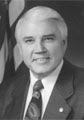
    Hall wants to issue bonds and build the roads to “deal with the transportation issue in central Virginia before it becomes a crisis,” writes reporter Will Jones. Apparently, Hall has the backing of some regional business leaders. Jim Dunn, president of the Greater Richmond Chamber of Commerce, says businessmen should give Hall’s proposal “some thought,” citing extensive needs, such as widening Interstate 64 east of Richmond, extending the Powhite Parkway, and improving Hull Street Road — all of which would encourage people to settle on the metropolitan periphery and drive greater distances. Oh, and Dunn says we need to promote regional transit, too.

    Bacon’s Bottom Line: Thus, while oil hits $100 per barrel and the nation’s leading business publication calls into question the viability of America’s auto-centric economy, Richmond political and business leaders propose to double down their bets on an auto-centric transportation system adapted to $10-per-barrel oil. Nowhere in the article is there any mention of addressing the dysfunctional human settlement patterns at the root of Richmond’s surging transportation needs.

    As Trip Pollard with the Southern Environmental Law Center pointed out in his recent study on land use, transportation and climate change in Virginia, “New Directions,” the Richmond region is developing land at a more prodigious rate — converting 58,000 acres of land between 1992 and 1997, compared to 49,300 acres in the far more populous Northern Virginia region and 43,300 acres in Hampton Roads. (Admittedly, those numbers are a decade old, but there is little to indicate that the pattern has changed.)

    Scattered, disconnected, low-density development is the root cause of transportation dysfunction. Not only would Hall do absolutely nothing to reverse this “suburban sprawl,” he would, in fact, subsidize it. Instead of advocating a “user pays” system, in which those who drive more pay more, Hall would finance the scheme largely through a sales tax. Thus, those who walk to work, bicycle to work, telecommute, carpool, ride the bus or simply live a short drive from work, would subsidize those who choose to live ever increasing distances from employment centers and put increasing strain on the transportation system.

    Then there’s the issue of the transportation authority itself — an unelected and largely unaccountable body empowered to increase taxes. Hall seems blandly unconcerned by the objections raised by citizens in Northern Virginia and Hampton Roads, much less by the legal challenges to the constitutionality of the authorities. Says Hall, “We have been assured by the attorney general … that it meets the test and those statutes are valid.”

    More money for sprawl-inducing mega-projects as oil tops $100 per barrel. Wow, that’s a real formula for regional success. NOT! This abomination — the Son of HB 3202 — must be strangled in its cradle before it locks into place a dysfunctional transportation system that does immeasurable harm to the future prosperity, liveability and sustainability of the Richmond region

  • House Lust and Mass Overconsumption

    Home ownership is a good thing. As Washington Post columnist Robert Samuelson observes, people who own homes take better care of them than people who rent. Homeowners invest in their property and stabilize neighborhoods. Perhaps most important, home ownership gives people an opportunity to accumulate wealth. It gives them something to protect. It gives them a stake in society.

    But it’s possible to have too much of a good thing, Samuelson argues. Fueled by $89 billion a year (in 2008) in mortgage deductions, home ownership has become a driving force of Mass Overconsumption. In Sweden, England and Italy, new homes average less than 1,000 square feet. By 2005 in the United States, the average newly built U.S. home measured more than 2,400 square feet. Samuelson quotes the president of Toll Brothers, a builder of 5,000-square-foot McMansions:

    “We not selling shelter. We’re selling extreme-ego, look-at-me types of homes.”

    Stoking egos with bigger homes requires more furniture to fill the extra space and the consumption of more energy to heat, cool and light it. All of that consumption costs a lot of money, which goes a long way to explaining why Americans save so little, rack up so much personal debt, run such huge trade deficits with thriftier nations, and consume so much energy. (If you believe the global warming hype, it also explains how McMansions are an indirect contributor to greenhouse gases as well.)

    Now, I personally believe that people should be free to live how they want, as long as they’re not hurting anyone else. If people want to indulge their egos by buying a 5,000-square-foot house, then that’s their business. (I live in a 3,900-square-foot house, and my wife wants to add on to it, so it would be hypocritical for me to suggest otherwise.) But I don’t see a compelling social benefit that justifies $89 billion in mortgage subsidies, most of which goes to affluent households like mine. The mortgage deduction should be capped at $5,000 or so in annual interest payments — if not eliminated entirely.

    While we’re on the subject of “house lust,” as author Dan McGinn calls it, let us not forget: The federal government is not the only level of governance that encourages Mass Oversconumption in housing. Here in Virginia, municipal governments favor homes that yield more in property taxes. Through all manner of strategems, from large-lot zoning to restrictions on the building of multi-family housing, municipal governments promote the construction of large homes and discourage the construction of smaller units.

    (Photo credit: About.com.)


  • Can You Text C – R – A- S – H?

    Teenagers are a menace on the highways. Not only are they more likely than adults to drive recklessly under the influence of alcohol, they’re more likely to drive recklessly even when they’re not under the influence of alcohol — as in, when they’re “texting.” According to Tyler Whitley in the Times-Dispatch, a recent poll of 16- and 17-year-olds found that 46 percent said they send text messages while driving.

    No sane person — which basically excludes all teenagers, who are driven by hormonal impulses that block the exercise of reason — would try to compose and send text messages while driving, no matter how dextrous their fingers and thumbs. Such an activity is only one step removed from reading a newspaper while behind the wheel. Some people might get away with it, but an elementary principle of safe driving is to keep your friggin‘ eyes on the road!

    While I normally oppose the relentless incursion of the Nanny State into our lives, I think it’s only common sense to prohibit texting while driving. Thus, I support HB 39, submitted by Del. James M. Scott, D-Fairfax, that would prohibit “operation of a motor vehicle, bicycle, electric personal assistive mobility device, electric power-assisted bicycle, or moped on the highways in the Commonwealth while using any wireless telecommunications device for the purpose of sending, receiving, or reading any text message.”

    Scott conceded that he had no statistics showing a connection between texting and driving accidents. But this is one of those rare cases in which no evidence is required. The prohibition, on its face, makes sense.

    Just one question: What is a “personal assistive mobility device?” An electronic wheelchair?

    Just one comment: If someone is crazy enough to whiz down “the highways in the Commonwealth” in a wheelchair while simultaneously blasting out text messages, I say, more power to them!

    (Photo credit: Gizmodo.com.)


  • End of an Era

    Sad news, folks: After two-and-a-half years of supporting Bacon’s Rebellion by funding our Road to Ruin project, the Piedmont Environmental Council is letting its sponsorship expire. With financial backing from the Prince Charitable Trusts and the Agua Funds, the PEC had given Bacon’s Rebellion free reign to write about critical issues facing Virginia, especially those related to transportation and land use, that the Mainstream Media lacked the resources or inclination to cover.

    It was a great ride while it lasted. Thanks to the PEC, we were able to assign our veteran reporters Peter Galuszka and Robert Burke to dig up the stories that no one else was writing about, while I edited, wrote columns and blogged daily. All told, we generated 69 original news stories and analysis pieces — see the list — and blog posts too numerous to mention.

    It was the ideal sponsorship: The PEC never told us what to write, and it never called us on the carpet for expressing a point of view that varied from the Council’s party line. I’m sure I gave President Chris Miller heartburn more than once with my barbs against the environmental community’s Global Warming orthodoxy, not to mention my support of nuclear power. But Miller valued our ability to articulate issues of importance to the PEC — not just the need for transportation and land use reform, but the imperative to think differently about energy and the environment — in a way that no one else was doing, and in our ability to reach out to an audience beyond the conservationists of the northern Virginia piedmont.

    Alas, PEC resources are tight, and the organization is locked in a death grip with Dominion over the high-voltage transmission line that the power company wants to build through PEC territory. I haven’t been told this, but I am assuming that Bacon’s Rebellion wasn’t as core to the PEC mission as fighting the transmission line. While I took a skeptical view of the transmission line and argued for a Distributed Grid electric system, I never made the PEC’s battle my battle. The PEC needs every dime it can muster to carry on the fight. It’s hard to blame the organization. I would have made the same call.

    So, what’s next for Bacon’s Rebellion? I will continue publishing the e-zine, with its columns, and I will continue blogging, though not as intensely as in the past. I’ve got to make an honest living now!

    Among my options, I’ll probably seek another sponsor, or sponsors. Bacon’s Rebellion is the leading non-partisan, public policy e-zine and blog in Virginia. There are several first-rate political blogs, to be sure. But their focus is primarily on the mechanics and dramatic personae of the political process, not public policy, and most have partisan affiliations. Bacon’s Rebellion is unique in that:

    • We focus on public policy issues exclusively
    • We create a forum where all political persuasions can interact civilly
    • We do not endorse candidates for office or government position
    • We have no party affiliation

    If there’s anyone out there who would like to discuss how we can raise the visibility of the issues that matter to you, please give me a call at (804) 873-1543.


  • The Coming Assessment Wars

    For a couple of years now, I’ve been predicting the following course of events: (1) a collapse of the housing bubble, followed by (2) a collapse of real estate assessments, (3) higher tax rates to make up the revenue loss, and (4) a revolt of the taxpayers against city councils and boards of supervisors.

    There’s no denying the collapse of the housing bubble — it was one of the biggest national stories 0f 2007. I don’t mind patting myself on the back for calling it back in November 2003. It’s taken longer than I thought it would, but it looks like we’re moving to phase 2, the collapse of real estate assessments and increase in tax rates. Peter Galuszka wrote about the budgetary impact of the real estate downturn in Prince William County earlier this month in “Boxed In.”

    Now, it seems, trouble is brewing in Loudoun County. Danilo Bogdanovic, a Loudoun County Realtor, blogs in Loudoun Stats how citizens are getting agitated about real estate assessments. Wrote Bogdanovic on December 12:

    Everyone we’ve talked to in Loudoun County is upset about their assessed value and most are worried that their 2008 tax assessments will not be in line with their fair market value. The people who are even more upset are those who appealed their tax assessments earlier this year and were completely shot down without a good, if any explanation.

    Yes, they’re upset because they’ve lost market value. But why are they really upset? Because 2007 assessed values are up to 30 percent higher than current market values (non-foreclosures or short-sales) and they think that the Tax Assessor doesn’t care. That means that Loudoun County residents are paying up to 30 percent more in taxes than they should.

    (At the risk of being picky, I don’t think Bagdanovic has it quite right in that last sentence. One way or the other, Loudoun taxpayers are going to pay close to what they’re paying now — the cost of running the municipal government. If real estate values were properly assessed, revenues would fall so dramatically that the Loudoun Board of Supervisors would have no choice but to raise tax rates to make up the shortfall. But no matter. In either case, homeowners feel like they’re getting hosed.)

    If Bagdanovic’s original post was interesting, a follow-up post, dated December 29, was even more so. Todd Kauffman, Loudoun County Assessor, contacted a senior member of the Loudoun Realtor association to object that Bagdanovic has posted misleading information on his blog that constituted a violation of the Realtor Code Of Ethics. Needless to say, Bagdanovic had no intention of backing off.

    I have no idea whether Kauffman is right or wrong about the Realtor Code of Ethics, but it clearly looks like local governance practitioners in Loudoun County are getting really worried if one of them is trying to bring a local blogger to heel.

    Voters have already thrown out Loudoun’s previous Board of Supervisors, leaving the new Board to clean up the mess. But the incoming Board still needs to run the government, and it needs revenue to do so, and it would seem to have precious few options. Inevitably, the next front in the battle over the size, scope and funding of Loudoun municipal government undoubtedly will focus on the justice or injustice of real estate assessments.

    (Hat tip: Ben Martin.)


  • New Dawn for Day?

    Bacon’s Rebellion does not endorse candidates for any government position, but we do take pride when regular contributors (or former contributors) seek to elevate themselves from the easy work of punditry to the hard job of actual governance. Thus, we are delighted to take note that former Bacon’s Rebellion columnist and blogger Barnie Day is under consideration for appointment to the State Corporation Commission.

    If picked, Day would succeed Judge Theodore V. Morrison, who is retiring at the end of this year. State Sen. William C. Wampler, Jr., R-Bristol, had been widely deemed a favored candidate for the seat but has withdrawn from consideration.

    The three SCC commissioners are key players behind the scenes in the debate over Virginia energy policy because, among their other duties, they oversee rate making and other regulatory matters for Virginia electric-power and natural-gas utilities. Day provides this capsule summary of the philosophy he would bring to the job:

    Generally, in the abstract, I believe that an unfettered marketplace is the best arbiter of private transactions between willing individuals. Over the past hundred years or so we, as a society, have collectively decided that our interests are best served by giving some businesses and institutions special status in the marketplace, and, in return, we have empowered the SCC to watch on our behalf these businesses and institutions, largely through the restraint of regulations.

    I do not have a law degree and do not look at things through a lawyer’s set of filters, but rather a consumer’s perspective, tempered with appreciation for the vital role stock holders and employees play in our overall well-being. The General Assembly membership may deem that an all-lawyer commission remains the best composition of this agency. I have no qualm if they do. It is a prerogative entrusted to them by our constitution.

    Day, who works as vice president-administration for Smith River Community Bank, lives in Patrick County. He serves on the board of the Virginia Tobacco and Indemnification Commission and a number of other community organizations. A Democrat, he served in the House of Delegates from 1997 to 2001.

  • Decoupling Natural Gas

    Well, I’m back from North Carolina, where I watched Wake Forest (my wife’s alma mater) triumph over the University of Connecticut in the Meineke Car Care Bowl. (Yes, that’s actually the name of the Bowl game — not one of your more prestigious events.) Thank you to EMR for stimulating discussion during my absence of Peter Galuszka’s important article raising concerns about the proposed third reactor at North Anna. While my inclination is to favor the expansion of nuclear power, there’s no gainsaying the legitimate concerns that Peter and others have raised.

    I would like to draw attention to another significant article related to energy policy, “Cleaner, Cheaper, Better,” by Jim Kibler, vice president of governmental relations for the energy company that owns Virginia Natural Gas. Kibler outlines a schema for overhauling the rate structure for natural gas prices so as to encourage conservation of the fuel.

    As Kibler explains, traditional rate structures were devised decades ago, when fuel was cheap and plentiful but the cost to build a grid to provide universal service was staggeringly expensive. Rate makers encouraged gas consumption: The more fuel the gas companies sold, the more money they had to continue investing in inter-regional transmission lines, storage facilities and pipes to the home. Writes Kibler:

    Economists devised an effective mechanism to create the economies of scale necessary to provide universal service: Tag each molecule of the gas with a piece of the cost of infrastructure. Because utilities earned more money the more gas they sold, they had an incentive to encourage consumption, and that’s exactly what they did.

    But policy priorities have changed. The infrastructure for delivering natural gas to homes and businesses has been built, and gas is no longer cheap. As the cleanest of non-renewable fuels and as a fuel that can be stored and burned to generate electricity during periods of peak power consumption, natural gas also is experiencing tremendous growth in demand.

    Recognizing the desirability of conserving natural gas, other states have “decoupled” rates for gas utilities, Kibler observes. The structure works like this:

    Under a decoupling model, the fixed costs of natural gas utility service are truly separated from the variable component โ€“ customer energy use. … No longer is each molecule of gas tagged with a slice of the infrastructure. The customer pays one charge based on the cost of building and maintaining the system (the only part of the bill that the utility controls) and another for his consumption (the only part of the bill that he controls). Natural gas utilities in Virginia would continue to pass through commodity prices at cost.

    When gas companies are no longer incentivized to sell more gas, they can make money by selling energy-saving services and appliances to consumers. As Kibler says, “Utilities with a profit motive to encourage conservation can use their access to customers and heft in the marketplace to contract for cost-effective customer energy audits, lower prices on programmable thermostats and obtain good deals and rebates on more efficient appliances, among other things.”

    Makes sense to me! Am I missing something?


  • MORE ON LAKE ANNA

    We agree with Larry Gross that Peter Galuszka did a good job with the column “Rethinking Lake Anna.”

    Further, we agree with Peter that ramping up nuclear power is a topic that may be given too little attention in the rush to shrink humans carbon footprint.

    Since Jim is on the road I will copy the comments from the string under to posting on the 27 December Baconโ€™s Rebellion so they are not mixed up with other comments on other columns in hopes of fostering more input.

    We note that Jason Mark did a nice job on the topic (“Atomic Dreams”) in “Earth Island Journal.” Autumn 2007 reprinted in Utne Reader Jan / Feb 2008. The comments on the Utne Reader web site illustrate the power of the PR campaign now underway by the Nuclear Energy Institute / Hill and Knowlton which we will note in PART IV of THE ESTATES MATRIX.

    As you might guess, our position is that the first order of business is to shrink Mass OverConsumption and to support strategies that result in a Distributed Grid, not massive new super-plants.

    EMR


  • Blog Vacation

    No more blogging for a few days. I’m off to North Carolina to visit the in-laws, and my laptop has died on me. Everybody enjoy the holidays!


  • CALL CENTER JOBS II

    (This is a repeat of a prior post that was contaminated by a spammer.)

    It seems that more and more one must deal with tired and incompetent call center workers.

    On the web yesterday and in WaPo today (“Indians Trade Health for Jobs: Disease, Weight Gain Likelier for Outsourced Workers” page D-11 behind Spots) there is an interesting perspective on what is happening among the 1.6 million call center workers in India.

    This data may provide insight into the future of Balanced Communities on an ever more Flat Earth.

    If these trends continue more and more in India will seek other ways to use their education and language skills and as the quality level declines Enterprises in the US of A will find it less and less effective to outsource across time zones. The falling value of the Dollar will accelerate this trend.

    It may turn out that only sustainable alternative is Balanced Communities in sustainable New Urban Regions, here or there.

    EMR

