
On behalf of bloggers, policy wonks and human settlement pattern junkies everywhere, happy birthday, Mr. Bacon. And many happy returns!
-
Happy Birthday Jim
-
Want to Stop Growth? Pass the Watkins Bill.
“Be careful what you wish for,” warns Corey Stewart, chairman of the Prince William County board of supervisors. SB 786, which would eliminate proffers and impose uniform impact fees on new real estate development, “will shut down residential development all over the county. I will make sure it shuts down residential development in Prince William.” So reports Kipp Hanley with the Manassas Journal-Messenger.
Under the bill, Northern Virginia jurisdictions could impose impact fees of no more than $8,000 to offset the cost of improving roads and building public facilities. Although the bill would collect impact fees from by-right developers, who don’t need to file rezoning requests and consequently pay nothing, local governments would not come close to covering the costs of growth. In William County, proffers currently run around $38,000 per dwelling; Stewart has pushed to raise them to $51,000.
The bill would boomerang on the very home builders who help draft the legislation that was submitted by Sen. John Watkins, R-Powhatan. Supervisors in fast-growth counties would routinely deny rezoning requests — including larger, better planned, mixed-use, pedestrian friendly and transit-friendly projects. Virginia would experience an acceleration of scattered, disconnected, low-density development — sprawl on steroids. My initial, ill-considered reaction to the bill was favorable. But now that critics have surfaced with powerful arguments against it, I have to say the legislation would be a disaster.
-
Who Will Report the News? WaPo Gets New Publisher
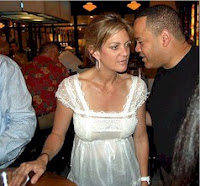 Katharine Weymouth, granddaughter of legendary Washington Post chairman Katherine Graham, has been named chief executive of Washington Post Media, a new division that encompasses The Washington Post newspaper and its online component, washingtonpost.com, WaPo has reported.The appointment accompanies news that in March, WaPo will offer an undetermined number of early-retirement packages to newsroom staffers and other employees. The latest culling follows buyouts in 2003 and 2006, which reduced staff by about 120 employees.Weymouth has a tough job ahead. Newspaper circulation, which peaked at 832,232 in 1993, has eroded to 638,000 papers Monday through Saturday. Quarter-to-quarter print advertising revenue at the Post declined 13% in the third quarter of 2007, with once-lucrative classified advertising revenues getting especially hard hit.Revenues at the Post’s website is increasing, but not fast enough to offset newspaper losses. Website revenues added $2.7 million in revenue during the third quarter – far short of the $16.3 million in advertising that the newspapers lost. I would speculate that the newspaper and website combined have more readers than ever. The problem is that Web readership generates smaller ad revenues and tighter profit margins than print. That is the nature of the Web — and the bane of newspapers everywhere.And what can we expect of Weymouth, a 41-year-old mother of three, a Harvard grad and recipient of a Standford law school degree? It looks like the newspaper and website will collaborate more closely. “We hope to get under the sheets, look at each other more closely, exchange information more freely and figure out what areas we can be more effective in working closely together and what areas should remain separate.”Read the article and watch a short video clip. They do not inspire confidence. Weymouth surely knows the enormity of the challenge facing one of the world’s great newspaper brands, but she (or the newspaper article describing her ascension to the CEOship) doesn’t mention it, much less offer any path — futile or otherwise — to reverse the slide. But, hey, she does have a Facebook profile! That’s where the photo above is from. (Photo credit: Washington Post.)
-
HOT Lanes at 45 MPH Not So Hot
If High Occupancy Toll lanes are placed on Interstates 395 and 95 in Northern Virginia, their private-sector operator would be required to assure average speeds of only 45 mph, reports Lillian Kafka with the Manassas Journal-Messenger.
The Virginia Senate Transportation Committee decided not to up that average speed to 55 on Thursday.
“We believe it is going to be too difficult to maintain that 55 mph average speed,” said Keith Martin, policy director at the Virginia Department of Transportation. “It may discourage companies from partnering with us.”
Or, he added, it could raise the variable rate tolls even higher than they could already increase as the HOT lanes become more congested.
Interesting question: Which would the public prefer, faster lanes and higher tolls, or slower lanes and lower tolls?
Here’s my question: Why is the Virginia Senate Transportation Committee making this business decision? Why isn’t that left to Fluor/Transurban?
-
Awesome New Transportation Technology On the Way
The I-95 Corridor Coalition, which includes Virginia among 16 states, has signed a contract with Kirkland, Wash.-based INRIX, to provide travel time and speed data on a network of U.S. highways and arterials for the purpose of contributing to interstate movement along the I-95 Corridor.
According to an INREX press release, the company’s Smart Dust Network and INRIX Traffic Fusion Engine will aggregate and blend traffic data from a variety of sources, including more 750,000 GPS-enabled vehicles and traditional road sensors. The I-95 Corridor Coalition initiative is the largest implementation of real-time traffic flow data sharing across a multi-state region and the first multi-state project leveraging GPS vehicle probes and traditional road sensor information.
The initiative is just one example of what the Kaine administration is doing to leverage technology to improve the flow of traffic, Aneesh Chopra, Virginia’s Secretary of Technology, told the Greater Richmond Technology Council this morning. “We want to put information into the hands of folks so they can make better judgments about where to drive.”
Chopra made the remarks while introducing Jim Buczkowski, director of electrical systems engineering for Ford Motor Company. Buczkowski then outlined Ford’s initiative to convert automobiles into mobile computing platforms capable of handling everything from Ford’s new voice-activated Sync technology to GPS navigation. I’ll have more to say about Bucskowski’s comments in the e-zine Monday.
-
A Cure that’s Worse than the Disease
While I’m no fan of Gene Nichol’s policies at William & Mary — I totally share the concerns of certain members of the House of Delegates about the decisions the college president has made — I’m not sure that hauling members of the W&M Board of Trustees into the General Assembly for questioning is a good idea either.
As Olympia Meola reports for the Times-Dispatch, “Delegates spent 90 minutes yesterday grilling four members of The College of William and Mary’s board of visitors on their view of recent school events, including the Sex Workers’ Art Show, and their intentions for the future.”
I am very uncomfortable with the idea of the General Assembly micro-managing decisions made by Virginia’s college presidents — even when I happen to agree with the delegates on the issues concerned, and even though I have frequently argued in this blog that universities are largely unaccountable to anyone other than their own internal constituencies. As the same time, I worry that politicizing college decision-making could be a cure that’s worse than the disease.
The governor, if I am correct, has the power to appoint the trustees to the boards of Virginia’s public colleges and universities. If W&M trustees back up the president, what can you do? Elect a governor who will put trustees with a different philosophy onto board.
Otherwise, the impetus for accountability should come from college stakeholdersm not from politicians. Recent events at the University of Richmond, a private institution, were noteworthy: An unpopular president was recently unseated by alumni who rose up in revolt and threatened to stop contributing, thus jeopardizing fund raising. Why can’t W&M alumni hold the Nuckol administration accountable, as some already have, by voting with their pocketbooks?
-
Virginia, West Virginia, Trailer Trash — What’s the Difference?
 Now that Sen. Richard Saslaw, D-Fairfax, is top dog in the state Senate, the General Assembly is getting a lot more entertaining. Last month, the Senate majority leader characterized Southwest Virginia gun rights zealots as Deliverance creatures (see “Quote of the Day: But First Cue the Banjos“). Once again, to paraphrase Britney Spears, oops, I think he’s done it again.Here’s the latest from the Senate majority leader, as reported by the Washington Post:
“We are West Virginia, if we pull Northern Virginia out of the equation,” Saslaw said, referring to the difference in the tax base between Northern and southern Virginia.
It’s easy to get mad at Saslaw, but he’s simply reflecting the views that many Northern Virginians feel but are too circumspect to say out loud. I remember hearing something similar 20 years ago from George Johnson, the former president of George Mason University: “Take away Arlington, Alexandria and Fairfax County, and what you’re left with is…. Arkansas.” Badda boom! (Johnson had better delivery.)Northern Virginians are an interesting bunch. As well as disowning downstate Virginia, they wash their hands of Washington, D.C. A good number of them would love to secede from the Commonwealth, perfectly happy to leave the inner city (Washington) and outlying countryside counties to fend for themselves. I can’t think of any other place in the country that’s quite so ruthless in wanting to slough off underperforming jurisdictions — or so contemptuous of their neighbors.For the record, here’s how metropolitan statistical areas in RoVa (the rest of Virginia) stacks up to West Virginia in 2005 per capita income (a good proxy for a region’s tax base):Richmond – $36,537Charlottesville – $35,570Hampton Roads – $33,163Roanoke – $32,587Lynchburg – $28,846WEST VIRGINIA – $27,215Harrisonburg – $26,419Danville – $25,647Blacksburg – $24,647Please note that the MSAs with higher incomes than West Virginia are considerably more populous than the MSAs that are lower.(Hat tip: The VA GOP Caucus blog.)
-
Watkins’ Impact Fee Bill Advances in Senate
A state Senate bill to replace proffers with impact fees has won approval from the Senate Finance Committee and now faces a vote in the full Senate.
As Chelyen Davis with the Free Lance-Star reports, the bill’s author, Sen. John Watkins, R-Powhatan, told the Senate Finance Committee that the proffer system is “out of hand, it is out of control.” Some localities charge proffers up to $40,000 per new house, which raises housing prices, makes homeownership less affordable, and artificially inflates real estate taxes.
Smart Growth groups have criticized the bill, which would cap the impact fees at $8,000 per house in Northern Virginia and $5,000 in the rest of the state, although it would extend to houses built under “by-right” development (not requiring rezoning), which currently are exempt from proffers. Such fees, they claim, don’t come close to the cost of covering the expense of roads, utilities and public services to new development.
And, according to Davis, it appears that Roger Wiley, with the Coalition of High Growth Communities, agrees. Said he: “The dollar caps in the bill are arbitrarily and artificially low. They are, make no mistake about it, designed to reduce the contribution of the development community. Give us some time. We aren’t rejecting the principle behind the bill. We’re willing to talk, as we’ve been doing already, to see if we can come up with some solutions to this problem.”
Davis reveals — as I had suspected but did not know for sure — that the Home Builders Association of Virginia not only backs the bill but helped Watkins write it.
The idea of treating all development, whether rezoned or by-right, on an equal footing strikes me as reasonable. Of course, while large developers, who frequently seek rezonings, will favor the idea, small developers, who tend to build on by-right lots that don’t require zoning, will oppose it. Still, I see that aspect of the bill as a positive because scattered, by-right development is the mortal enemy of efficient human settlement patterns.
The problem with the Watkins bill is that the impact fees are ludicrously low. Compounding that deficiency is the fact that a two-sizes-fit-all system will not work. The cost of extending infrastructure and services varies considerably from county to county, and each jurisdiction may seek a different balance between charging newcomers vs. existing residents for the cost of providing that infrastructure.
If the Watkins bill opens up a broader conversation on the reform of proffers and impact fees, it will serve a useful purpose. If it gets signed into law as is, it will be a travesty.
Update: “The Loudoun County Board of Supervisors voted unanimously Tuesday to “strongly oppose” a Senate bill that would require the proffer system to be replaced with a system of impact fees,” reports Leesburg Today. Chairman Scott K. York called the bill the “anti-taxpayer bill” that would “completely obliterate what we have worked through for 30 years with respect to the proffer system” with about “30 minutes of work.”
-
After Filling 1,368 Positions, Kaine Moves to Trim State Workforce
Concerned about deteriorating tax revenues, Gov. Timothy M. Kaine is putting a freeze on state hiring — and may consider more layoffs, reports Jeff Schapiro with the Times-Dispatch. “Anything is possible; everything is on the table,” Kaine press secretary Gordon Hickey said of firings, which have been limited to less than 100 so far.
By way of background, the number of state employees classified as “General Funded” (which, I presume, means funded by the General Fund, which excludes university employees and other groups over which the governor has little authority) stood at 39,420 in Jan. 2006, when Kaine became governor. By Nov. 2007, the number had risen to 40,788 — an increase of 3.5 percent in note-quite two years.
Given the surge in state spending, that increase in employee count doesn’t sound unreasonable. On the other hand, much of that surge was programmatic — spending on state aid to schools, Medicaid and the like, which should not take many more employees to administer. Also, the increase in the number of state employees should be compared to employment trends among large organizations in the private sector. I can’t readily find any productivity numbers for the service sector, but my sense is that most service-sector companies the size of the Commonwealth of Virginia are reducing employee count, not raising it.
Admittedly, the productivity (or lack of it) of the state workforce cannot be laid exclusively at the feet of Tim Kaine, who inherited an organizational culture that, for many reasons including oversight by the General Assembly, is highly resistant to change. But it is appropriate at this moment of Virginia’s fiscal history to ask: Where are the productivity gains promised by the reorganization of the state’s IT functions? In theory, Virginia is supposed to be saving lots of money on IT spending and equipping its employees to do their jobs more productively. Is that happening?
How is the Virginia Information Technologies Agency working out? Is it over the hump in its difficult reorganization? Is its quasi-independence from the executive branch proving to be a help or a hindrance? Is the contracting out of major functions to the private sector creating the promised benefits?
Inquiring minds want to know.
-
On the Energy Front…
From the Harrisonburg Daily News-Record:
JMU and seven universities in Virginia hope to shore up $4.8 million in state funding to research harnessing energy from Virginia’s offshore wind, ocean waves and algae during the next two years. But due to budget cuts, Gov. Timothy M. Kaine proposed only half of that amount for the research.
If we have to rely upon the state to fund renewable energy innovation, we’ll be waiting a long, long time. And then there’s this from Dominion spokesman Jim Norvelle, spinning an article in the New York Times:
Dominion believes a reason that electricity rates in Virginia are below the national average and stable today is because it uses a diverse fuel mix of nuclear energy, coal, natural gas, oil and hydropower to generate electricity. Our customers are not beholden to price spikes in any one fuel source, such as what happened in the natural gas market a few years ago. Our future generation plans would continue this trend.
Certainly energy conservation will play a growing role and Dominion is testing programs to see which ones our customers will adopt vigorously. But no one should expect conservation and renewable energy sources to replace generation; it will play a role in slowing the growth in electric demand.
I am confident that conservation and renewable fuels will play a huge part in Virginia’s long-term energy future. I am worried, however, how long it will take and what it will cost to get from here to there. Clearly, we need to move faster than Dominion and other electric utilities want to go. But we cannot do so heedless of the costs. It’s a tough balancing act.
-
Virginia Bridges Need Billions in Repairs!!!!!!
Here’s the lede and headline in Peter Bacque’s story in the Times-Dispatch about bridges in Virginia with structural problems: It will cost $3.5 billion to replace them all, just a half billion dollars shy of the Virginia Department of Transportation’s annual budget.
Sounds like a crisis! Ready to panic yet?
Here’s the less alarming news that appears in the body of the story: First of all, bridges that are “structurally deficient” are not necessarily “unsafe.” Second, the proportion of problem bridges in the state has been slowly, but steadily, getting smaller during the past 12 years, and is below the national average. This year, VDOT will spend about $150 million to maintain and repair the state’s bridges.
Bottom line: For $150 million a year, or about 1/3 of one percent of VDOT’s budget, we’re slowly working our way through the backlog of bridge repairs. There is no cause for alarm.
-
The Political Role Reversal over Payday Lending
The debate over payday lending is getting surreal. Posing as populist champions of the little guy, Republicans in the House of Delegates want to regulate the payday lending industry. They are aligning themselves on this issue with the likes of the Virginia Organizing Project and the Virginia Poverty Law Center. Meanwhile, industry lobbyists are looking to Sen. Richard Saslaw, the Democratic majority leader in the state senate, to save them.
In the latest iteration of the debate, the House Commerce and Labor Committee has approved a “compromise” that would impose regulations somewhat less onerous than those demanded by the industry’s most vocal foes. In addition to capping annualized interest rates at 36 percent, the legislation would allow payday lenders to charge 10 percent loan origination fees and verification fees of up to $5.00.
However, the bill would impose significant restrictions on lending. No borrower could have more than one outstanding loan at one time (ending the practice in which borrowers would obtain loans from competing vendors, sometimes juggling two, three or more loans at one time). Additionally, no one would be allowed to take out more than five payday loans over a year, and there would be a 24-hour cooling off period between loans.
While the R’s may be billing the bill as a “compromise,” it’s not clear exactly who compromised with whom. Apparently, the industry still opposes the legislation. Reports Jeff Schapiro in the Times-Dispatch: “In a hearing room filed with money store employees, lender lobbyist Reginald N. Jones said lawmakers were threatening the jobs of 2,400 workers at the state’s 800 payday-lending outlets, which last year dispensed nearly $1.5 billion in small loans.”
With the bill likely to pass the full House, the hopes of industry lobbyists now focus on Saslaw, who heads the Senate Commerce and Labor Committee and is widely perceived as being “pro business.”
Adding to the weirdness, former Gov. Jim Gilmore congratulated House Republicans for the compromise, and took the opportunity to jab Mark Warner, his rival for John Warner’s expiring U.S. Senate seat. Said Gilmore: “It is no secret that payday lending stores opened under the leadership of Mark Warner and the bill he signed into law. Their loans are deceptive and they should at a minimum be held to the same standards as other small-loan lenders operating in Virginia. Mark Warner’s decision to adopt this policy was wrong.”
To repeat my position on payday lending: I support marketplace transparency and the prevention of fraud. Payday lenders should fully explain interest rates and fees to borrowers. The law should ensure that consumers fully understand the terms and conditions of their loans. Otherwise, lawmakers need to butt out. If consumers can find better terms elsewhere — from family, friends, churches, banks, loan consolidators, wherever — they are highly motivated to do so. The General Assembly, egged on by a bunch of pious do-gooders who won’t suffer the consequences if payday lenders shut down and deprive borrowers of options, has no business setting the terms of loans.
The Republican Party, it appears, has abandoned the principles of free enterprise that it once embraced. If that leaves the Democratic Party as the standard bearer for free markets, then we’re pretty much all doomed.
-
Side Boobs and the End of Civilization
 The war against the much-dreaded and thoroughly feared side boob, has been temporarily avoided:
Police plan to drop a misdemeanor obscenity charge filed against the manager of an Abercrombie & Fitch clothing store that displayed two photos of scantily clad men and a woman, a city attorney said yesterday.
Police said they confiscated the photos from the Lynnhaven Mall store Saturday after some customers complained and Abercrombie management did not heed warnings to remove the images of three shirtless young men, with one man’s upper buttocks showing, and of a woman whose breast was mostly exposed.
One can only imagine how many tickets Virginia Beach police issue to beachgoers who dare to expose such body parts during the high season… to protect the children, of course.
Update: I took the liberty of adding one of the offending images (with the racier aspects tastefully blurred). Alas, the “side boob” image was so tame — far milder than you could find by typing “Jessica Alba” and “side boob” into Google — that it wouldn’t inspire enough prurient interest to warrant reproducing here. — Jim Bacon.
-
You’ve Seen Enough
It seems Sens. Cuccinelli and Peterson have run into a roadblock on their way to greater budgetary transparency. In his newsletter, and in his inimitable style, Ken shows us that at least one of his Senate colleagues, Sen. Edd Houck, thinks we’ve got all the transparency we need right now, thank you:
In our debate on the bill, he said that he doesn’t see any problem with how open our government information is today. Now, remember, Sen. Houck is a Senate Budget Conferee! He has been in the Senate for over 25 years and he has Finance Committee staff at his disposal for his own self-education on budget matters. Do you have that? I didn’t think so.
Sen. Houck went on to say that he was offended by the notion that we needed the bill, as putting in the bill implied that Virginia government was somehow not open and transparent already (I’m not kidding. I mean, I’m funny, but I can’t make this stuff up…). Virginia legislators, much less citizens, cannot find much budget or expenditure information online that’s worth the effort, and it certainly isn’t out there in any organized fashion that makes sensible research possible (forget easy, let’s start with possible…).
I wonder if Senator Houck would accept a challenge to take 10 minutes of his time to see if he can demonstrate that he can in fact find anything about specific expenditures via any online information now available from Virginia Government? Hmmm… I’ll ask. I’ll let you know what I hear back.
Ah the Senate… no matter which party is in charge, it’s the grandees who oversee the budget that have the real power. And it seems they are unwilling to allow even the palest glimmer of light to intrude on their fiefdom.
-
The Free-Market Conservative’s Case for Journey Through Hallowed Ground
 At the risk of inciting my blogging friend Groveton, I recommend to readers an op-ed piece that I penned for the Fredericksburg Free Lance-Star, “History, lifestyles, and vistas are threatened,” in which I extol the virtues of the Journey Through Hallowed Ground.JTHG is one of the most promising experiments in free-enterprise conservation taking place in the country today. The broad-based initiative, which encompasses the region along the U.S. 15 corridor between Charlottesville and Gettysburg, is based upon respect for property rights. Contrary to the delusional claims of adversaries who see it as a Trojan horse for introducing land use controls, JTHG is conspicuous by its refusal to get embroiled in land use disputes. The group’s purpose is to create an alternate economic model for towns, hamlets and farms on the fringe of the Washington metropolitan area — a model built upon heritage tourism, Main Street revitalization, and sustainable agriculture — that enables landowners to make a decent living without selling off their property for scattered subdivisions and shopping centers.I’m not saying the model is perfect. Perfection is for heaven, not earth. JTHG wants a federal designation as a National Heritage Area, which would come with funds for educational programs, and it seeks National Scenic Byway status for Rt. 15, which also would entail the expenditure of federal funds. So, if you’re a deficit hawk worried about runaway federal funding, like Groveton, you might object to these priorities. Ed Risse offers a different criticism: If heritage tourism becomes really successful, how much automobile traffic will it generate, and what are the implications for highway congestion in the corridor and for environmental sustainability?Both legitimate points. But to my mind, those objections are far outweighed by the positive, uplifting example set by the Journey Through Hallowed Ground. JTHG aims to preserve our cultural and historic heritage, and it aims to do so not by filing lawsuits and lobbying for government restrictions on growth, but by creating economic value and preserving natural and manmade landscapes. How self-styled conservatives can object to that is a mystery to me.(Photo cutline: Oakhill plantation. Photo credit: Journey Through Hallowed Ground.)



