Tag Archives: Outer Beltway

VDOT Terms Conservationist Alternative an Impractical “Thought Exercise”

Traffic on I-66

Traffic on I-66

by James A. Bacon

The Virginia Department of Transportation (VDOT) has fired back at conservation groups opposing Northern Virginia’s Tri-County Parkway, asserting that their proposed alternatives would cost $6 billion to implement compared to an estimated $450 million to build the parkway. Ignoring the realities of the transportation planning process, says VDOT, the “substitute vision” amounts to little more than an impractical “thought exercise.”

“The suggested improvements represent not a simple alternative to the TCI project, but more of a substitute transportation vision (such as might be found in a regional or sub-regional transportation plan) rather than a transportation improvement alternative that could be implemented as a single project or a single project package in lieu of the proposed TCI,” states a newly published VDOT memorandum, “Analysis of the Substitute Vision Provided By SELC Et Al. As An Alternative To The Tri-County Parkway.”

“Efforts to combine a package of disparate components of a Substitute Vision into an alternative to a single proposed action (such as the proposed Tri-County Parkway) do not reflect the realities of the transportation planning process and, other than serving as a sensitivity analysis and planning/thought exercise, are largely impractical,” states the document.

The Tri-County Parkway (also referred to as the Bi-County Parkway) is a key link in a proposed North-South Corridor running west of Washington Dulles International Airport down to Manassas and Interstate 95. The project has provoked a strong reaction among citizens living around the Manassas National Battlefield Park and the designated Rural Crescent in western prince William County.

In January the Southern Environmental Council (SELC), Piedmont Environmental Council (PEC), Coalition for Smarter Growth (CSG) and other preservation groups issued a document, an “Updated Composite Alternative,” that detailed alternatives to the proposed parkway. Ideas included making major upgrades to existing roads, such as improvements to the I-66/Route 28 interchange, HOV lanes and mass transit on major arteries, and installing roundabouts to reduce congestion at intersections of heavily traveled two-lane roads.

Conservation groups contend that the parkway is a speculative project designed to address population growth forecast to occur over the next three decades in Loudoun and Prince William counties, draining money from projects needed to ameliorate the congestion that already exists in Northern Virginia’s east-west corridors.

To analyze the Updated Composite Alternative, VDOT broke the ideas into specific projects, identifying specific improvements and start- and end-points for each. Then it used the Metropolitan Washington Council of Governments traffic and land-use model to analyze the results. “The most notable conclusion is that, even with the changes assumed for the Substitute Vision, travel demand on the Tri-County Parkway remains relatively unchanged,” the memo states.

Further, the document added, “The components of the Substitute Vision do not take into account any elements of actual project development, which are factors that are critical to the realistic recommendation of an alternative/set of alternatives. Such factors include … funding, assessment of potential environmental impacts or constraints, and public/agency involvement and comment. In contrast, the Tri-County Parkway has been undergoing the NEPA process since 2001.”

Concludes the memo: “The Substitute Vision clearly is not a ‘low build’ alternative that could be implemented easily in a timely fashion.”

Stewart Schwartz, executive director of the Coalition for Smarter Growth, said that the conservation groups behind the Updated Composite Alternative have not had an opportunity to study the highly technical VDOT memo in detail. However, he did offer this response to some of the memo’s more general comments:

We included projects that are common sense priorities that VDOT has left out of both short-term and long-term plans and priority lists.  What stands out from their report is the number of projects which they have NOT placed on the region’s Constrained Long Range Plan and/or are not included in their new draft six-year construction plan,  but would offer real benefits for commuters today.  These include projects like the Route 28/I-66 interchange to address the demand to reach jobs east of Dulles Airport and reduce delays on I-66, and the Route 28/Braddock Road interchange to replace a traffic light-induced bottleneck.  Our list also includes projects that Loudoun has placed on its County Transportation Plan to fix the Route 50 corridor, and critical transit investments to help Prince William commuters, like extending VRE and adding express bus service, and in the future extending Metrorail to Centerville.  Why aren’t these projects VDOT priorities?

It’s simply misleading of VDOT to call our alternative a $6 billion package as compared to their $450 million TCP.   In a number of cases, it is VDOT that defined oversized, more costly versions of what we proposed.  But more importantly, as I just said above, the many projects we list are necessary to address the primary problem of east-west congestion and other current and future needs.  Therefore, they should and would naturally be included a similar area-wide package by VDOT totaling in the billions as well.

It is because of these significant needs, that we and others are questioning why VDOT would spend not just $450 million on the TCP but $1 billion or more on the Outer  Beltway from I-95 to Route 7 and the associated Dulles Connector that could cost another $500 million.   Note that the Outer Beltway would likely cost much more than $1 billion if the TCP is indeed now estimated at $450 million for the ten miles from I-66 to Route 50. But whichever way you cut it, VDOT is proposing $1.5 billion or more for a highway that doesn’t address priority commuter needs.

What we expect to find when we complete our technical review of VDOT’s report on our alternative and their other report updating their traffic numbers for their Draft Environmental Impact Statement is that the new north-south highway through the Prince William Rural Crescent and rural Loudoun Transition Area will itself induce new development and create new traffic.  So, not only does the TCP not address priority transportation needs, the highway will make traffic worse.

Battle for the Battlefield

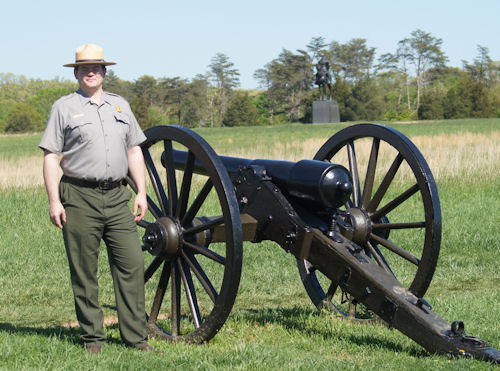
Manassas Battlefield Park Superintendent Ed Clark stands by a federal cannon with a statute of Stonewall Jackson in the background.

Manassas Battlefield Park Superintendent Ed Clark stands by a federal cannon with a statute of Stonewall Jackson in the background.

The Manassas Battlefield has become the scene of yet another irreconcilable conflict: this one between VDOT’s road-building plans, park service preservation goals and local residents protecting their way of life.

by James A. Bacon

As superintendent of the Manassas National Battlefield Park, Ed Clark enjoys regaling visitors with stories about the colorful characters who took part in two of the most important battles of the Civil War. But the administrative aspects of his job require most of his attention. Clark oversees the restoration of historical structures in the park and the updating of exhibits. He directs the plan for restoring the landscape to its 1862 form, which means cutting down some of the woods that have grown up since then, replacing invasive trees with native species, and doing something about those confounded deer. He keeps careful tabs on the private property inside the park and on its periphery. He would love to buy out the handful of property owners who still live within the official park boundaries, and he dreams of acquiring select properties outside the boundaries.

But Clark’s biggest preoccupation these days is traffic… rush hour traffic. The theme that animates his thoughts is how to improve the experience of the roughly 600,000 people who visit the park each year. And traffic congestion, he says, is ruining that experience.

About 24,000 vehicles per day use two two-lane roads — U.S. 29 (Lee Highway) and Rt. 234 (Sudley Road) — that intersect in the heart of the battlefield park. The two roads are direct descendants of the old Warrenton Turnpike and a local dirt road that played key roles during the battles. Clark knows they can’t be restored to their primitive, 19th-century condition but he’s not happy with the way they have been co-opted as regional transportation arteries serving the development sprouting all around in western Prince William County.

For three to four hours each morning and then each evening, traffic stacks up at the intersection near the old Stone House, one of the most visible battlefield landmarks. The driving tour, which many people take because the distances are too far flung to walk within the seven-square-mile park, requires crossing that intersection eight times. “The traffic detracts from the visitor experience,” says Clark. “Basically, it shuts down the park to visitors.”

The superintendent now finds himself embroiled in a political slugfest worthy of the artillery duel where General Thomas J. Jackson was said to stand as steadfast as a stone wall. But the 21st-century conflict is more complex and more drawn out. Manassas Battlefield sits athwart the route of a four- to six-lane highway that the McDonnell administration wants to run from the City of Manassas past Dulles airport. Local landowners, smart growth groups and even many local Republican legislators don’t want to see this rural corner of Northern Virginia developed.

Clark says he is doing his best to reconcile the park service’s preservation goals with McDonnell administration transportation policy, all the while respecting the rights of local landowners. He is negotiating a “programmatic agreement” with the Virginia Department of Transportation that would allow the state to run a major north-south highway past the western edge of the park, sharing alignment with a portion of a planned battlefield bypass that will loop around the northern periphery. In exchange, the park service would get to close the north-south segment of Rt. 234 inside the park and, when the bypass is complete sometime in the indefinite future, close the east-west segment of Rt. 29.

“We’re at the end game of a lot of conversations,” he says. Now the negotiations have boiled down to minimizing the footprint of the highway and mitigating its noise and visual impact.

But Clark may not be as close to the end game as he thinks. Only recently have citizens gotten wind of the details of the draft programmatic agreement, and they’re fired up.

“We feel like sacrificial lambs. Our way of life, our quality of life, our ability to live here” are all threatened,” says Page Snyder, daughter of the legendary Annie Snyder, who successfully spear-headed resistance to a regional mega-mall next to the battlefield park in 1988 and a Disney theme park five years later.

Snyder is one of roughly 100 property owners along Pageland Lane who will be directly affected by the agreement. But neither she nor they act like lambs being led to slaughter. Local foes of the proposed plan have packed public gatherings by the hundreds, joined forces with Smart Growth groups, recruited six Republican General Assembly members and Rep. Frank Wolf, R-10th, to their side, extracted a promise from the Commonwealth Transportation Board (CTB) to delay accepting a Master Plan for the proposed North-South Corridor of Statewide Significance, and persuaded the Prince William board to delay a vote affirming its support for the Bi-County Parkway, the linchpin of the North-South Corridor.

The outcome appears very much up in the air. Read more.

Rob Hodge, Civil War re-enactor and documentary film maker, says the rush hour traffic at the intersection of U.S. 29 and Rt. 234 harms the visitor experience at the Manassas Battlefield.

Rob Hodge, Civil War re-enactor and documentary film maker, says the rush hour traffic at the intersection of U.S. 29 and Rt. 234 harms the visitor experience at the Manassas Battlefield.

A Bump in the Road

Under withering criticism for a lack of transparency, the Commonwealth Transportation Board has agreed to a one-month delay before formally endorsing the McDonnell administration’s vision for the North-South Corridor.

by James A. Bacon

Transportation Secretary Sean Connaughton, a former chairman of the Prince William County board, is a key driver behind the North-South Corridor.

Transportation Secretary Sean Connaughton, a former chairman of the Prince William County board, is a key driver behind the North-South Corridor.

In deference to a scathing letter from Congressman Frank Wolf, R-10, and personal appeals from two members of the General Assembly, the Commonwealth Transportation Board voted Wednesday to delay formal acceptance of the Northern Virginia North-South Corridor Master Plan by a month.

Any recognition of the master plan would have been purely symbolic — it represents no more than an aspirational vision for a north-south multimodal corridor west of Washington Dulles International Airport. Blocking the plan would not thwart any of the specific projects discussed within it. And the deferral was equally symbolic. Not a single member of the CTB expressed reservations of any kind about the plan. Its acceptance in June seems pre-ordained.

But in the trench warfare over new transportation projects, warring parties place great stock in even symbolic victories and defeats. And opposition to the linchpin segment of the 45-mile North-South corridor, the so-called Bi-County Parkway (also referred to as the Tri-County Parkway), is intense. The crux of the conflict centers on the alleged necessity of routing the Parkway through or around the Manassas National Battlefield Park. The interests of stakeholders as varied as the McDonnell administration, the National Park Service, Northern Virginia commuters and residents of nearby farms and subdivisions seem largely irreconcilable.

Approval of the Bi-County Parkway, which is moving along its own bureaucratic track, is not contingent upon acceptance of the North-South master plan. But accepting the master plan would confer legitimacy upon the Parkway. And that was enough to goad several Prince William County residents to travel to Richmond to address the CTB and to inspire two elected officials, Del. Tim Hugo, R-Centreville, and Bob Marshall, R-Manassas, to endure four hours of CTB tedium in order to speak on the behalf of constituents who had packed previous Northern Virginia gatherings to protest plans for the parkway.

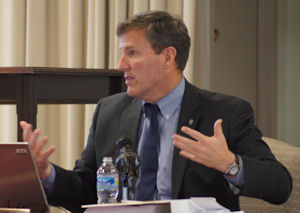
Tim Hugo

Tim Hugo

“Normally, we can’t get 15 people to a town hall meeting. We had 400 people show up,” Hugo told the CTB. “Congressman Wolf is not a flamethrower. I’m not a flamethrower.” But both are concerned by how the project is progressing. The Bi-County Parkway, the delegate said, will create “a traffic armageddon.”

But the Parkway had its defenders, including representatives of the Loudoun County and Prince William chambers of commerce and an aide to Loudoun County Board Chair Scott York. Brian Fauls, manager-government affairs for the Loudoun Chamber, said Loudoun needs a north-south highway to improve access to Dulles airport. Like the ports in Hampton Roads, Dulles is regarded as an economic engine of the state. But unlike Hampton Roads, which is served by five existing Corridors of Statewide Significance, Dulles is served by none. The North-South corridor would remedy that deficiency.

Richard McCary, past-president of the Committee for Dulles, also pointed out that the corridor is needed to serve the massive population growth in eastern Loudoun/western Prince William projected by the Metropolitan Washington Council of Governments.

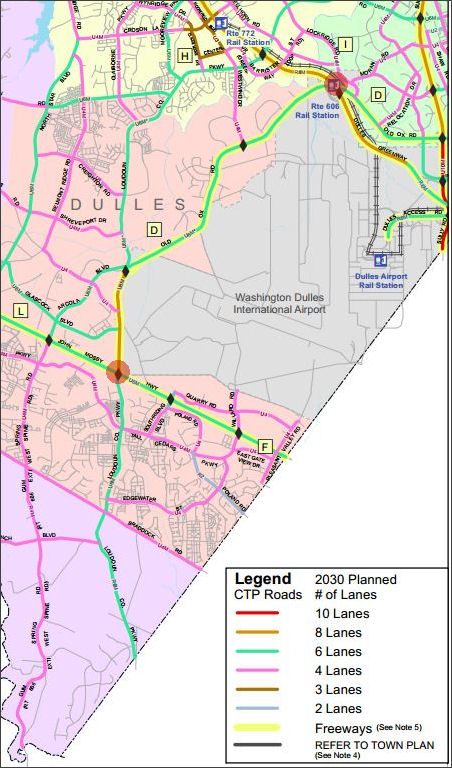
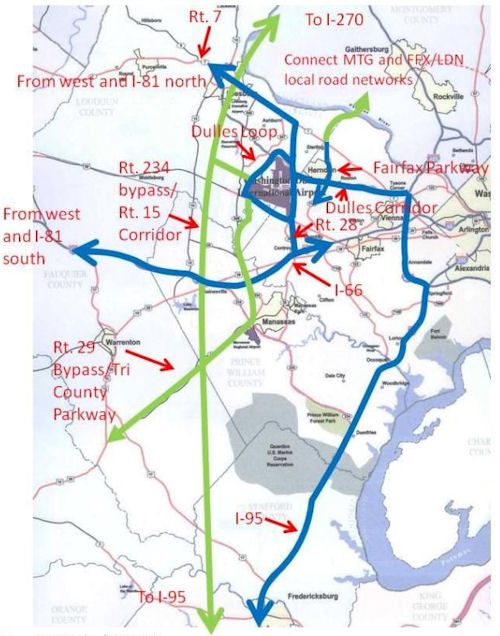
The Master Plan outlines several components to the corridor. One piece already exists — Rt. 234 (the Prince William Parkway), which runs from Interstate 95 to Manassas. The corridor would continue north past the Battlefield Park and through the rural, western reaches of Prince William County — the Bi-County Parkway — and then tie into a northern segment aligned with Northstar Boulevard in Loudoun. Additional pieces of the corridor would include an east-west link to Dulles airport and a widening of Rt. 606 on the airport’s western edge. VDOT has not yet developed a cost estimate for the projects.

The great sticking point is the middle segment where it would run along the western edge of the battlefield and through the so-called “rural crescent” of Prince William. According to the latest version of a deal negotiated between the National Park Service and the Virginia Department of Transportation, the Bi-County Parkway would align with the western half of a proposed battlefield bypass. When the Bi-County parkway is built, park authorities would close Rt. 234, a parallel north-south road that runs through the center of the park, and install unspecified traffic-calming measures on a section of U.S. 29 that runs east-west through the park. Traffic on those two roads, which park officials say disrupts the visitor experience, carry roughly 24,000 cars a day. In theory, completing the eastern half of the bypass will improve conditions for east-west commuters, but no one has identified a source of funds for that project. Continue reading.

VDOT to Study Potomac Crossings

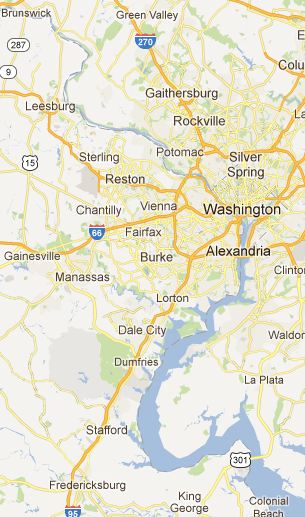
Area covered by VDOT Potomac-bridges study.

by James A. Bacon

Three days ago the Virginia Department of Transportation (VDOT) issued an innocuous press release announcing that it would sponsor and fund a study of future travel demand across the Potomac River. Specifically, the study will focus on cross-river traffic and demand between the Route 15 crossing north of Leesburg to the Route 301 crossing some 60 miles to the southeast.

Stated the press release: “The study will develop a common set of data from which Virginia, D.C. and Maryland can discuss approaches to ease congestion and increase multi-modal mobility among the three jurisdictions. The study will define the problem, not recommend the solution.”

Can you spot the asymmetry in this arrangement? Virginia, Maryland and D.C. will collaborate to study the demand for cross-river transit but Virginia will pay for the study.

Why would Maryland not help chip in to cover the cost? An October letter from Maryland’s Acting Secretary of Transportation Darrell B. Mobley to Virginia Transportation Secretary Sean Connaughton provides a clue:

The Maryland Department of Transportation’s (MDOT’s) highest priority remains the preservation of our existing infrastructure and the safety of the traveling public. MDOT does not intend to revisit the years of debate regarding new crossings of the Potomac River.  We are interested in the study of potential improvements to existing crossings, including: The Governor Nice Bridge along the U.S. 301 corridor, the American Legion Bridge on the Capital Beltway, and the potential addition of transit across the Wilson Bridge. … We believe that exploring the concept of additional crossings of the Potomac at this time could create unrealistic expectations and defer the time and resources that should be dedicated toward addressing regional needs by improving our existing crossings.

… I recognize that this may alter your willingness to pursue the study as you envisioned, but our staff participation would be contingent upon constraining any analysis to the existing crossings.

The VDOT press release does not state that the study is motivated by a desire to explore an additional crossing, but that’s the conclusion of the Coalition for Smarter Growth and a passel of other environmentalist and smart-growth organizations from the Piedmont Environmental Council to the 1000 Friends of Maryland.

Connaughton, states a joint press release, “is intent on pursuing new bridges.” Last spring Gov. Bob McDonnell had met with Maryland Governor Martin O’Malley to discuss the topic of another Potomac River crossing. McDonnell and Connaughton have been “relentless in pursuit” of a bridge crossing in association with an outer beltway. Meanwhile, VDOT is studying the practicality of building the Tri-County Parkway, a southern link in the outer beltway that would bridge the Potomac.

“It is very odd that Virginia officials keep pressing for new bridges upriver for that would divert scarce public dollars away from urgent needs like fixing existing roads, highways and transit,” stated Dru Schmidt-Perkins of 1000 Friends of Maryland in the press release. “Maryland has consistently pointed out, as they do in their recent letter, that they have much more urgent needs, and this isn’t one.”

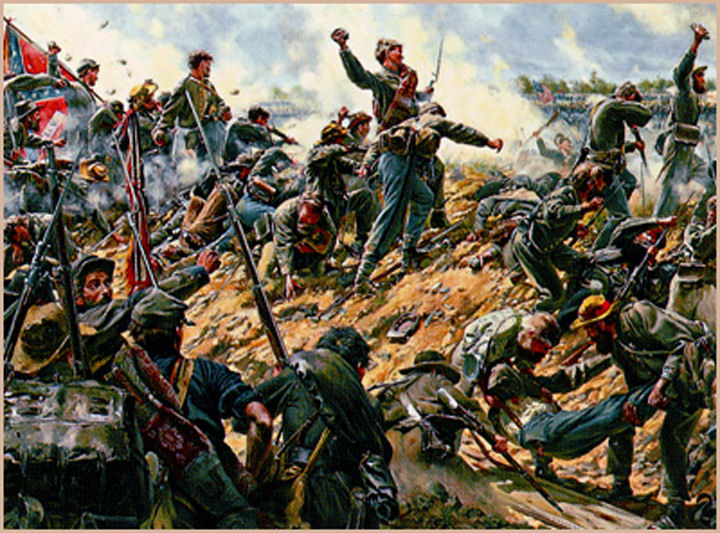
So Begins the Fifth Battle of Manassas

Uh, oh, here we go again!

The McDonnell administration wants to build a highway through the Manassas National Battlefield Park and foes are mobilizing to black the initiative. Call the coming clash the Third Battle of Manassas.

Actually, no, don’t. The third battle occurred when mega-developer John. T. “Til” Hazel tried to build a giant mall next to the battlefield back in 1988. A fourth took place in 1994 when the Walt Disney Company tried to develop a major theme park near the battlefield, suffering a defeat as ignominious as General John Pope’s. So, it looks like the latest controversy is shaping up as the figurative Fifth Battle.

Last year, at the bidding of the McDonnell administration, the Commonwealth Transportation Board (CTB) ordered the Virginia Department of Transportation to begin developing a master plan for a north-south “corridor of statewide significance” on the western periphery of metropolitan Washington. That corridor would align with a long-proposed Tri-County Parkway that would link Interstate 95 with Washington Dulles International Airport.

Recently, VDOT has sought an agreement with the National Park Service to build the highway on 20 to 35 acres of land within and adjacent to the battlefield. Last week a coalition of conservation and smart-growth groups — the Southern Environmental Law Center (SELC), the Piedmont Environmental Council (PEC), the National Parks Conservation Association, the National Trust for Historic Preservation and the Coalition for Smarter Growth — submitted formal comments detailing the project’s shortcomings.

“The proposed ‘Tri-County Parkway,’ with its 200-foot-wide right-of-way, up to six traffic lanes, and increased traffic and noise, would damage Manassas Battlefield’s historic character, trigger new development and traffic, and would set a bad precedent for building new highways through national battlefields and national parks across the nation,” stated the five organizations in a joint press release.

“Not since the threat of the Disney theme park in 1994 has Manassas National Battlefield been at such risk,” said Chris Miller, president of the PEC. “We urge Governor McDonnell and other decision makers to reject VDOT’s proposed highway in favor of a lower impact alternative.”

“Given the national significance of the battlefield park, VDOT should analyze all feasible and prudent alternatives to the new highway, but it has failed to do so,” said Morgan Butler, senior attorney for the SELC. “Moreover, the impacts of both the Tri County Parkway and the Manassas Battlefield Parkway should be analyzed together.”

The coalition is pressing for a “low-build alternative” that would focus on improvements to east-west commuter routes like I-66 and Highway 50, and upgrades to local roads that would avoid unnecessary noise and traffic impacts on the battlefield.

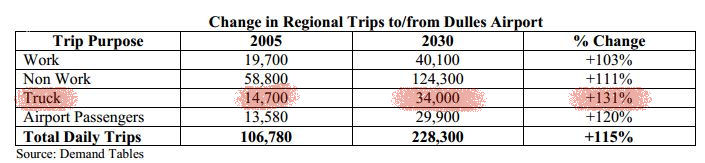
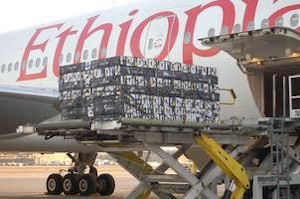
The McDonnell administration and its Northern Virginia business backers say that a north-south corridor is needed to provide congestion relief and expedite air cargo shipping in and out of Dulles. Such a corridor also might lead, in the indefinite future, to an additional crossing of the Potomac River.

– JAB

Money for the Bi-County Parkway? I’ve Got a Nice Fireplace. Perhaps You’d Like to Burn Your Money There Instead.

Possible routes for By-County Parkway. Map credit: VDOT

by James A. Bacon

I don’t know whether to laugh or cry. Buried within the massive Six Year Improvement Program approved by the Commonwealth Transportation Board (CTB) last week was a line item that provides $5 million for preliminary engineering and design of the Bi-County Parkway (BCP). The parkway, the dream of a vocal element of the Northern Virginia business community, is widely seen as a preliminary step in creating an outer beltway for the Washington metropolitan area.

The Northern Virginia Transportation Alliance lauds the progress on the parkway, which would extend Rt. 234 in Prince William County all the way to Rt. 50 in Loudoun County. “In addition to connecting employment centers and residential communities in Northern Virginia’s second and third largest jurisdictions the Parkway provides a critical (and currently missing) link for travelers and freight to and from Washington Dulles International Airport, one of Virginia’s most important economic engines,” said the alliance in an email distributed last week.

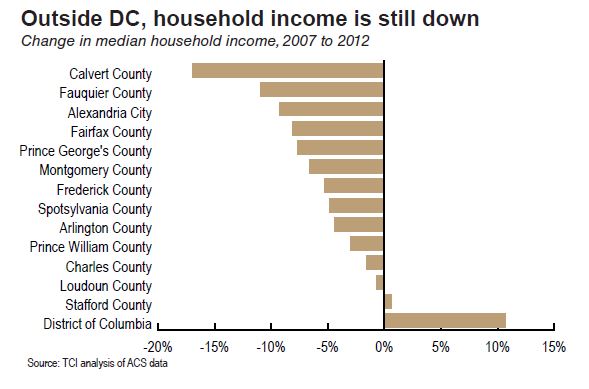
I am tempted to laugh because the sum is so piteously small, no more than a sop to Northern Virginia’s development and construction interests. Yet I am moved to cry because that $5 million is utterly wasted. While one could have made a semi-plausible case during the 2000s real estate boom that the region would one day need a north-south corridor on the western fringe of the Washington metropolitan area, no such case can be made today. The dynamics of metropolitan growth and development have totally changed. Growth in Northern Virginia is (a) slowing and (b) moving back to the urban core. Infrastructure spending should be steered to supporting that growth, which is actually happening, not squandered on anticipating development that may or may not ever happen.

A few reminders from previous posts…

Northern Virginia population growth is slowing, and the prospect of restrained federal government spending — if not an outright collapse in federal spending — will reduce the demand for workers and all the housing, office and retail infrastructure that supports them. The experts have trimmed their growth forecasts in recent years, as can be seen in this chart published in a previous post. (See “Fairfax County’s Incredible Shrinking Growth Forecast.”)

The exurbs have lost their allure. In metropolitan areas across the country, property values are gaining value in the dense urban core and losing value in the low-density periphery. (See “Exurbs in Agony.”) Declining property values have boosted the rate of foreclosures. Bottom line: There is surplus housing supply  on the urban edge. There is no need to build much more.

Population growth has shifted to core jurisdictions. Consumer preferences are changing. People increasingly want to live in walkable, mixed use communities, ideally with access to mass transit. Empty nesters seek access to the cultural amenities that reside in the urban core. Saddled with college debt and more likely to be unemployed or underemployed, Gen Y is not buying into the American Dream of a house in the burbs with a two-car garage. (See “Population Growth Shifting to Cities.”)

The market is glutted with land available for development. There is no need to open up more land on the metropolitan fringe because so much property is available for development and re-development closer to the urban core. Fairfax County has embraced an Arlington-style strategy of increasing density around its METRO stops. Building is booming around the existing Dunn Loring-Merrifield METRO station, and developers are preparing for the opening of the Silver Line to Tysons Corner and beyond. Mixed-use re-development at higher densities is all the rage.

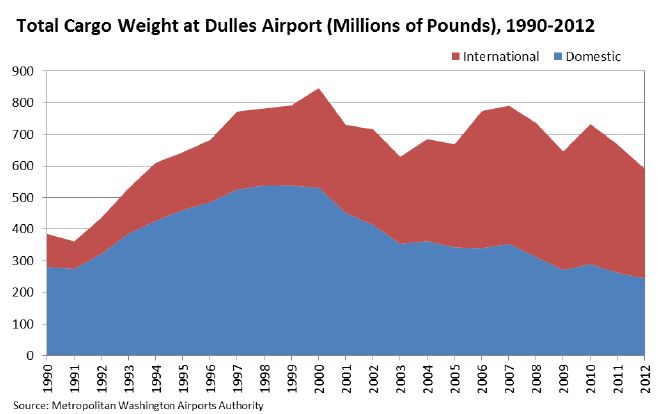
The only semi-plausible argument advanced by the Northern Virginia Transportation Alliance is an economic development one — the bi-county road would help serve growing air freight traffic at Dulles. If Bi-County Parkway backers can make a persuasive case that the road could pay its own way through tolls, I’d be open to their argument. But if the road would require massive state subsidies like the proposed U.S. 460 Connector in southeastern Virginia, that’s a pretty good signal that the economics don’t work.

More Talk of a New Potomac Crossing

Gov. Bob McDonnell and Gov. Martin O'Malley.Photo credit: Politico.

Governor Bob McDonnell recently broached the idea of a new Potomac River crossing with Maryland Governor Martin O’Malley, reports Toll Road News.

No other project in the Washington, D.C., metro area has comparable potential for improving mobility and taking unnecessary traffic off Beltway, the trade publication quotes Transportation Secretary Sean Connaughton as saying. “We are starting the process. I’ve already had some discussion with them about a joint effort.”

It’s not clear where the crossing would be located, but Connaughton suggested it would be upriver from the Washington Beltway where it could serve as direct link between the Rockville-Gaithersburg-Germantown area in Maryland and Reston-Sterling-Dulles-Chantilly in NoVa.

The Commonwealth Transportation Board approved last year the development of a “Corridor of Statewide Significance” master plan that would cut through Prince William, Fairfax and Loudoun counties. Although the corridor would terminate at Rt. 7, Smart Growth lobbyists fear that the corridor could be easily extended to the Potomac and converted to an outer beltway.

Hat tip: Larry Gross.

– JAB