Category Archives: Energy

Even NAS Braniacs Have Unanswered Questions about Uranium Mining

by James A. Bacon

The National Academy of Sciences report on uranium mining in Virginia covers a lot of ground, as anyone who peruses the 290-page document can attest. But the panel of co-authors attending a public presentation of the report in downtown Richmond last night conceded that there was a lot that they didn’t know — often because their study mandate did not include evaluating specific mining sites.

Paul A. Locke, chairman of the NAS study committee

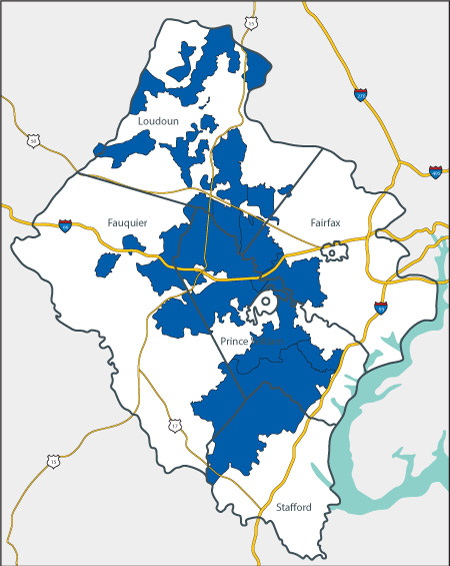
As it happens, while uranium has been detected in some 55 spots around the state (as shown on the map above), only one site, the Coles Hill Farm in Pittsylvania County, has potential for commercial grade production, said Paul A. Locke, chairman of the committee and a Johns Hopkins University professor of public health. Members of the audience asked numerous questions about the feasibility of mining uranium at Coles Hill in a environmentally safe manner, but committee members could answer only with vague generalities, if at all.

Lisa Guthrie, executive director, Virginia League of Conservation Voters

Among the questions outside the scope of the NAS study:

  • Will there be a large up-front cost to establish a regulatory regime for uranium mining, considering that Virginia has no existing regulatory apparatus and no existing uranium-mining industry from which to generate licensing revenue?
  • Given the fact that uranium tailings remain radioactive for thousands of years, long after the mining company will cease to exist, what mechanisms exist to monitor and ensure environmental compliance of an impoundment site over the long term?
  • How much radiation is likely to leak in the event of an extreme event such as an earthquake or massive flood — an amount equivalent to the radiation from a radium watch… or a Chernobyl disaster?

Further, neither Locke or other board members could point to specific Best Practices that should be implemented for uranium mining and processing at Coles Hill. Speaking generally, they said that technological and regulatory advances over the past two or three decades have vastly improved the safety and environmental health of uranium mining. No other uranium mine in the world exactly matches the Pittsylvania site in terms of geology, climate and surrounding population, but a mix-and-match approach, picking Best Practices on the basis of specific characteristics, should be feasible.

Neither did the NAS board conduct a “probabilistic risk assessment,” an exercise that would be possible only for a specific site. But Locke did acknowledge that site-specific analysis and risk assessment of Coles Hill would be critical for the mining project to move forward.

The Coles Hill ore deposit is the largest undeveloped uranium deposit in the United States and the seventh largest in the world, according to Virginia Uranium Inc., the company lobbying to lift the moratorium on uranium mining in the state. Gov. Bob McDonnell has assembled a Uranium Working Group staffed by state employees to examine risks associated with uranium mining and analyze how they could be addressed by regulation.

The working group has scheduled four public hearings between June and November, launched a web portal and set up mechanisms to accept questions and comments from the public. Fearing that critical Working Group decisions might be made behind closed doors, environmental groups have expressed concerns about the transparency of the process.

In a letter to legislators Martin L. Kent, McDonnell’s chief of staff, responded to those concerns: “This working group is solely focused on scientific, legal, regulatory, and factual questions that need to be further examined. If the General Assembly directs the agencies to promulgate appropriate regulations to govern uranium mining, that is a separate process.”

(See PeterG’s coverage of a previous NAS meeting in Danville here.)

Subscribe To Site:

What Baconauts Won’t Discuss

By Peter Galuszka

Reading the Bacon’s Rebellion Blog always displays breathtaking contradictions. Chief among them is the huge contradiction between pushing “smart growth” and shunning any form of increasing gasoline taxation.

The crux is that we have lots of horrendous sprawl in the state such as all of Northern Virginia, Route 3 in Fredericksburg and U.S. 29 in Charlottesville. We have underfunded and under-maintained roads. That all adds up to a death spiral of bad planning and a slavish adherence to el-cheapo ways of doing things – all in the name of the Cato Institute.

In Virginia, for instance, the state gasoline tax is 17.5 cents a gallon. It hasn’t been raised in 25 years. It hasn’t even been made to adjust for inflation. By contrast, North Carolina’s gas tax is 38.9 cents per gallon.

As politicians, especially Republicans such as Gov. Robert F. McDonnell stubbornly refuse to consider the obvious solution to their many road issues, they have the rest of us jumping through one convoluted hoop after the other trying complicated ways to get funds without taxation. It’s a bit like trying to breathe without air.

That brings up another point – the insane accusations that Barack Obama is responsible for $4 a gallon gasoline. GOPers like Mitt Romney and Bobby Jindal (oil state guy) claim that gasoline prices have doubled under Obama and his energy policies are now creating havoc at the pump. The reality is that setting gasoline prices has a lot more to do with Asian demand the Iranian nuclear facilities than the policies of one U.S. president, who, by the way, has made big progress in weaning the country away from foreign oil.

Yet the biggest irony is spelled out in the latest issue of The New Yorker and comes, surprise, from Romney’s own economics adviser, Greg Mankiw. The Harvard professor recently wrote: “Economists who have added up all the externalities associated with driving conclude that a tax exceeding $2 a gallon makes sense…By taxing bad things more, we could tax good things less.”

Now, if you happen to read Bacon’s Rebellion’s most prominent blogger, we get an education how smart growth could make our lives better. We need to build more housing in more densely-packed areas, go for green zones, reduce wasteful and polluting gasoline use and try mass transit (all dipped in a libertarian flavor of course!)

The unspoken part is what Mankiw brings up. Federal gas tax is a puny 18.4 cents a gallon. If you raise  it to $2 a gallon, as Mankiw suggests, you’d suddenly have smart growth – presto! You’d have a lot of other things, too, such as much higher mileage cars, a fatter federal checkbook and less stupidity when it comes to highway and housing planning.

Are we going to get this? Of course not. The status quo politicians are hardly going to pretend the gas hike issue exists while blaming Obama for something not of his making. Meanwhile, readers of Bacon’s Rebellion will be treated to the increasingly amusing acts of contortionists stretching and folding any way they can to avoid discussing tax hikes. As a former altar boy I can appreciate trying to keep the dogma pure.

Subscribe To Site:

The Uranium Quagmire

By Peter Galuszka

For the 50 or so people sitting in the quaint Pepsi-Cola building Tuesday in Danville’s tobacco warehouse district, the information seemed to spawn more frustration than clarity. They had gathered to hear two economic impact reports regarding controversial plans by Virginia Uranium to mine an ore deposit a dozen miles to the north in Chatham.

“The bottom line is that we don’t know what will happen in the future,” said Katherine Heller, a senior economist at RTI International. The Research Triangle Park, N.C. consulting firm had been hired by regional agencies to estimate what happens if Virginia Uranium, owned by local and Canadian investors, proceeds with its plans for a uranium mining and milling complex.

The RTI report, in addition to one prepared for the state by Chmura Economics and Analytics in Richmond, says that barring human error and adequate regulations, the uranium project could be a boon for the depressed, former textile and furniture region. RTI predicts it could bring in 724 jobs and $162 million in a year affecting an area 50 miles from the mine and milling operation. Chmura’s report says essentially the same thing.

Those predictions, however, assume the state overcomes big hurdles, as yet another report by the National Academy of Sciences says it must face. Among those obstacles:

  • Virginia has no laws regulating uranium mining or milling ore into useable yellowcake. Gov. Robert F. McDonnell recommended delaying any decision on voiding a nearly three-decades-long ban on uranium mining in the state until more study is done. He has set up a group to study the issue.
  • According to RTI, the tailings from the uranium deposit that runs 1,500-foot deep will be stored permanently underground in an area near vital drinking water supplies. According to Heller, those dump sites will have to be monitored indefinitely, most likely for thousands of years. There are no plans yet to do such monitoring or how to pay for it.
  • There are no plans yet on requiring Virginia Uranium to set aside funds in escrow to help localities deal the costs and loss of businesses and taxes due a potential spill or accident. It also isn’t clear who will pay for the necessary state regulators and inspectors especially when the upcoming budget is tight and has yet to be approved.
  • There are lingering questions and confusion over how transparent the McDonnell group will be as it studies uranium mining. At first, Cathie J. France, a deputy director of the Department of Mines, Minerals and Energy who heads the uranium committee, said that her group would not hold public hearings but would accept written comment and provide a Web page. After public criticism, Martin L. Kent, McDonnell’s chief of staff, wrote legislators that due to “misunderstanding” there had been a “mischaracterization” of how public comment will be obtained. He says that the group will “accept public comment during four open meetings.”
  • The economic health of the uranium plans depends on highly volatile global uranium pricing. Heller said that RTI based its predictions on a “middle high” estimate that could be subject to big and unexpected swings.
  • So far, studies regarding uranium mining have cost various government entities more than $2.7 million. The RTI study cost $530,000. Yet they all confront the same problem, the impossibility of assessing risk or economic fallout if there are no state regulations or enforcement mechanisms in place to set a benchmark.

The bottom line is that the uranium idea seems terribly premature. Virginia Uranium has already drawn negative attention for taking legislators on expenses-paid trips to places such as Paris. McDonnell wants his committee to make recommendations to the 2013 General Assembly. That may be way too soon.

Subscribe To Site:

Big Oil… Big Solar… Big Algae?

Researchers J. Emmett Duffy and Elizabeth Canuel look over the algae flowway on the VIMS Gloucester Point campus. Photo credit: VIMS.

President Obama may rue the day when he touted algae-based biofuels as a long-term solution for rising energy costs. Conservatives from Newt Gingrich to Charles Krauthammer have subjected the idea to endless mockery. Google “Obama algae for fuel” and you’ll hit a treasure trove of ridicule and satire. Lucky thing for Obama that the late night comedians are in his pocket, or we’d see endless japes about the devolution of green fuels into green slime.

There are legitimate reasons to be skeptical. According to a Gingrich newsletter, fuel from algae costs anywhere from $140 to $900 per barrel to produce today. On the other hand, it was only a few years ago that oil was selling for $140 per barrel. Furthermore, research into algae production and conversion into useful forms of energy is a recent phenomenon. Scientists are still wrapping their arms around the challenge. While I vociferously oppose government picking technology winners and losers for commercialization — witness Solyndra and the other solar-technology debacles — I do believe it is a legitimate role of government to sponsor basic R&D.

It happens that one of the more interesting experiments in algae R&D is taking place at the Virginia Institute of Marine Science. VIMS differs from other research initiatives by focusing on wild strains of algae that grow naturally in the Chesapeake Bay.  One of Virginia’s biggest environmental problems is the algae blooms that sink, decompose, soak up oxygen and kill the fish. Figuring out a way to harvest the algae blooms early in their life cycle could save the lives of a lot of underwater critters.

While other algae growers have to fertilize their crop, Chesapeake Bay algae gets its  fertilizer — phosphorous and nitrogen from farms and household yards upstream — for free. Researchers suggest harvesting algae at points along the Bay where phosphorous and nitrogen inputs are concentrated, according to a 2010 VIMS article. “We want it to be like a factory,” said William Cooke, a William and Mary physics professor.

“I see the nutrient-reduction and the fuel production as going hand in hand,” said J. Emmett Duffy, a VIMS marine science professor. “We like to think of it as turning pollution into fuel.

Will harvesting algae blooms become an economically viable activity? I have no idea. But I will say this. The Chesapeake Algae Project, of which VIMS is a part, was supported by a $3 million grant from Norwegian oil company Statoil. Meanwhile, Exxon Mobil has invested $600 million into algae-based biofuels in partnership with Craig Venter, the guy who first cracked the human genome. I have a lot more faith in the likes of Exxon, Statoil and Venter to pick the best technologies than I do in the federal government. If nothing else, capitalists aren’t swayed by campaign donations. But the idea of algae-based fuels may not be as hare-brained as Obama’s critics think.

– JAB

Subscribe To Site:

Richmond’s Arab Spring


By Peter Galuszka

What seems one of the wildest General Assembly sessions that ended on Saturday was actually a healthy display of democracy in action. It could presage a fundamental way that things are done in Richmond.

True, a new Republican and conservative majority in the House of Delegates pushed odious wedge issues at the General Assembly that made Virginia the laughingstock of national late night television. These include attempts to force women to have transvaginal ultrasound exams before they have abortions. In a slap at gay and transgender citizens, it made it harder for them to adopt children.

It pushed back needed health exchanges to get insurance as the Obamacare deadline approaches. Keeping our priorities skewed, public school kids still will have their start-date dictated by huge, profitable theme parts like King’s Dominion and Busch Gardens. Legislators came up with an empty tank when it came to funding transportation projects. And the legislature set up the repeal of the one-handgun-a-month law that could revive Virginia’s key role in pistol trading by East Coast criminals.

That said, a lot of other mayhem was thankfully put to rest. Racist immigration-based citizen checks got nowhere as did a law to burden public school teachers with extra and unneeded reviews. Amazon will be forced to pay sales taxes like everyone else, torpedoing a sweet-heart deal used to attract the digital retailer by Gov. Robert F. McDonnell and the Virginia Economic Development Partnership. The Senate killed a bill that would have singled out poor women by forbidding them from having abortions if the fetus has gross abnormalities.

With all this social agenda nonsense, the General Assembly didn’t get on with its most important task p-p- passing a budget –, but it will meet again to do so. Not to first time this has happened.

What has happened, and is very encouraging, is that this is the first time in years that the average public actually gave a damn about their rights to be heard in the legislative process. The State Capitol’s bucolic lawns saw thousands of protestors, including the arrests of 30 or more by state police SWAT teams armed with nightsticks and machine pistols and dressed in protective armor that made them look like fearsome Michelin Men.

What made the scenes so unusual was that most of the participants were middle aged women outraged that McDonnell and the hard-right Republicans would suddenly start dictating some extremely private parts of a woman’s life and deny her what the U.S. Supreme Court says she can do. We’re not talking the long-haired types of my Vietnam generation or more recent Occupy Richmond (or Wall Street or Seattle) people.

For far too long, state politics has been a good old boys’ club run by big corporations who bankroll think tanks and legislators led by the hand by lobbyists. Bill wording can be cut and paste jobs from national right wing outfits. People with opposite points of view are usually sliced out of the loop.

When McDonnell appointed a subcommittee within a state mining department to study the highly controversial notion of uranium mining in Southside, he picked as its head a former natural gas lobbyist with no experience with radioactive issues. She announced there will be no public hearings before her group sends its recommendations about whether or not lift a near 30-year-old ban on uranium mining. This is typical of the way Bob McDonnell and people like him see the world and regard their voters. They are not to be seen. Not to be heard.

While it is doubtful that McDonnell and his ilk will get the message, the outrage over the behavior of the General Assembly by everyday people shows that the old, behind-closed-door way of doing business is over. McDonnell and his spokesman Tucker Martin, can blame the news media. The State Capitol Police, with McDonnell’s acquiescence, can call out the SWAT teams all they want.

One thing they can’t do is kill the spirit of the man who actually designed the State Capitol building that was the locus of so much outrage. That spirit will outlive them all.

Subscribe To Site:

¡Viva la Revolución!

Estimado Jefe!

Usted nunca debe salir de la ciudad, señor! Ahora que usted está ausente, la revolución comienza! Amados lectores de ya no ver los artículos que glorifican a los ricos y privilegiados. Vamos a ayudar a la tierra y los pobres y redistribuir los fondos de cobertura. ¡Viva la Revolución!


Subscribe To Site:

That Danged News Media!

By Peter Galuszka

After a deluge of negative national publicity in recent weeks over a number of socially conservative and highly controversial bills that he originally endorsed, Virginia Gov. Robert F. McDonnell has complained on a WTOP radio interview that he’s disappointed with the news media.

“All we ever ask from the media is to be fair, cover what’s actually going on,” McDonnell told listeners.

Oddly, the news media has been covering exactly what has been going on. Virginia has suddenly become the tip of a spear in a hard right-wing agenda. The General Assembly has been flooded with bills to force women to have a transvaginal ultrasound exams before they get an abortion, to repeal laws restricting monthly handgun sales, to deny poor women abortion money in special cases, to force police to check the citizenship of anyone they arrest, among other legislation.

McDonnell whines that the media should be looking at 100 other bills, such as adjusting the state pension system, boosting education and easing traffic congestion.

He must want the good old days a while back when he was being touted as a modern and responsible new type of Republican governor who can cut budgets while attracting jobs.

Too bad for the governor. It may not be his fault in the most recent elections that a number of socially conservative Republicans gained enough legislature seats to push laws that had been held in check for years. Just after those elections. But he backed these people. He basked in media attention that his enlightened leadership was somehow responsible for their victories.

Yet once these fledglings got into power, they went so crazy with a multi-front socially conservative offensive that the national media could not help but notice. Nor was the humor (if any) of the situation lost on scriptwriters at “The Daily Show” and “Saturday Night Live.”

McDonnell wants to be ready for prime time. His WTOP complaints show that he isn’t.

Subscribe To Site:

Oilfield Reality Check

By Peter Galuszka

One has to laugh at just how fantastic the debate over energy has become.

Conservatives are trying to make President Barack Obama a goat for not bowing to the propaganda about the Keystone XL pipeline which would take unusually dirty oil from Canadian tar sands all the way to the U.S. Gulf Coast for refining.

Here’s a gem from a Jan. 18 editorial by The Washington Times: “The White House’s pre-emptive strike on the Keystone XL oil pipeline is a disaster for American workers and consumers. President Obama continues to demonstrate that he has no idea how real jobs are created or how the economy works.”

The propaganda campaign has trickled down to the Virginia level, which would get absolutely zero from the pipeline. Barry E. DuVal, the president of the Virginia Chamber of Commerce has trashed Obama for his decision as has Republican Gov. Robert F. McDonnell, who is maneuvering to get a vice presidential spot with Mitt Romney.

So, it is unusual to pick up today’s Wall Street Journal and see this front page piece: “Oil and Gas Boom Lifts U.S. Economy.” The report states that U.S. oilfield jobs are up to 641,000, a 33 percent increase over the past five years.

Fueling the petroleum boom are new ways of reaching hard-to-tap oil and gas reserves such as hydraulic fracking. Gas from the Marcellus Shale deposit in the Northeast and Midwest has greatly boosted gas supplies. North Dakota’s once played-out oil fields are seeing a boom (not the “Boomergeddon” kind) as oil workers flock in, boosting $300-a-month rents to $2,000- a- month.

To be sure, the boom doesn’t address longer-term problems such as weaning the world from irreplaceable fossil fuels, their impact on climate change and the environmental challenges of fracking.

Rather, it shows the disconnect between the reality out there and the DuVals and Moonie papers of the world. One wonders why any respectable blogger would want to write for The Washington Times.

Subscribe To Site:

Thumbsucking, Richmond-style

By Peter Galuszka

The incredible, shrinking Richmond Times-Dispatch offers a lot less to read these days. Under  the leadership of Publisher Thomas A. Silvestri, many staffers have been fired to boost parent firm Media General’s top line. The effort hasn’t been entirely successful since its stock, once around $65 a share, is now a little better than $4 a share, admittedly better than the near buck a share low of a couple of years back that brought MEG close to delisting on the Big Board.

So, the TD tries to get around its dearth of real reporting by getting Richmond’s pooh-bahs to write tomes in the “Commentary” section about what a great job they are doing. These, coupled with Silvestri’s unfailingly sunny and typically mindless columns boosting the Confederate Capital, make for a more amusing section on Sunday mornings than the funny pages.

This Sunday’s section was kicked off by Eugene Trani, the fireball, former president of Virginia Commonwealth University. Trani is famous for growing VCU from a Tier Two commuter college to something aspiring to greatness. He bulldozed block after block of Richmond’s downtown to expand the university and make it more of an economic driver.

Now retired, Trani heads Richmond’s Future, which the TD describes as a “forward looking regional think tank.” That, in itself is an interesting choice of words. If it were “backward looking,” we’d be in more of a heap of trouble than we already are.

After a couple of years of heading Richmond’s Future, Trani has used the group’s mostly corporate funding to finance studies by a Federal Reserve economist and a VCU assistant professor. Together, these reports try to rate the Richmond SMSA, which Trani meticulously explains to the dullards among us, against 10 other SMSA around the country to see where it stands. Good and bad, it turns out. Second in per capita income and sixth in annual employment growth  compared to places such as Jacksonville, Fla. and Salt Lake City.

Writing in the TD, Trani claims  that it is important to know where Richmond  stands against other similarly-sized city. I looked thoroughly through his article to find more of a “so what” but couldn’t find it.

And that is the problem. Richmond’s business elite has been staring at its navel for a long time. There has been study after study trying to “benchmark” the city. Consultant James A. Crupi, who does a lot of thumbsuckers for the Fortune 100, did a study in 1993 that found that Richmond is a “glass half-empty.” He returned in 2007, funded by Greater Richmond Chamber of Commerce money, to find that Richmond had somehow transformed itself into a “glass half full.”  What that means, I have no idea.

There are other groups trying to get a real bullseye on Richmond. There’s something called the Capital Region Collaborative that promotes navel-gazing on a regional basis. Its ranks are fed from something called “Leadership Metro Richmond” which trains “leaders” to be big shots among the corporate salons and, of course, participate in and cheerlead Crupi and Trani style reports.

OK, fine. But so what? Trani says Richmond should boost its base in logistics. No brainer, there. Greatly expanded Ft. Lee is a dominant defense supply area and Richmond has a great central-location on the Mid-Atlantic coat. Too bad its tiny seaport was so badly managed that it has all but shut down. Richmond also should boost science and math studies, like every other burg in the U.S.

And, there’s something called the Commonwealth Center for Advanced Manufacturing, which is a multi-university and community college effort to take advantage of a new Rolls Royce plant east of Petersburg.

Small problem, there. The Rolls Royce plant was originally intended to build  parts for engines for corporate jets. The 2008 global financial meltdown, and  the bad judgment of big U.S. corporate titans to fly corporate jets to Washington to beg for Congressional bailouts, chilled that market.

Now, the big facility underway is looking for other markets. One hope had been making engines for the new F-35 joint strike fighter for the Air Force, Navy and Marines. That’s something anti-spending hawk U.S. Rep. Eric Cantor, a key player in the Richmond elite, pushed mightily although the Pentagon said it had another supplier and didn’t need more engines from Rolls. In any event, it won’t matter. Reacting to Republican anti-spending fanatics, President Obama is likely to cut back on the F-35 program.

These are small details, however. The reality is that no matter how much the Tranis and Crupis look into their crystal balls, Richmond’s economy is still pretty much dominated by electric utility Dominion, packaging maker MeadWestvaco and cigarette giant Altria, whose primary products are lethal and which moved its headquarters to Richmond after being pretty much thrown out of New York City. The region was badly hurt when mass retailer Circuit City self-destructed from bad management and chip maker Qimonda went under, with thousands of jobs, because of bad local markets.

Yet another firm went under, too, during the 2008-09 recession, mortgage lender LandAmerica. Interestingly, Trani was a director of the firm and, in that capacity, is a defendant in a lawsuit that alleges that he and others failed in their fiduciary duties because they took decisions that resulted in the collapse of the firm and major losses for investors.

The Richmond newspaper, naturally, doesn’t hit that one too hard. Instead, Trani, rather than a professional journalist on staff, will be writing a series of reports about his new think tank and where he thinks Greater Richmond rates and should be going in the Greater World.

Subscribe To Site:

Resisting the Siren Call for Subsidies

An "all of the above" energy policy with no subsidies

by James A. Bacon

Last week Gov. Bob McDonnell rolled out the 2012 energy policy and budget initiatives that he hopes to shepherd through this year’s General Assembly. The proposed measures fall far short of the governor’s lofty rhetoric of making Virginia “the energy capital of the east coast.” But that, as I shall explain below, is probably a good thing.

The press release laying out the legislative package provides lengthy quotes from McDonnell, Lt. Governor Bill Bolling and senior legislators in support of a job-creating “all of the above” energy strategy. As the press release explains, “The governor is leading in the push to develop offshore energy, supporting expansion of renewables, and advocating on behalf of traditional fuels including coal, natural gas, oil and nuclear energy in order to secure an adequate supply of affordable, reliable energy for Virginia’s future.”

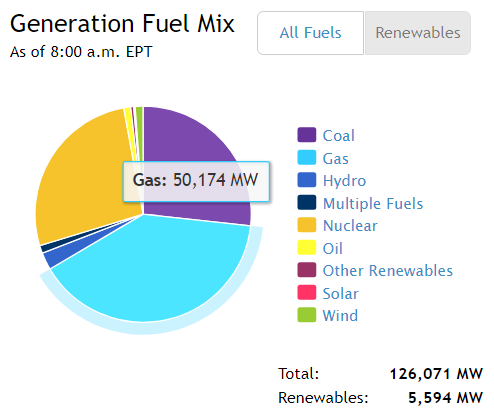
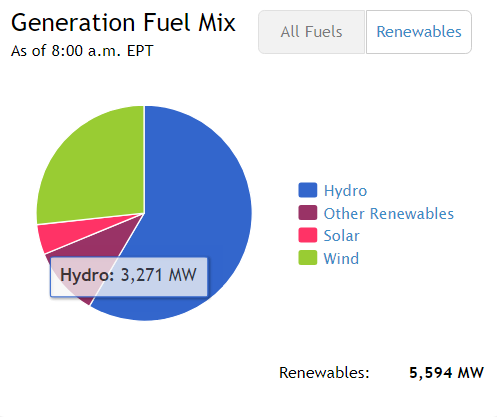
That makes total sense to me. Other than its significant coal production in far Southwest Virginia, the Old Dominion is a laggard in energy production — we are a net importer of electricity. Producing more energy is a good way to create jobs and bolster the tax base. Just one problem. There is little in the energy package that would actually boost energy production. Even if we assume that all nine measures are passed, Virginia won’t get any closer to becoming the “energy capital of the east coast,” a title that is far more likely to fall to West Virginia, Pennsylvania or some other state cashing in on the Marcellus Shale natural gas boom.

One measure would make it easier for utilities to develop the infrastructure to supply natural gas to economic development projects. A companion measure would make it easier for electric utilities to gain regulatory approval for 138kv transmission lines used for economic development projects. Both of these appear to be aimed more at facilitating job-creating economic development deals than boosting energy production, although the natural gas provision supposedly would increase the market for Virginia natural gas.

The package also contains two measures related to energy efficiency. One would promote “customer engagement tools” that would result in measurable and verifiable energy savings. The press release did not elaborate upon what kind of “tool” was being considered. Smart meters, perhaps? Another bill would allow biomass-fueled cogeneration projects to trade “renewable energy certificates” to the power company buying its electric power and credit them toward its mandated use of alternate fuels. Yet another measure would allow utilities to credit research on alternate energy toward their mandated use of renewable energy.

The governor also proposes:

  • Allocating $500,000 in FY 2013 to develop data regarding resource availability in the federally designated “wind energy area” off the Virginia coast.
  • Creating an Alternative Fuel Vehicle Conversion fund to help finance the conversion of the state fleet to alternative fuel vehicles.
  • Advancing mine safety by requiring mine operators to submit planned mining maps earlier in the regulatory process.
  • Allocating $300,000 yearly to strengthen the oil and natural-gas permitting process.

Conspicuously absent from the list was any mention of developing Virginia’s uranium reserves. Although mining a mother lode of uranium in Pittsylvania County undoubtedly would be an economic development boon for Southside Virginia, McDonnell was properly cautious in stating, after the release of a National Academy of Sciences report, that public safety should trump economic considerations.

Also absent was any nod toward embracing more energy-efficient human settlement patterns and transportation systems as a conservation strategy. But that hardly comes as a surprise. McDonnell has never evinced an awareness of the energy/land use connection. Former Gov. Tim Kaine is the only Virginia governor who ever has.

The hidden good news here is what McDonnell is not doing. He is not proposing to spend a lot of state tax dollars subsidizing the pet causes of energy interests. He is not trying to pick energy winners and closers.

I have lambasted President Obama for squandering billions of dollars on uneconomical alternate energy projects like Solyndra. It would be equally wasteful for McDonnell to try playing venture capitalist at the state level. Fortunately, he has enough sense not to. If we can just persuade him to drop the “energy capital of the East Coast” hype, Virginia would be even better off.

Subscribe To Site: