Author Archives: Peter Galuszka

Dulles Rail: “Good Night, John Boy”

By Peter Galuszka

The convoluted schemes of Virginia state politicians to avoid paying for rail service to Dulles International Airport are as frustrating as they are self-defeating and unfair.

Just a few days ago, it seemed that the General Assembly would consider adding $300 million to extend Metrorail to Dulles on the Silver Line when the legislature meets to approve an $85 billion budget April 18.

Thanks in part to last minute opposition by Democratic deal-maker State Senator Charles J. Colgan of Prince William County, the $300 million went “puff.” No deal. No money.

The $300 million cut underscores what seems to be Richmond’s ancient philosophy on expanding Dulles Rail: stick as much of the cost as possible on taxpayers and tollpayers in Northern Virginia.

Days after the $300 million in state funds for Dulles Rail disappeared, the Board of Supervisors of Fairfax County confirmed its buy-in for Phase Two of the Dulles Rail project, whose ultimate costs will top $2.7 billion. The county says that while it is looking for alternate funding sources, it may pay up to $965 million for the project. About $730 million – or 80 percent – will be paid for by “voluntary” special tax districts created by landowners.

Once again, Northern Virginia, which provides more state tax revenue than any other region of the Old Dominion, gets stuck with most of the bill for Dulles Rail. That is the criticism of the Coalition for Smarter Growth which was quick to note the bizarre budget cut. They point out that, at the same time, the administration of Gov. Robert F. McDonnell is proposing at least $750 million in state funding for a new superhighway near U.S. 460 in the rural peanut country of Southeast Virginia and diverting $200 million for a controversial bypass in Charlottesville.

It’s hard to fathom why providing Dulles rail with state money is such anathema. The new U.S. 460 tollroad project, for instance, raises many questions. It is being billed as a necessity for Virginia’s economic future since the port of Hampton Roads needs better transportation access to handle bigger, deeper-draft cargo ships when the Panama Canal is expanded in 2014.

Yet, Norfolk Southern railway which serves the port has already finished a $321 million public-private project to raise mountain tunnels to handle more double-stack rail shipments from Hampton Roads to the Midwest. The chief executive of the Panama Canal Authority says that thanks to rail improvements, Hampton Roads is already prepared to handle the expanded trade the canal project will bring. If he’s right, then why is there urgency for the new road?

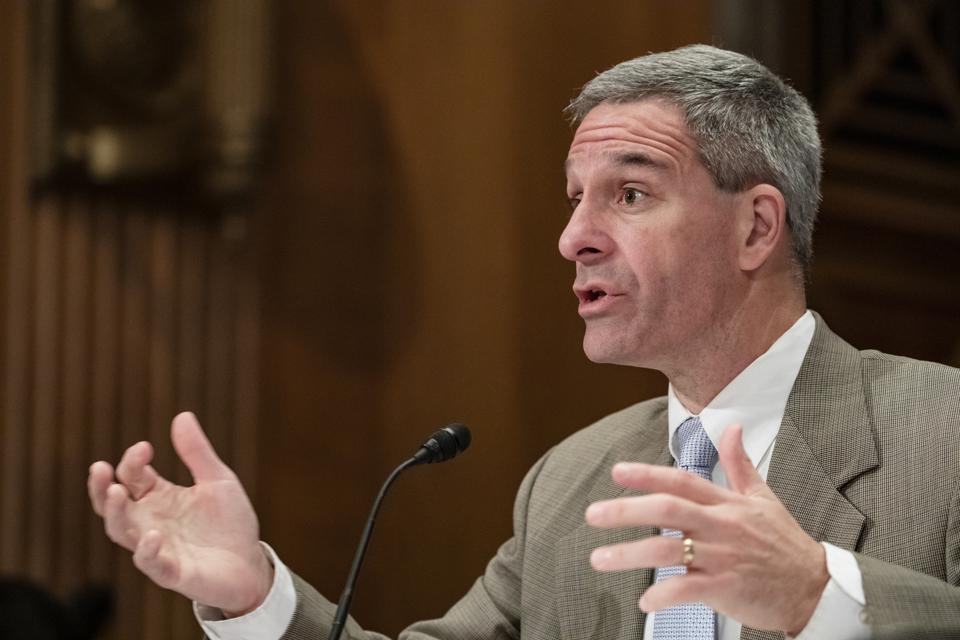
There have been other peculiar impediments to the state paying for Dulles rail, such as Knee-jerk anti-unionism. Right-wing Atty. Gen. Kenneth Cuccinelli and others are crying foul at any attempt by the airports authority to use the a similar but somewhat tougher project labor agreement that helped move Phase One forward. A more deep-rooted issue is Virginia’s traditional philosophy, dating back to the one-party system of Harry F. Byrd 100 years ago, that public projects must be funded on a “pay as you go” basis.

That might have worked for building a two-lane bridge in bucolic Virginia when TV’s John Boy Walton, attired in bib overalls, might have been around. Today, the fact remains that Washington is the only capital in the advanced industrialized world not to have public rail service to its leading international airport.

Closely Watched Trains

By Peter Galuszka

A few weeks ago, I was making another trip to the area near Matewan, W.Va., a small, historic town of red brick buildings a stone’s throw across the Tug Fork River from Kentucky. Matewan is noted for its coalfield labor strife caught dramatically in John Sayles superb 1987 movie of the same name and is the locus for part of a book I’ve been researching for the past 18 months.

There isn’t much hotel space available in the Tug Fork Valley. At times, I’ve had to stay dozens of miles away in Eastern Kentucky.  When available, I prefer a bed and breakfast right in the middle of Matewan and just steps from where Sid Hatfield, the town police chief, shot it out with rent-a-thugs from the Baldwin-Felts Detective Agency in 1920 (yes, Big Money was into privatization even then).

Aside from seasonal all-terrain vehicle enthusiasts, the only big noise in Matewan is the Norfolk Southern. The original mainline of the old Norfolk & Western runs just behind the bed and breakfast. First you hear an odd whir, then a diesel horn blast and then your world shakes. Trains run anytime, day and night. It was the route of the fancy red and black Powhatan Arrow passenger train from Norfolk to Cincinnati. Now what you see are endless coal trains and hot shot containers racing their East Coast to Midwest route. Most recently, I have seen jumbo-sized, extra-tall coal hoppers whip past.

What’s the point of this travelogue? The extra-sized cars are the point. Nearly two years ago, Norfolk Southern completed a $321 million project using private and public money to raise tunnels in West Virginia and southwestern Virginia. The low ceilings had forced east-west,double-stack trains to spend an extra day going through Pennsylvania or Tennessee. Not anymore.

In fact, the so-called Heartland Corridor project means that Hampton Roads is uniquely qualified to take advantage of the larger, deeper-drawing container ships that are expected to boost trade when the Panama Canal expansion is completed in a couple of years.

That, at least, is the opinion of Alberto Aleman Zubieta, chief executive officer of the Panama Canal Authority. Zubieta worries, as many do, that U.S.East and Gulf Coast ports just aren’t ready for the new Panama Canal trade, except for Hampton Roads. “Norfolk is ready,” he was quoted as saying. “Rail has been modernized between Norfolk and Chicago; they understand the benefit of getting cargo to its destination.”

So, if Hampton Roads is already the beneficiary of a major rail improvement project that is now ready to handle Panamax cargo, then why all the hullabaloo over a $1.8 billion public-private project to expand U.S. 460? The expansion from Suffolk to Petersburg would relieve clogged Interstate 64 on the other side of the James River and would offer an extra emergency escape route should a major hurricane show up.

But the big reason for the project, enthusiastically backed by Gov. Robert F. McDonnell and his Transportation Secretary Sean Connaughton, is that Hampton Roads desperately needs transportation access to handle all the new trade coming with the Panama Canal is expanded.

Yet if you listen to Zubieta, the project is in place. Finito. Even if you wanted to expand distribution and manufacturing centers in Southeastern Virginia, why couldn’t you do it with rail spur lines coming from the NS mainland that neatly parallels the existing U.S. 460? A number of distribution centers already use the rail line, including a Food Lion warehouse near Petersburg.

The road project has lots of problems. Its backers admit that tolls won’t pay for it. Some kind of industrial authority would have to be created with new factory or warehouse owners kicking in payments to make it work.

What about the already existing rail line? Why doesn’t someone bring that up? Doesn’t it make the expensive road project unnecessary? Or is there some under-the-table log-rolling going on that we don’t know about?

Bye, Bye, Vice President McDonnell

Paul Ryan

It appears that ultrasounds, handgun purchases and helping groups ban gays from becoming adoptive parents are costing Gov. Robert F. McDonnell his dreams of being a Republican vice presidential candidate.

Now that Mitt Romney has 655 electoral votes tied up and looks like a sure thing as far as the GOP nominee, McDonnell has fallen to the wayside. Pundits still opine about who the VP contender could be, such as Florida Sen. Marco Rubio or Buckeye politician Bob Portman. A clear favorite of the moment is Wisconsin Congressman Paul Ryan who is seen as the Dr. Spock of the right-wing’s intellectual set.

But where, oh where, is Bob McDonnell? He’s either off the pundits’ lists or is being increasingly dissed as being potentially too “social conservative.” In that regard, he has his fellow Republicans to thank.

In the last elections, hard right elements took over the House of Delegates and cheered on by such ultra-conservatives as Del. Bob Marshall, launched their attacks on women’s rights, gay rights and immigrant rights as well as handgun safety.

In doing do, they made Virginia a national laughing stock on programs such as Saturday Night Live that did utterly devastating skits in 2008 about Sarah Palin, the completely unprepared and nearly clueless Alaska governor who ran as John McCain’s running mate.

The sad part is that McDonnell had no direct role in this political meltdown, rather his former positions such as his notorious graduate school thesis that he tried so hard to suppress resurfaced again.

Ironically, the politician who has usurped McDonnell is Wisconsin’s Paul Ryan, who is cast as a young, dynamic and brainy “Young Gun” who was the mastermind behind the attention-getting 2011 debt ceiling debacle with Virginia’s own Eric Cantor. Such stuffy GOP kingmakers as George Will regard Ryan as a bright young thing: “Admirably, Romney has embraced Ryan’s approach to altering the ruinous trajectory of the entitlement state and forestalling that trajectory presages, a “government-centered society” (Romney’s phrase in his fine Milwaukee speech Tuesday night).

Reading the tea leaves reveals that Ryan is seen as the thought-leader who can push forward the GOP’s more serious agenda of cutting deficits and debt and changing the decade’s old role of the federal. McDonnell, who had tried so hard to remake himself as a moderate and a “jobs” government is now being seen as another pathetic nutbar, who, fairly or not, wants to humiliate women before they have a legal abortion. And, fairly or not, he’s seen, thanks to buddy Marshall, as an anti-immigrant fanatic without the multi-racial appeal of Rubio, another VP contender.

In any event, Bob’s VP days are over. And Barack Obama may actually push ahead with Virginia anyway. Real Clear Politics has him ahead of Romney 48 to 43.1, as incredible as that sounds.

Another “F” for Transparency

By Peter Galuszka

Imagine learning that a court date or a city council meeting is to be held in two days. You show up at the door, only to be told by a guard that admittance is by invitation only. You will have to leave.

That, in essence, is how the administration of Virginia Gov. Robert F. McDonnell seems to be handling public access regarding the hottest environmental issue the Old Dominion now faces: uranium mining.

McDonnell initially drew widespread criticism for having closed sessions for a state government group planning to recommend by next year whether to end Virginia’s nearly three decades’ long ban on uranium mining. The governor then promised that some of the meetings will be open.

On April 4, his people held a meeting to discuss must that issue in Richmond. Yet the meeting sounded a very sour note.

Only two days’ notice was given that it would be held. Most of the public was not invited. A handful of select environmentalists, such as the Roanoke River Basin Association, near where the uranium may be mined, were invited.

The meeting should not have been limited to a “pre-selected audience,” Megan Rhyne, executive director of the Virginia Coalition for Open Government, a non-profit group, was quoted as saying. She did praise McDonnell for at least having the meeting.

Perhaps, but the entire modus operandi of the McDonnell Administration gravitates towards closed door sessions with lots of lobbyists and big-time political contributors in tow.

And Virginia’s tendency towards closed-door politics is nothing new. The State Integrity Investigation, a collaboration of the Center for Public Integrity, Public Radio International and Global Integrity rated Virginia “F” for transparency, along with seven other states, including North Dakota, Michigan, South Carolina, Maine, Wyoming, South Dakota and Georgia. Five states rated highest, including New Jersey and California.

It seems the concept of government openness is still a new one to the McDonnell Administration.

Expanding U.S. 460 and the Chinese Connection

By Peter Galuszka

In the past day or so, there’s been a bit of buzz about a decades-old plan to expand the northwest to southeast route U.S. 460 takes through Virginia’s peanut country on its way to Tidewater. This latest bit of boosterism posits that giant ships inbound to Virginia via the widened Panama Canal will make for a large opportunity in trade.

Since existing Interstates linking Virginia Port Authority facilities in Norfolk, Portsmouth and Newport News are inadequate to handle the transshipment of cargo containers (and the role of railroads Norfolk Southern and CSXT is curiously left out of the equation),  the thinking seems to be that U.S. 460 is the only way to go. Or, we miss out on a big bonanza. Or so “economic development officials” think.

I, for one, have never been completely trusting of economic development people.  They are like Realtors trying to make sales. The last bargain they brought us involved Amazon sans state sales taxes. That idea was so wrong-headed that the public screamed and the General Assembly actually slapped on the country’s largest digital retailer to same tax a small Virginia business has to pay. So much for intelligence or egalitarianism.

Yet there’s a much bigger issue out there that must be considered before Virginians start signing all those public-private deals to create superhighways through Planters-land. Most of the increase in imports that will enter the U.S. thanks to the Panama Canal project will be from China. Believe it or not, the U.S. has big and unresolved issues with the People’s Republic, which still is a Communist-controlled country that puts dissidents in jail or exiles them.

For evidence, look no farther than the op-ed page of today’s New York Times. Richard A. Clarke, who was George W. Bush’s special advisor for cybersecurity, warns that Chinese officials have long raided our Websites and data bases and emails to mine out advantageous bits of intelligence, mostly of an economic nature. Among victims of China’s data theft are such as firms as Sony, Citibank, Lockheed, Booz Allen, Google, EMC and Nasdaq. By hacking our files, the Chinese gain a leg up in research. They don’t have to spend so much on R&D because they can easily steal ours.

Meanwhile, a new report by the Brookings Institution is so worried about such thefts of intellectual property and cybersecurity that it urges a new round of negotiations between Washington and Beijing before things really get out of hand. “U.S.-China strategic distrust is growing, is potentially very corrosive, is little understood on either side, and therefore should be addressed directly as a major issue,” write authors Kenneth Lieberthal and Wang Jisi.

The authors cite some other familiar issues, such as Beijing’s one-sided currency trading and hard-edged trade policy negotiating as reason for wariness. Another issue is China’s acceleration of military strength. This may not involve the ability to strike globally with nuclear weapons as was the case with the former Soviet Union, but China is making big strides with regional weaponery that could ward off U.S. tactical moves or threaten Taiwan. A big component involves the ability to hack digital files and launch cyberattacks.

President Obama is wary of the threats China is posing. As wars in South Asia wind down, he is proposing placing U.S. Marines in Australia. They would be a small force designed to be a tripwire and send a message to Beijing that the U.S. is nearby and might respond to aggression.

As one who has covered the Soviet Union and Russia for many years, I have always been puzzled about why the U.S. was quick to slap the Russians with trade sanctions a’ la Jackson Vanik while the Chinese got away with similar human rights violations not to mention very hardball economic and trade policies.

From the sounds of it, Virginia’s economic development sector either doesn’t know or doesn’t want to know about the uncertainty of where America’s future with China is going. If they don’t start paying attention, however, we might end up with huge, empty ships at deserted docks with the rest of us paying for a huge, underused highway.

Five Ways Virginia Sucks

By Peter Galuszka

An alternative blogger is listing five ways Virginia may be the worst state in the union, a.k.a. “Bob Land.”

Tara Lohan of AlterNet notes that generally, watching the news these days is like going through a time warp when it comes to debates about birth control or teaching science in the classroom. States such as Georgia and Missouri come to mind in this regard, but Virginia, she says, is the worst.

Here are five reasons why:

  • Despite the horrific Virginia Tech shootings and public polling wishing otherwise, Gov. Robert F. McDonnell has successfully pushed through a measure to repeal the one handgun a month purchase limit in the state. He apparently doesn’t care that New York Mayor Michael Bloomberg says that “Virginia is the No. 1 out-of-state source” of handguns in the country.
  • Virginia may have 1,600 children up for adoption. But not if you are gay or lesbian. Virginia allows adoption agencies to deny placements” to people who conflict with their religious beliefs.
  • Hard right Atty. Gen. Kenneth Cuccinelli has waged a vigorous and expensive campaign in his witch hunt against former University of Virginia climatologist Michael Mann.
  •  Virginia’s powers have been backing a new coal-fired electricity plant just upwind of Colonial Williamsburg. According to The Virginian-Pilot, the plant would emit 2,000 pounds of arsenic, up to 7,000 pounds of benzene, 1,390 pounds of chromium and 118 points of mercury into the air every year.
  • McDonnell launched a “War on Women” with his backing of a law requiring women considering abortion to have an ultrasound test. He backed away from a more invasive way of doing the test which is not deemed a medical necessity.

In general, Lohan hits the highlights, although she misses a little context. One is that since he is elected separately, Cuccinnelli doesn’t report to McDonnell. The Old Dominion Electric Cooperative coal plant has been put on hold mostly because of financing issues. The flood of natural gas, much from hydraulic fracking, has put a serious dent in the viability of new coal-fired electricity.

But she hits most of the notes. Interesting to read something other than what a dandy state Virginia is for business.

What Baconauts Won’t Discuss

By Peter Galuszka

Reading the Bacon’s Rebellion Blog always displays breathtaking contradictions. Chief among them is the huge contradiction between pushing “smart growth” and shunning any form of increasing gasoline taxation.

The crux is that we have lots of horrendous sprawl in the state such as all of Northern Virginia, Route 3 in Fredericksburg and U.S. 29 in Charlottesville. We have underfunded and under-maintained roads. That all adds up to a death spiral of bad planning and a slavish adherence to el-cheapo ways of doing things – all in the name of the Cato Institute.

In Virginia, for instance, the state gasoline tax is 17.5 cents a gallon. It hasn’t been raised in 25 years. It hasn’t even been made to adjust for inflation. By contrast, North Carolina’s gas tax is 38.9 cents per gallon.

As politicians, especially Republicans such as Gov. Robert F. McDonnell stubbornly refuse to consider the obvious solution to their many road issues, they have the rest of us jumping through one convoluted hoop after the other trying complicated ways to get funds without taxation. It’s a bit like trying to breathe without air.

That brings up another point – the insane accusations that Barack Obama is responsible for $4 a gallon gasoline. GOPers like Mitt Romney and Bobby Jindal (oil state guy) claim that gasoline prices have doubled under Obama and his energy policies are now creating havoc at the pump. The reality is that setting gasoline prices has a lot more to do with Asian demand the Iranian nuclear facilities than the policies of one U.S. president, who, by the way, has made big progress in weaning the country away from foreign oil.

Yet the biggest irony is spelled out in the latest issue of The New Yorker and comes, surprise, from Romney’s own economics adviser, Greg Mankiw. The Harvard professor recently wrote: “Economists who have added up all the externalities associated with driving conclude that a tax exceeding $2 a gallon makes sense…By taxing bad things more, we could tax good things less.”

Now, if you happen to read Bacon’s Rebellion’s most prominent blogger, we get an education how smart growth could make our lives better. We need to build more housing in more densely-packed areas, go for green zones, reduce wasteful and polluting gasoline use and try mass transit (all dipped in a libertarian flavor of course!)

The unspoken part is what Mankiw brings up. Federal gas tax is a puny 18.4 cents a gallon. If you raise  it to $2 a gallon, as Mankiw suggests, you’d suddenly have smart growth – presto! You’d have a lot of other things, too, such as much higher mileage cars, a fatter federal checkbook and less stupidity when it comes to highway and housing planning.

Are we going to get this? Of course not. The status quo politicians are hardly going to pretend the gas hike issue exists while blaming Obama for something not of his making. Meanwhile, readers of Bacon’s Rebellion will be treated to the increasingly amusing acts of contortionists stretching and folding any way they can to avoid discussing tax hikes. As a former altar boy I can appreciate trying to keep the dogma pure.

Hate ObamaCare? Try Social Media

By Peter Galuszka

For all the chatter before the U.S. Supreme Court and pundits, ObamaCare has raised critical questions striking at the heart of individual rights and the Constitution. Yet there’s another, far more powerful and potentially more sinister force out there that is far more ominous along similar grounds: social media.

True, “social media” is considered “private industry” since it is dominated by fast-growing companies such as Facebook and therefore is considered “ok” by the libertarian crowd. They said the same thing back in the 1980s when Bill Gates cleverly forced more than 85 percent of the market to use his mediocre computer operating system, often by predatory tactics, or so critics say.

Now we have Facebook, created by yet another brainy Harvard geek, everywhere, dominating everything and changing, for the worse, how people communicate, how they can protect their privacy, intellectual property, how they think and how they write. (Mind you, it is “OK” because it is “private industry.”)

If you want to check into newspaper stories, you are often forced to go to a Facebook page where you must wade through a swamp of irrelevant crap such as what someone’s latest cat looks like and what they thought of last night’s Fettuccini Alfredo. Grandmothers feel a little heartbroken when their grandchildren say they can’t come over because they have to study, but then post their same-day trips to a theme park on their Facebook pages where Grandma can easily see them. Even common courtesy is being taken apart by this latest fad.

The issues created by Facebook go far beyond ObamaCare requiring everyone to get health insurance. The Virginia State Police is now under fierce attack by civil libertarians for forcing applicant state troopers to hand over passwords so investigators can vet their Facebook pages. In ancient days, it would be like giving inquisitors every personal letter you ever wrote or your diary.

True, vetting state employees especially cops is important. If Gov. Robert F. McDonnell had been a little more attentive about who his personal chef was, he wouldn’t be getting front-page publicity. One wonders why he needs a chef to handle 100 events a year, but I guess it’s better that way, since if he didn’t have a chef, there are plenty of powerful corporations and lobbying firm all too happy to handle his canapés for him. But there must be limits. Not only the State Police, but many companies, are stepping over the personal privacy lane because enormously public Facebook makes it easy.

Another Facebook issue is who controls content. The company has gotten into trouble over this one before. The company line is that what you post is yours, but Facebook pretty much gets to do whatever it wants with it until you officially remove the item. Sometimes, it is hard to change anything with these faceless, computer-driven firms who often don’t even bother to have phone trees, let along Customer Relationship Managers, to handle your problem.

Intellectual property is another big issue. If you post your creative work, how do you know it isn’t being ripped off? This question drills down to a generational divide. Some of the 20-somethings I work with part-time are so part of the Facebook culture, they judge their success by their number of hits, rather than the chances that their content is being ripped off. On the other hand, one of my daughters, a college senior studying art, told me than none of her colleagues will ever post any of their work on Facebook, not even photos of paintings, because they are too afraid of losing ownership control and there seem to be no safeguards.

Lastly, since Facebook and Tweets and Twitters (whatever) are designed around quick, instant messages, they are as forgettable as they are extremely brief. The process puts enormous pressure on users not to do any deep thinking, develop an argument or share any more than the simplest of creative ideas.

What you are seeing is the medium truly becoming the message (or, even better, the massage).  Oops, that sounds so 1960s Marshall McLuhan. I am showing my age.


The Uranium Quagmire

By Peter Galuszka

For the 50 or so people sitting in the quaint Pepsi-Cola building Tuesday in Danville’s tobacco warehouse district, the information seemed to spawn more frustration than clarity. They had gathered to hear two economic impact reports regarding controversial plans by Virginia Uranium to mine an ore deposit a dozen miles to the north in Chatham.

“The bottom line is that we don’t know what will happen in the future,” said Katherine Heller, a senior economist at RTI International. The Research Triangle Park, N.C. consulting firm had been hired by regional agencies to estimate what happens if Virginia Uranium, owned by local and Canadian investors, proceeds with its plans for a uranium mining and milling complex.

The RTI report, in addition to one prepared for the state by Chmura Economics and Analytics in Richmond, says that barring human error and adequate regulations, the uranium project could be a boon for the depressed, former textile and furniture region. RTI predicts it could bring in 724 jobs and $162 million in a year affecting an area 50 miles from the mine and milling operation. Chmura’s report says essentially the same thing.

Those predictions, however, assume the state overcomes big hurdles, as yet another report by the National Academy of Sciences says it must face. Among those obstacles:

  • Virginia has no laws regulating uranium mining or milling ore into useable yellowcake. Gov. Robert F. McDonnell recommended delaying any decision on voiding a nearly three-decades-long ban on uranium mining in the state until more study is done. He has set up a group to study the issue.
  • According to RTI, the tailings from the uranium deposit that runs 1,500-foot deep will be stored permanently underground in an area near vital drinking water supplies. According to Heller, those dump sites will have to be monitored indefinitely, most likely for thousands of years. There are no plans yet to do such monitoring or how to pay for it.
  • There are no plans yet on requiring Virginia Uranium to set aside funds in escrow to help localities deal the costs and loss of businesses and taxes due a potential spill or accident. It also isn’t clear who will pay for the necessary state regulators and inspectors especially when the upcoming budget is tight and has yet to be approved.
  • There are lingering questions and confusion over how transparent the McDonnell group will be as it studies uranium mining. At first, Cathie J. France, a deputy director of the Department of Mines, Minerals and Energy who heads the uranium committee, said that her group would not hold public hearings but would accept written comment and provide a Web page. After public criticism, Martin L. Kent, McDonnell’s chief of staff, wrote legislators that due to “misunderstanding” there had been a “mischaracterization” of how public comment will be obtained. He says that the group will “accept public comment during four open meetings.”
  • The economic health of the uranium plans depends on highly volatile global uranium pricing. Heller said that RTI based its predictions on a “middle high” estimate that could be subject to big and unexpected swings.
  • So far, studies regarding uranium mining have cost various government entities more than $2.7 million. The RTI study cost $530,000. Yet they all confront the same problem, the impossibility of assessing risk or economic fallout if there are no state regulations or enforcement mechanisms in place to set a benchmark.

The bottom line is that the uranium idea seems terribly premature. Virginia Uranium has already drawn negative attention for taking legislators on expenses-paid trips to places such as Paris. McDonnell wants his committee to make recommendations to the 2013 General Assembly. That may be way too soon.

The “Agenda 21″ Nutbars

By Peter Galuszka

A half a century ago in rural places like the tobacco and corn fields of Eastern North Carolina, there used to be billboards with strong and aggressive messages. One said: “This Is Klan Country.” Another advocated: “U.S. Out of the United Nations.”

Both represented frightening, hard-right elements. The source of the first sign was obvious. Another, slightly more presentable group had put up the second sign. That was the John Birch Society, an ultra-conservative organization founded in 1958 that hated communists, pushed U.S. unilateralism, and purported to uphold so-called “American” values, which, at the time, were codes words for Anglo Saxon “Christians” upset about everything from growing globalism to integrating the races at home.

Now, people of the same ilk, Tea Partiers and other hard-right types, are extending decades-old U.N. paranoia to down-in-the-weeds smart growth policies that set up limits such as lot size, where growth should go and how services can be matched to growth.

In an intriguing article in this Sunday’s Richmond Times Dispatch, reporter Rex Springston outlines how this cabal apparently based in the Richmond area and in the watery Middle Neck has targeted the smart growth campaign. They have helped delay comprehensive plans in Henrico and Chesterfield Counties, oppose the use of electricity meters, bike paths, and cleaning up the Chesapeake Bay.

Their rallying cry is the so-called “Agenda 21” which is a policy established by the U.N. back in the early 1990s promoting the then-fashionable ideals of “sustainable development.” Given that the document came from an international group representing countries of all income and development levels, it pushes such guidelines as grouping housing for the sake of efficient resource use.

The anti-Agenda 21 crowd claims that the plan would strip away home ownership. It would end private farming and would apparently push people into Stalin-style collective farms or somesuch. Erecting smart electric meters in individuals’ houses for more efficient use of electricity is part of a plot for mass surveillance by Big Government. Naturally, George Soros, the billionaire, left-leaning financier, is behind this. Yet the Republican National Committee and Next Gingrich have embraced getting rid of Agenda 21.

Close to my home in Chesterfield County, anti- Agenda 21 types have helped delay adoption of a new comprehensive plan which had been designed more or less around smart growth policies. Growth would be concentrated around existing highway and commercial areas and not allowed to hopscotch hither and yon. A “green zone” in southwestern Chesterfield where I live would be kept green. Tea Party types threw wrench into that one, saying it would take property rights away from owners.

One wonders where these clowns were back 20 years ago when Chesterfield’s growth-happy board of supervisors gave into every idea any developer had. That is why schools are overcrowded and police and fire services are short-changed. My small subdivision has shifted school districts three times in 10 years to help the county rectify its disastrous planning.

The Tea Party people like bad planning because it represents “freedom,” I would guess. It seems extremely odd that they would drag in a sleepy, two-decades-old UN proposal as their whipping boy. Their claims that it is fostering global socialism is as nutty as the John Birch Society itself.

One wonders, with the global economy deciding where jobs go more and more, how these people deal with the 21st century world. Their solution seems to be to dress up like Patrick Henry in colonial garb, wave their rattlesnake flags and tell the rest of the world where to go. The rest of us will be paying for the consequences.